Loy Krathong on the river: floating a wish down the Chao Phraya
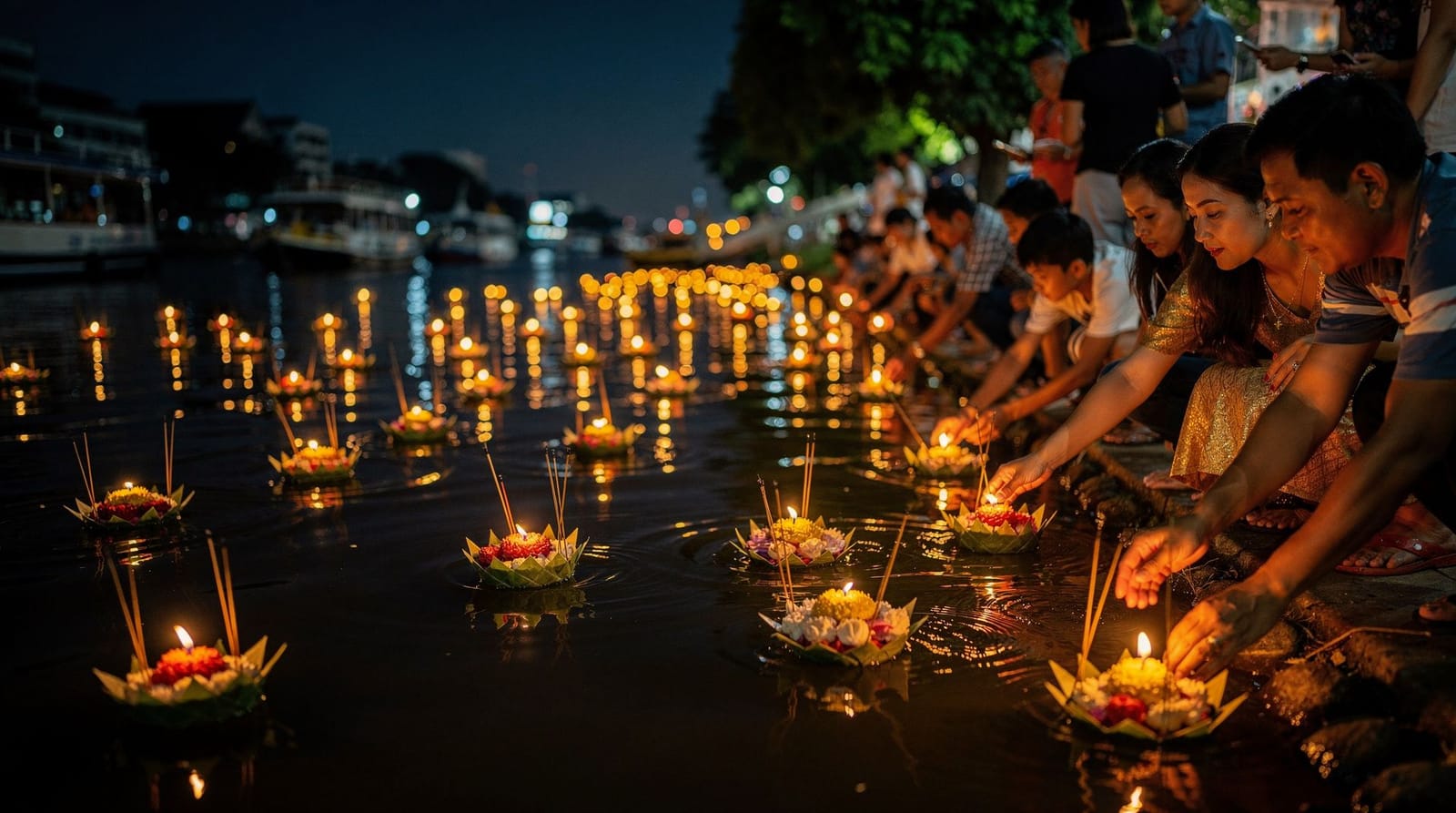
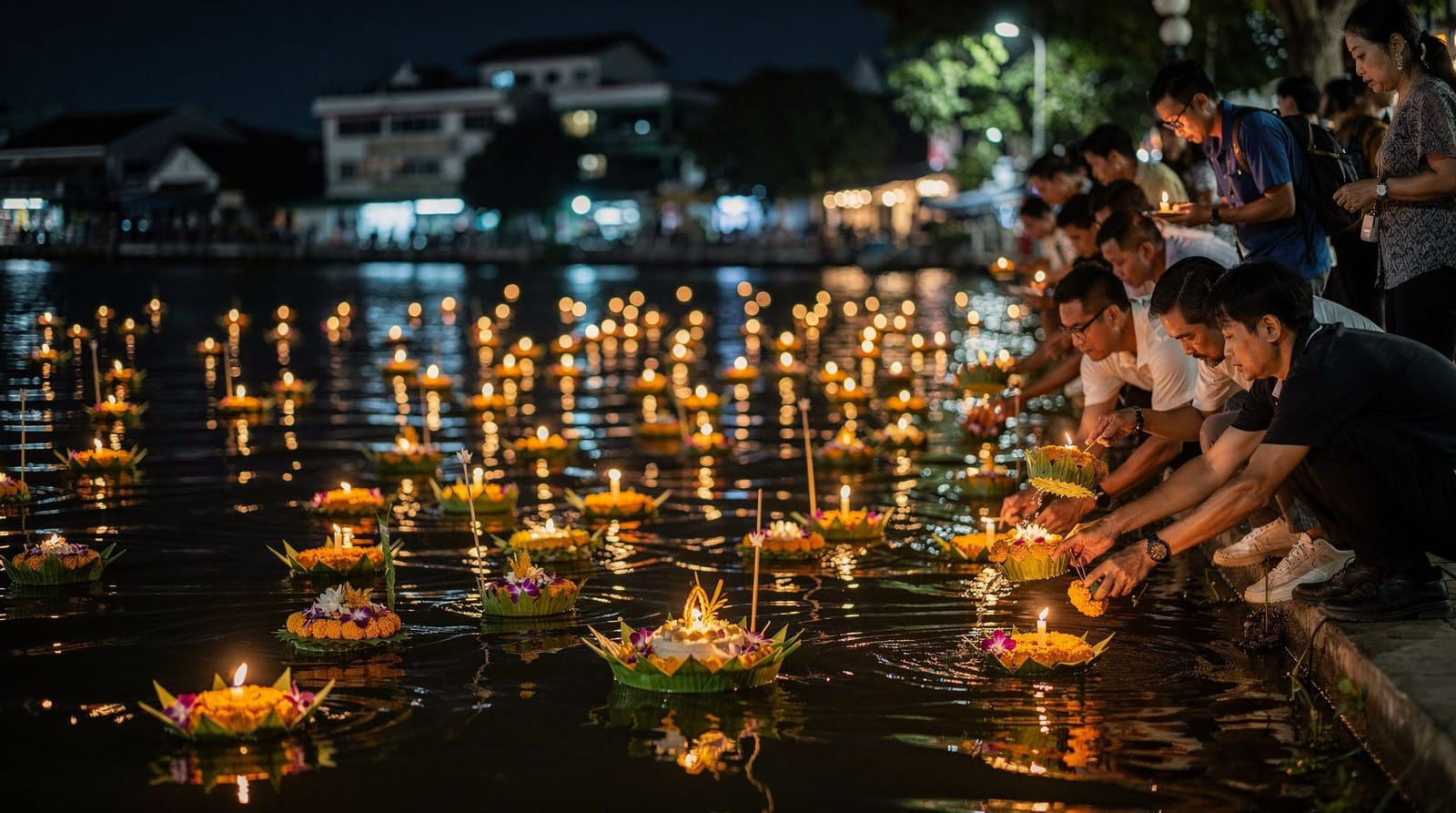
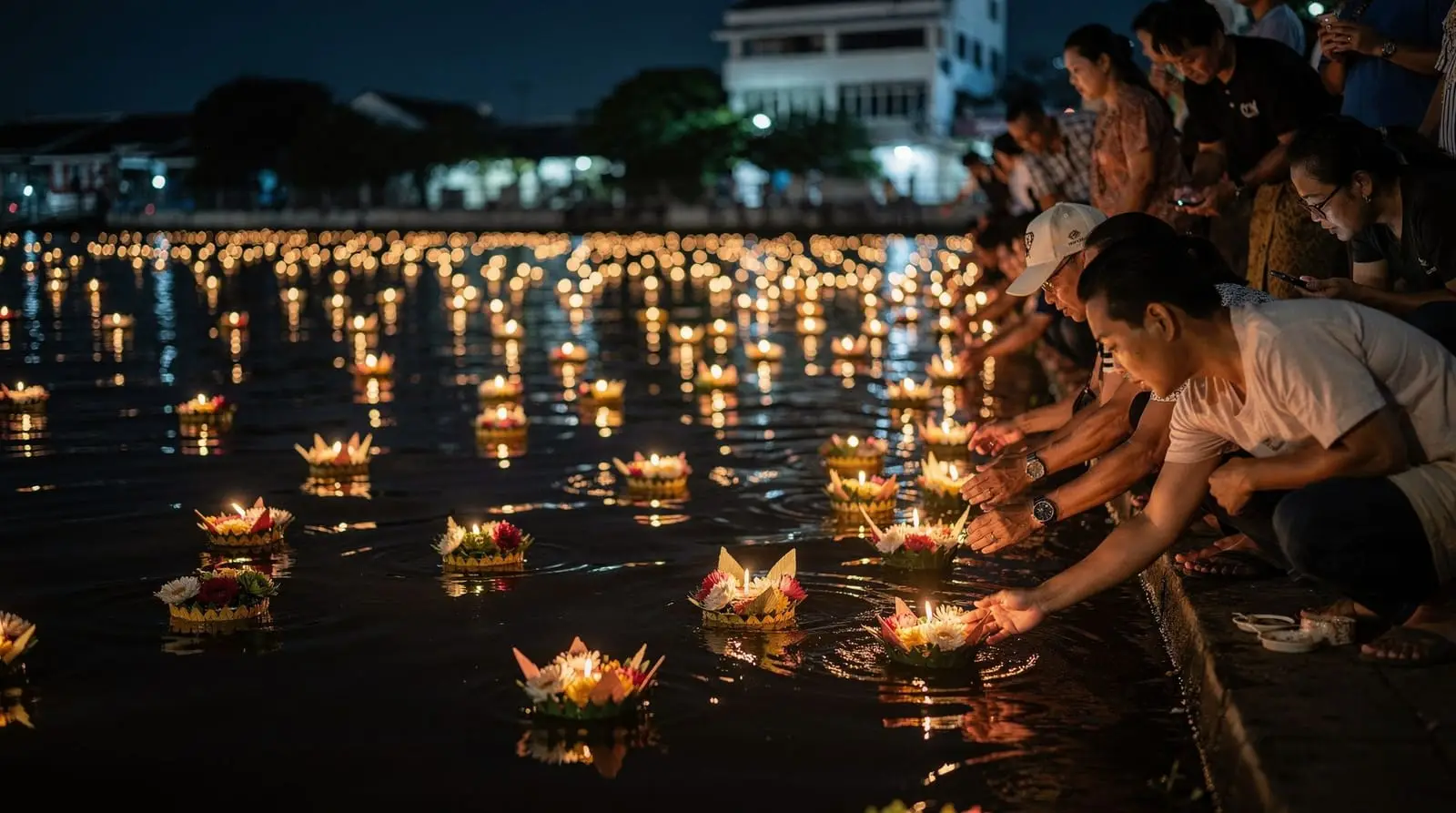
If Songkran is Bangkok shouting with joy, Loy Krathong is Bangkok whispering. On the full-moon night of the twelfth lunar month — usually in November — the whole country gathers at the water’s edge to float small decorated rafts bearing a candle, three sticks of incense and a wish. I had braced for another raucous festival and instead found something quietly beautiful: thousands of flickering lights drifting down the Chao Phraya under a fat moon, and a city momentarily hushed by ritual. It remains, of all the Thai festivals I have seen, the one that stayed with me.
| When | Full moon of the 12th lunar month, usually November |
| Where | Anywhere on the Chao Phraya, plus park ponds for a quieter version |
| Cost | 30–100 baht for a krathong, more for a dinner cruise |
| Getting there | BTS to Saphan Taksin, then walk — roads gridlock |
| Book ahead | River dinner cruises sell out fastest of any night of the year |
What Loy Krathong actually is
The word loy means “to float” and a krathong is the little raft you float. Traditionally made from a slice of banana-tree trunk, folded banana leaves, flowers, a candle and incense, the krathong is set adrift on a river or pond as an act of letting go — of paying respect to the water goddess, of releasing the past year’s misfortunes and bad luck, of making a wish for the year ahead. Some people place a coin, a lock of hair or a fingernail clipping on theirs, a symbolic shedding of the old self. The Loy Krathong guide explains the folklore properly, and the Loy Krathong in Bangkok page tells you exactly where in the city to experience it.
It coincides with Yi Peng in the north, the famous lantern-release festival of Chiang Mai, which is why the two often get conflated. In Bangkok the emphasis is firmly on the floating krathong rather than the sky lantern, though you will see some lanterns released too.
The history goes back centuries, with most Thais tracing the festival’s origins to the Sukhothai era and a court lady named Nang Nopphamat, whose legend is woven into the whole celebration. Whether or not the story is literally true matters less than the feeling it gives the night: a sense that you are doing something people on this same river have done for hundreds of years. On the full-moon night the temples ring their bells, traditional music drifts out of loudspeakers along the riverside, and the smell of incense and candle wax hangs over the water. It is one of the few nights when modern, frantic, neon Bangkok genuinely slows down and turns inward.
Choosing the right night and timing your evening
The date moves with the lunar calendar, so the festival can land anywhere from late October to mid-November, and it is always worth confirming the exact date before you book flights, because the celebration is essentially a single night. The action builds through the evening: vendors set up from late afternoon, the crowds swell from around 6pm, and the peak floating happens between roughly 7pm and 10pm once the moon is well up. I arrived at the riverside around 6:30pm and was glad I did, because the best spots at the water’s edge fill quickly and by 8pm the popular piers are shoulder to shoulder.
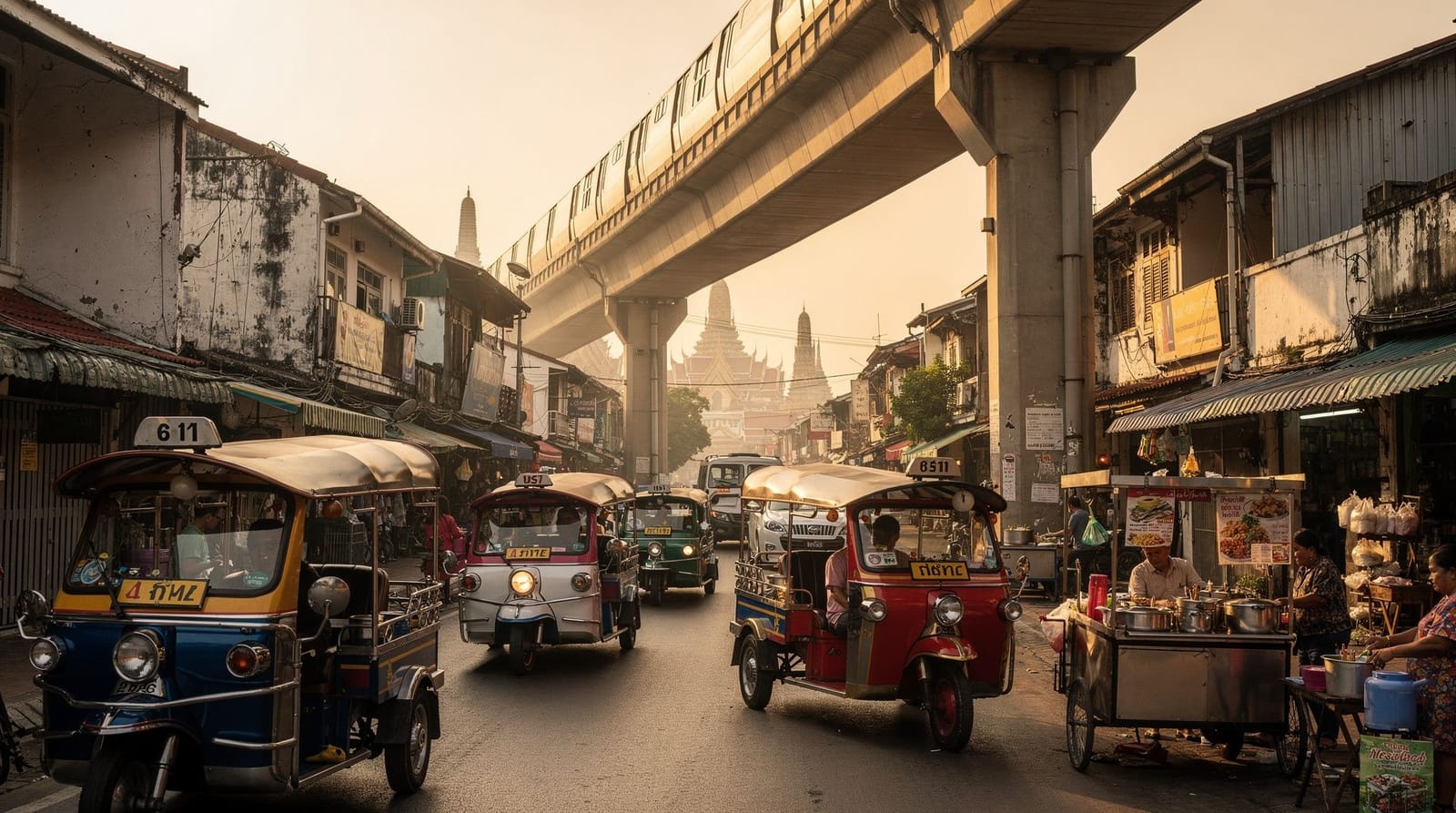
Getting around on the night takes patience. The roads near the river clog completely, so I always use the BTS to Saphan Taksin and then walk down to Sathorn pier, or take the MRT and approach from the Chinatown side. A taxi or Grab that should take fifteen minutes can take an hour in Loy Krathong traffic, so the train is not just cheaper at around 40 to 60 baht, it is genuinely faster. Wear shoes you do not mind getting wet, because the ghats and the lower steps down to the water can be slippery with candle wax and spilled river, and bring a little cash for your krathong and a snack, since card machines are not a feature of riverside vendors.
Making my own krathong
You can buy a ready-made krathong from the vendors who line every riverside and park on the night — they cost 30 to 100 baht depending on size and elaborateness — but I wanted to make my own, and many spots offer little workshops or sell the components. Folding banana leaves into neat points is harder than it looks, and mine came out lopsided, but threading the marigolds and orchids in and fixing the candle felt like exactly the right kind of slow, deliberate act for the occasion.
A word on the environment, because it matters: the traditional banana-leaf krathong is biodegradable, but the styrofoam ones are an ecological disaster, and the city now fishes hundreds of thousands of them out of the river the next morning. Choose a natural-materials krathong, or one made from bread that fish can eat, and skip anything made of foam. It is a small thing that makes the festival’s spirit of respect for the water genuine rather than ironic.
The best place to float it
I floated mine from the riverside near Asiatique, but the Chao Phraya offers countless spots, from the grand hotels’ private piers to the public ghats below Wat Arun. The riverside guide maps the best access points. The temples along the river hold particularly atmospheric celebrations, with the floating lights set against floodlit prangs.
Crowds gather thickly at the famous spots, so if you want a calmer experience, the smaller piers and the ponds in Lumphini Park and other green spaces offer the same ritual without the crush. Wherever you go, the moment of crouching at the water’s edge, lighting the candle, making a wish and pushing the little raft out into the current is the same — small, personal, and quietly moving.
Seeing it from the water
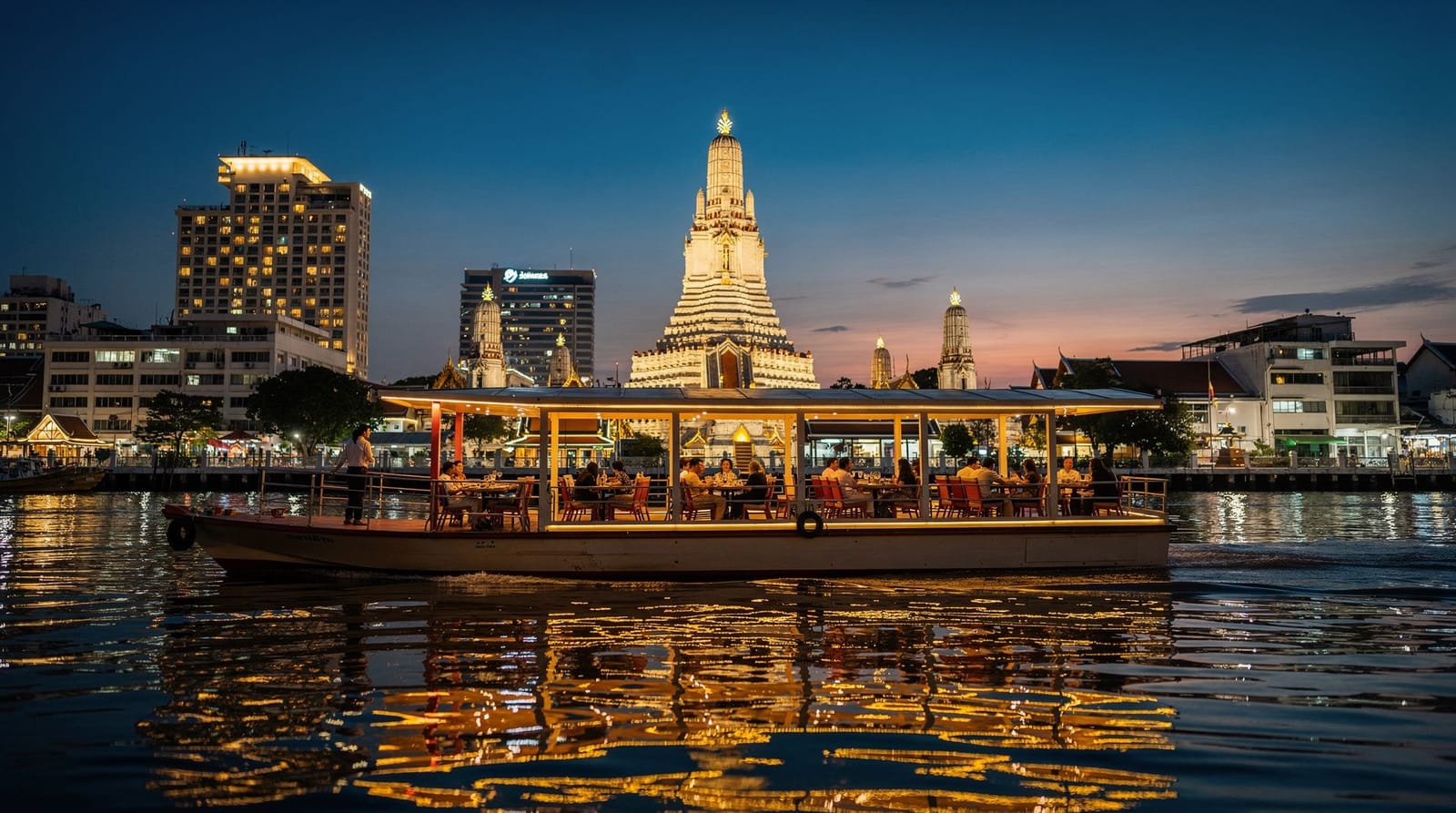
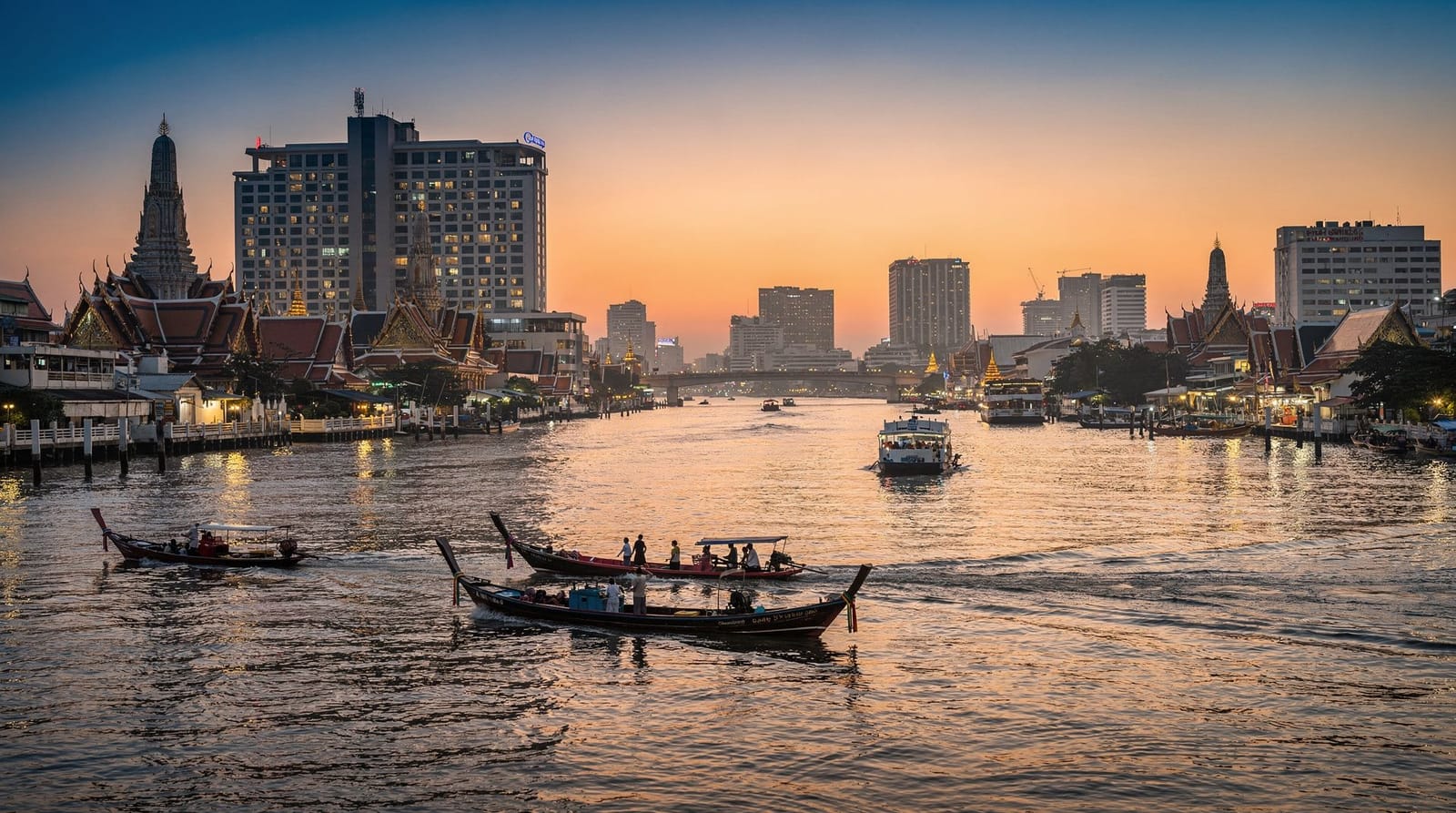
The most spectacular vantage point, though, is from the river itself. Looking back at the city from a boat, with thousands of candle-lit krathongs drifting around the hull and the temples glowing on the banks, is the kind of scene that justifies the whole trip. The regular Chao Phraya boats run on the night, and the Chao Phraya boats guide explains the services, but a dedicated cruise turns the festival into the main event.
A Chao Phraya dinner cruise on Loy Krathong night floats you through the heart of the celebration with dinner served as the lights drift past, and you can release your own krathong from the deck. Book ahead, because the festival sells these out faster than any other night of the year. The best dinner cruises guide compares the boats if you want to choose carefully.
Where to go if you want the spectacle without a boat
Not everyone wants to be on the water, and you absolutely do not need to be to have a great Loy Krathong. Asiatique, the riverside night market reached by a free shuttle boat from Sathorn pier, runs one of the most accessible celebrations in the city, with a broad open quay where you can buy and float a krathong while the Ferris wheel turns behind you. It is touristy but genuinely fun, and good for families. For something more atmospheric and traditional, the ghats below Wat Arun on the Thonburi side put the floating lights directly beneath the floodlit prang, which is about as photogenic as the festival gets.
If you want to avoid the river crush entirely, the lakes in Lumphini Park and the ponds in Benjakitti and other green spaces host their own quieter versions, with the same ritual minus the crowds and the current. I have floated a krathong on a still pond in a near-empty park and found it almost more moving than the river, because the candle sits motionless on the black water and you can watch your own light for a long time instead of losing it instantly to the Chao Phraya’s pull. The Loy Krathong in Bangkok guide and the riverside guide both map these options if you want to plan around the crowds.
The food and the festival atmosphere
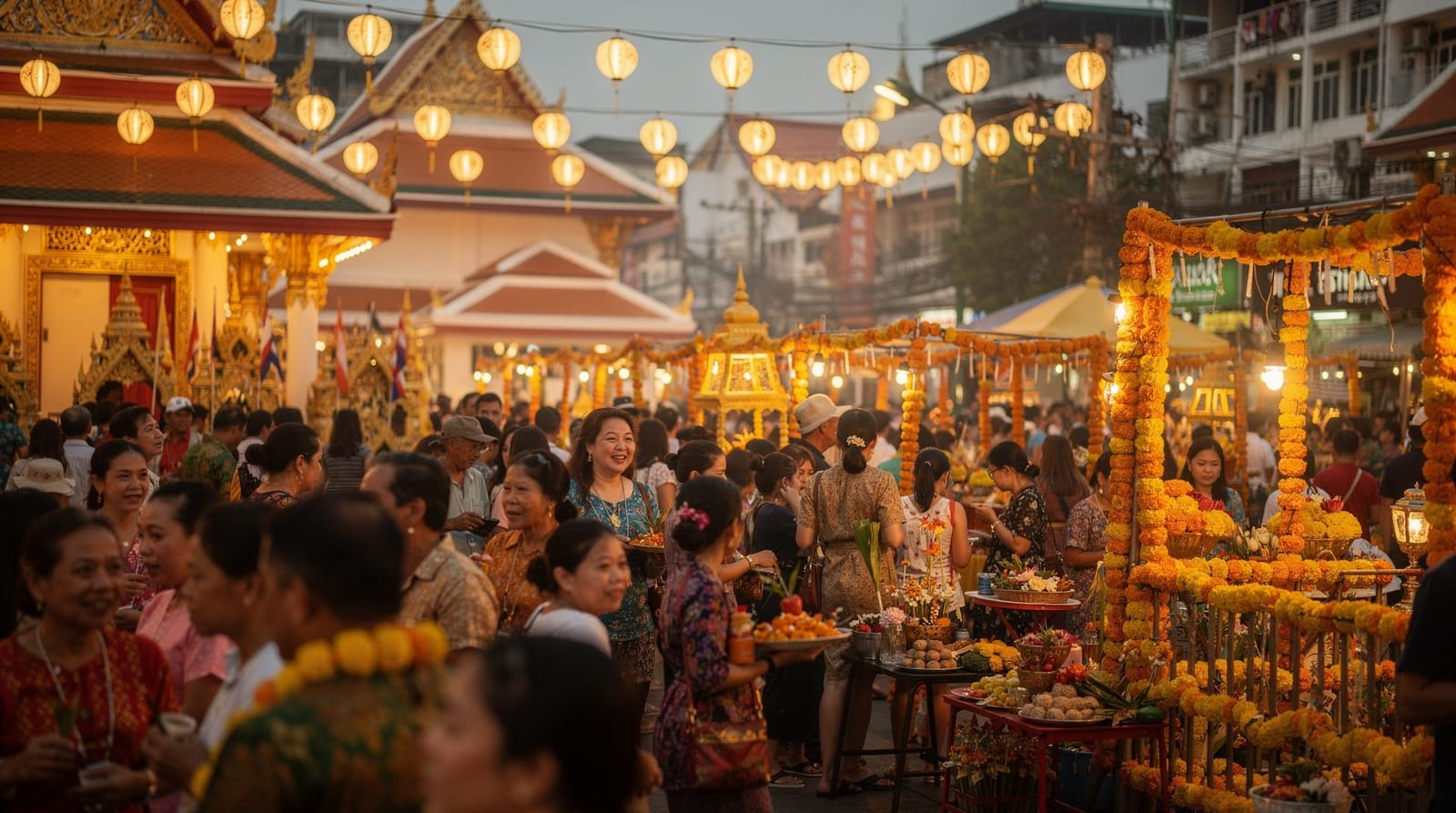
Like every Thai celebration, Loy Krathong runs on food, and the riversides turn into a long ribbon of stalls on the night. I grazed my way along the quay before floating my krathong, eating grilled squid for around 60 baht, a bag of sweet sticky rice with mango, and a charcoal-grilled banana, all of it cheap and exactly right for the occasion. Many temples hold small fairs alongside the floating, with games, sweets, and sometimes traditional dance or likay performances, and a few of the bigger venues run beauty pageants and krathong-decorating contests that are charmingly local in feel.
If you have time over a longer stay, it is worth pairing the festival with the city’s wider cultural calendar. The festivals calendar lists the other big nights, and reading the Loy Krathong guide beforehand turns a pretty light show into something you actually understand. Knowing why people place a coin or a fingernail clipping on their raft, or why they watch to see whether the candle stays lit as it drifts away, makes the whole evening richer.
How the evening unfolds
| Time | What’s happening |
|---|---|
| From ~4pm | Vendors set up krathongs along the river and parks |
| From ~6pm | Crowds swell, popular piers start filling |
| 7pm–10pm | Peak floating, moon well up, busiest window |
| After 10pm | Crowds thin, a calmer window for a late krathong |
Booking a dinner cruise for the night is worth understanding in real terms: boats range from simple open-deck river cruisers to multi-deck vessels with live music and a set menu, and prices scale with the boat’s size and the view. A mid-range Loy Krathong dinner cruise typically runs from around 1,500 baht per person upward, considerably more than a normal night, because demand spikes so hard. The Chao Phraya dinner cruise guide explains what separates the budget boats from the premium ones, which matters more on this one specific night than any other.
Why it moved me more than Songkran
Songkran is exhilarating, but it is also exhausting and chaotic and ultimately a party. Loy Krathong is something else — contemplative, gentle, and rooted in an idea I found genuinely affecting, that letting go of the old year and its grievances is something a whole nation can do together, on the same night, at the water’s edge. Watching strangers all around me crouch and light their candles and whisper their private wishes, then stand and watch their little lights join the thousands already drifting downstream, I felt I had glimpsed something true about the place. The festivals calendar lists every major Thai celebration, but this is the one I would plan a trip around.
Frequently asked questions about Loy Krathong in Bangkok
When is Loy Krathong in Bangkok?
It falls on the full moon of the twelfth lunar month, usually in November. The exact date shifts each year, so check the lunar calendar when planning.
Where is the best place to float a krathong in Bangkok?
Anywhere along the Chao Phraya river, the riverside at Asiatique, the piers near the temples, or the ponds in Lumphini Park. A river dinner cruise offers the most spectacular view of the floating lights.
Are krathongs bad for the environment?
Styrofoam ones are. Choose a biodegradable banana-leaf or bread-based krathong instead, in keeping with the festival’s spirit of respecting the water, and never float anything made of foam.
How do I get to the Chao Phraya for Loy Krathong?
Take the BTS to Saphan Taksin for Sathorn pier, or the MRT to approach from the Chinatown side. The roads near the river gridlock completely on the night, so the train at around 40 to 60 baht is faster and cheaper than a taxi.
How much does a krathong cost?
Ready-made banana-leaf krathongs from riverside vendors cost roughly 30 to 100 baht depending on size, with cash only. Some venues run small workshops where you can assemble your own from the components for a similar price.
Is Loy Krathong good for families?
Yes. Asiatique, reached by a free shuttle boat from Sathorn pier, runs a family-friendly celebration on a broad open quay, and the park ponds offer a calm, crowd-free alternative for floating a krathong with children.