Jim Thompson and the story of Thai silk
Bangkok: Jim Thompson House and Baan Krua Community Tour
Who was Jim Thompson and why does his house matter?
Jim Thompson was an American architect and former OSS intelligence officer who revived Thailand's struggling silk industry after the Second World War and turned Thai silk into a global luxury product. In 1967 he vanished without trace while walking in the Cameron Highlands of Malaysia, and the mystery was never solved. His Bangkok home, a cluster of antique teak houses filled with Asian art, is now one of the city's best museums — open daily, entry around 200 THB, reached via BTS National Stadium.
Few foreigners have shaped a Thai industry the way Jim Thompson shaped Thai silk — and almost none have vanished as mysteriously. An American architect and wartime intelligence officer, Thompson rebuilt Thailand’s dying handwoven silk trade after the Second World War, made it a global luxury, and then disappeared without trace on a walk in Malaysia in 1967. His Bangkok home, a serene cluster of antique teak houses beside the Saen Saep canal, is now one of the city’s most rewarding museums. This guide tells the story, walks you through the house, and explains how to recognise and buy genuine Thai silk.
| Where | Soi Kasem San 2, near BTS National Stadium |
| Cost | Around 200 THB adults, less for students |
| Time needed | 60–90 minutes, tour lasts roughly 40–50 min |
| Getting there | BTS National Stadium, short signposted walk |
| Best time | Mid-morning or late afternoon, guided tour required |
The man: architect, spy, silk revivalist
James Harrison Wilson Thompson was born in Delaware in 1906 and trained as an architect. During the Second World War he joined the Office of Strategic Services (OSS), the wartime forerunner of the CIA, and was posted to Asia. He arrived in Bangkok near the end of the war and fell in love with Thailand, choosing to stay rather than return to a conventional architectural career in the United States.
What he found in Thailand was a centuries-old craft in decline. Handwoven Thai silk, produced in small weaving communities, had been pushed to the margins by cheaper industrial textiles. Thompson saw both the beauty of the product and a commercial opportunity. Working closely with the Muslim Cham weavers of the Ban Krua community — a cluster of weaving households across the canal from his eventual home — he organised production, modernised dyeing with fast colours, and crucially marketed Thai silk to the West.
His timing and taste were impeccable. Thai silk caught the eye of the international fashion world, and a breakthrough came when his fabric was used for the costumes of the Broadway musical and subsequent film of The King and I. By the 1950s and 1960s, Jim Thompson’s Thai Silk Company had turned a fading village craft into an internationally recognised luxury, providing livelihoods for thousands of weavers. He became a celebrated figure in Bangkok’s expatriate society, known as much for his art collection and his teak house as for his business.
The disappearance that was never solved
On 26 March 1967, Thompson was on holiday with friends at a bungalow in the Cameron Highlands, a cool hill resort in Malaysia. After lunch on Easter Sunday, he went out for a walk alone and never came back. The alarm was raised that evening, and what followed became one of the largest search operations in Malaysian history — police, soldiers, trackers, aboriginal Orang Asli guides and even psychics combed the jungle for weeks.
Nothing was ever found. No body, no clothing, no remains, no credible sighting. The complete absence of evidence has kept the case alive for decades. Theories abound: that he became lost and died in the dense jungle; that a tiger or other animal took him; that he was kidnapped or murdered; that he staged his own disappearance; or that his OSS past caught up with him in some intelligence-related affair. None has ever been proven, and the truth of what happened to Jim Thompson remains genuinely unknown. The mystery only deepened his legend.
The house: six teak buildings and a hidden garden
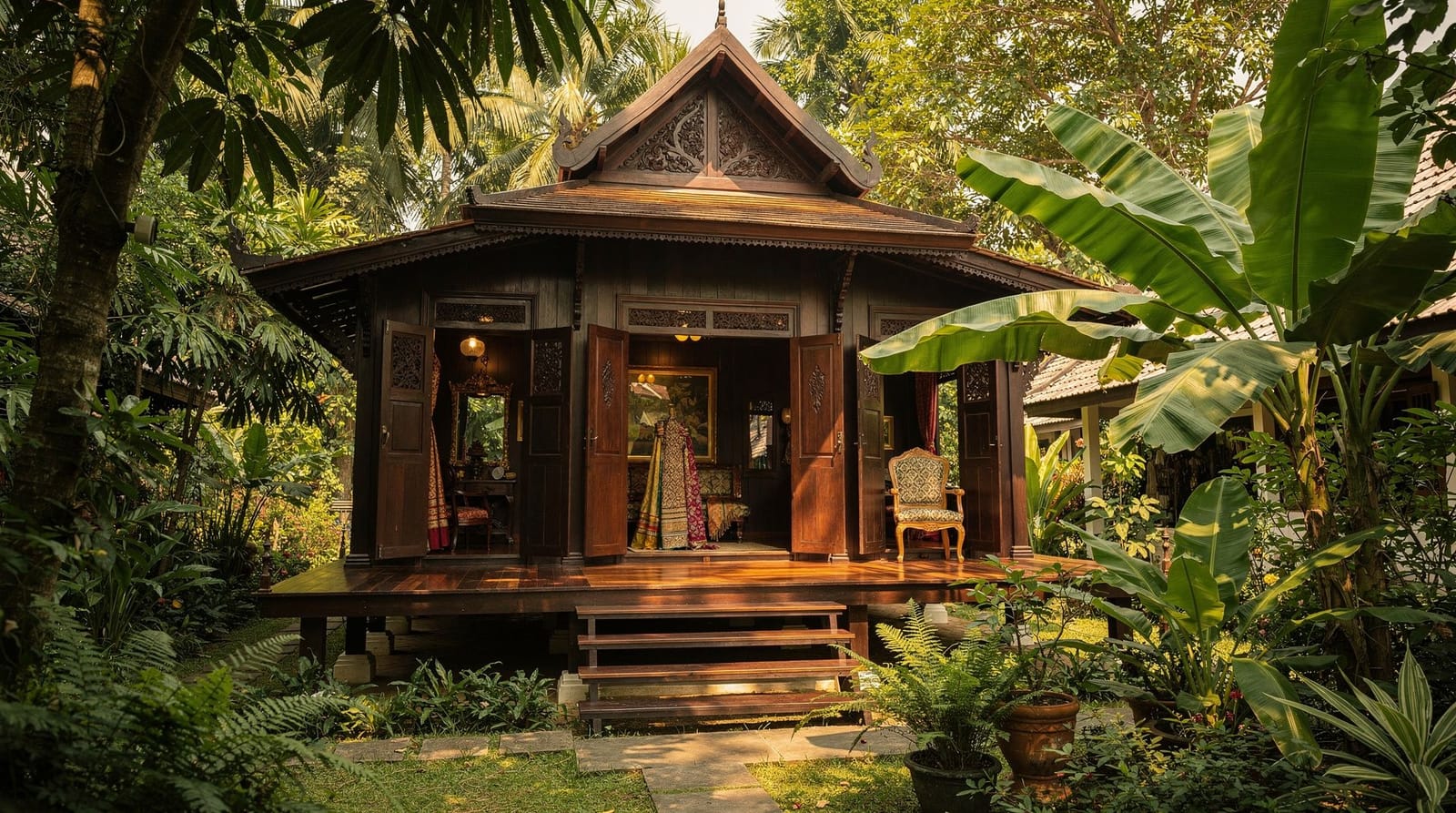
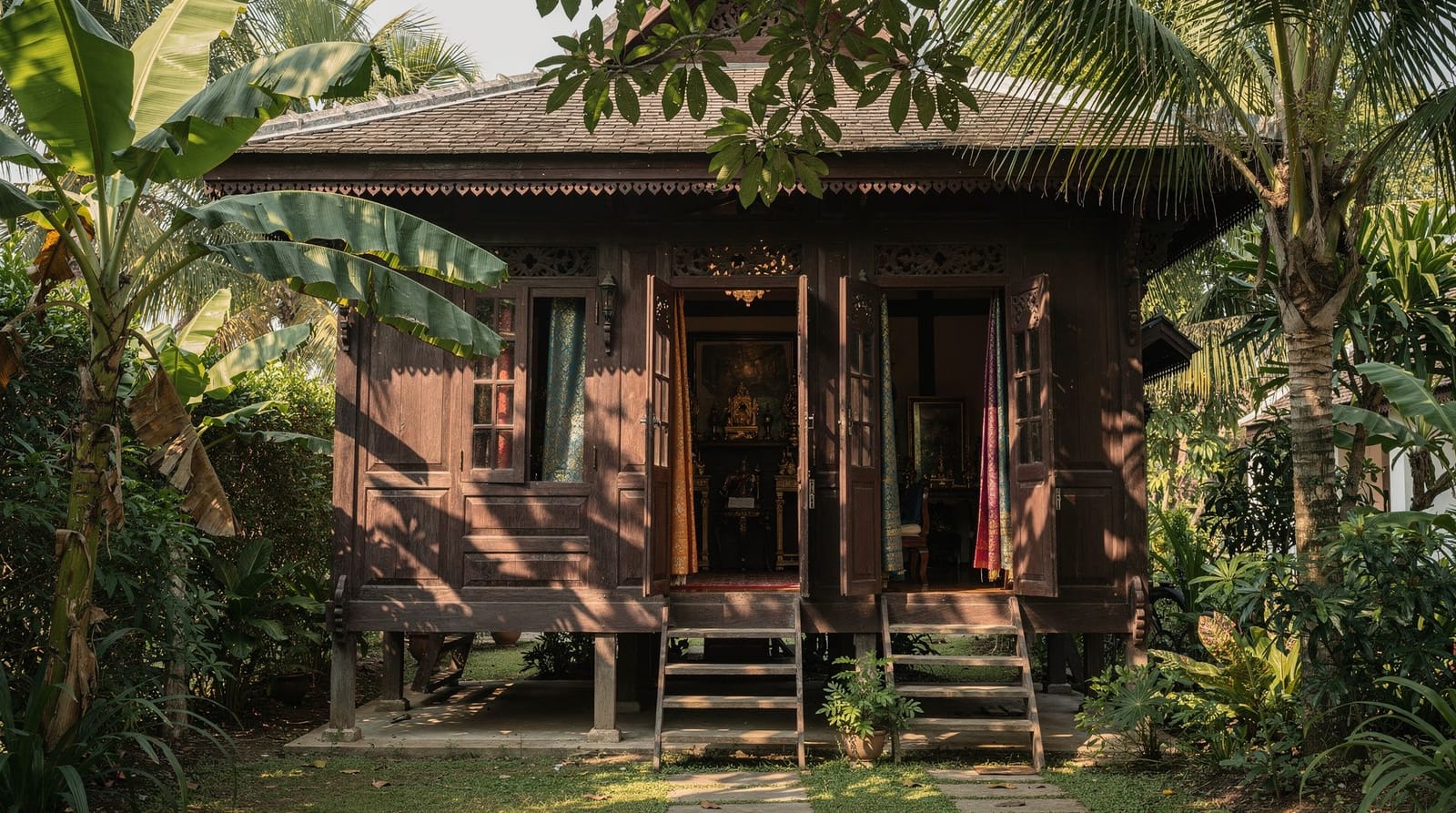
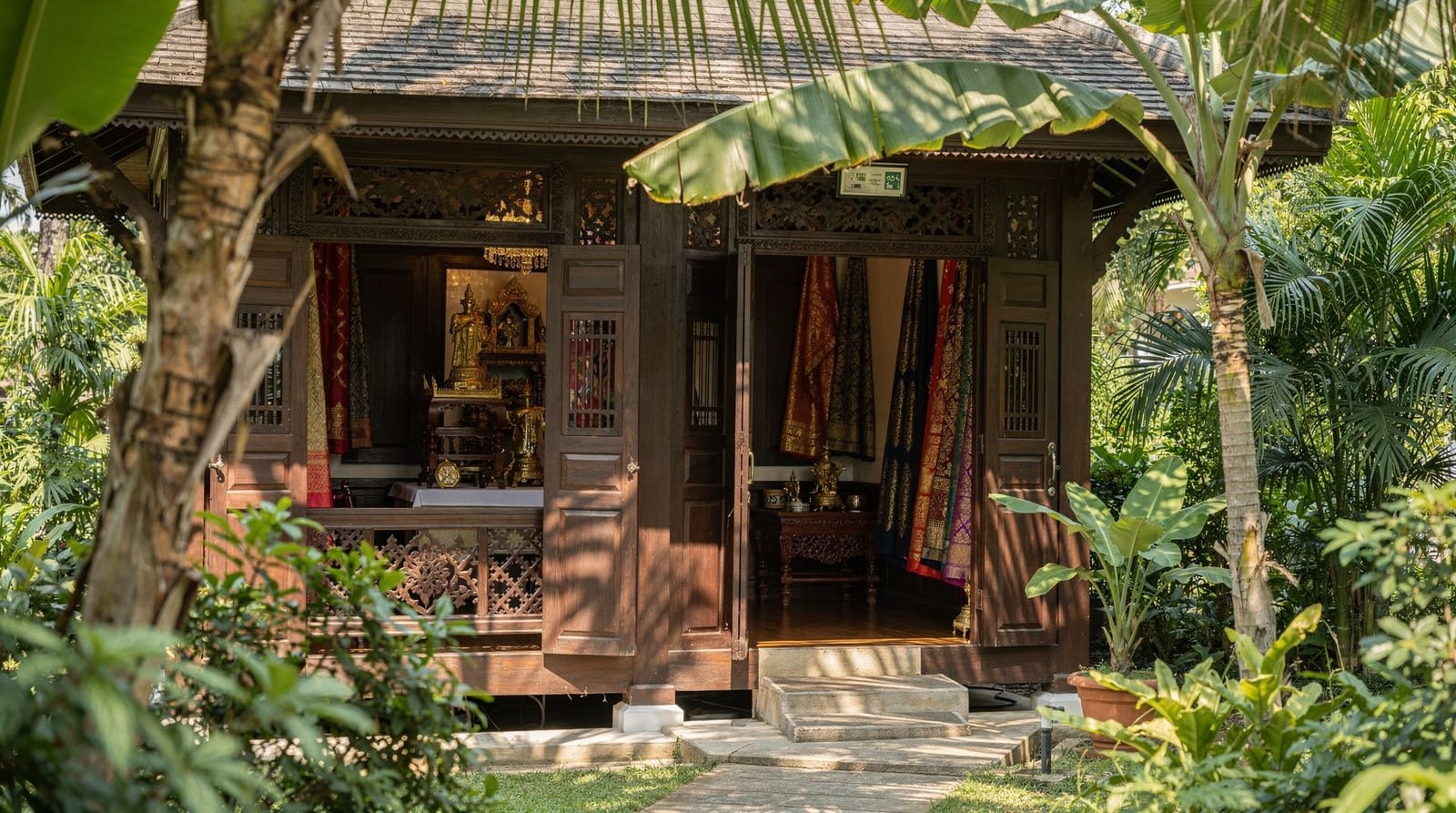
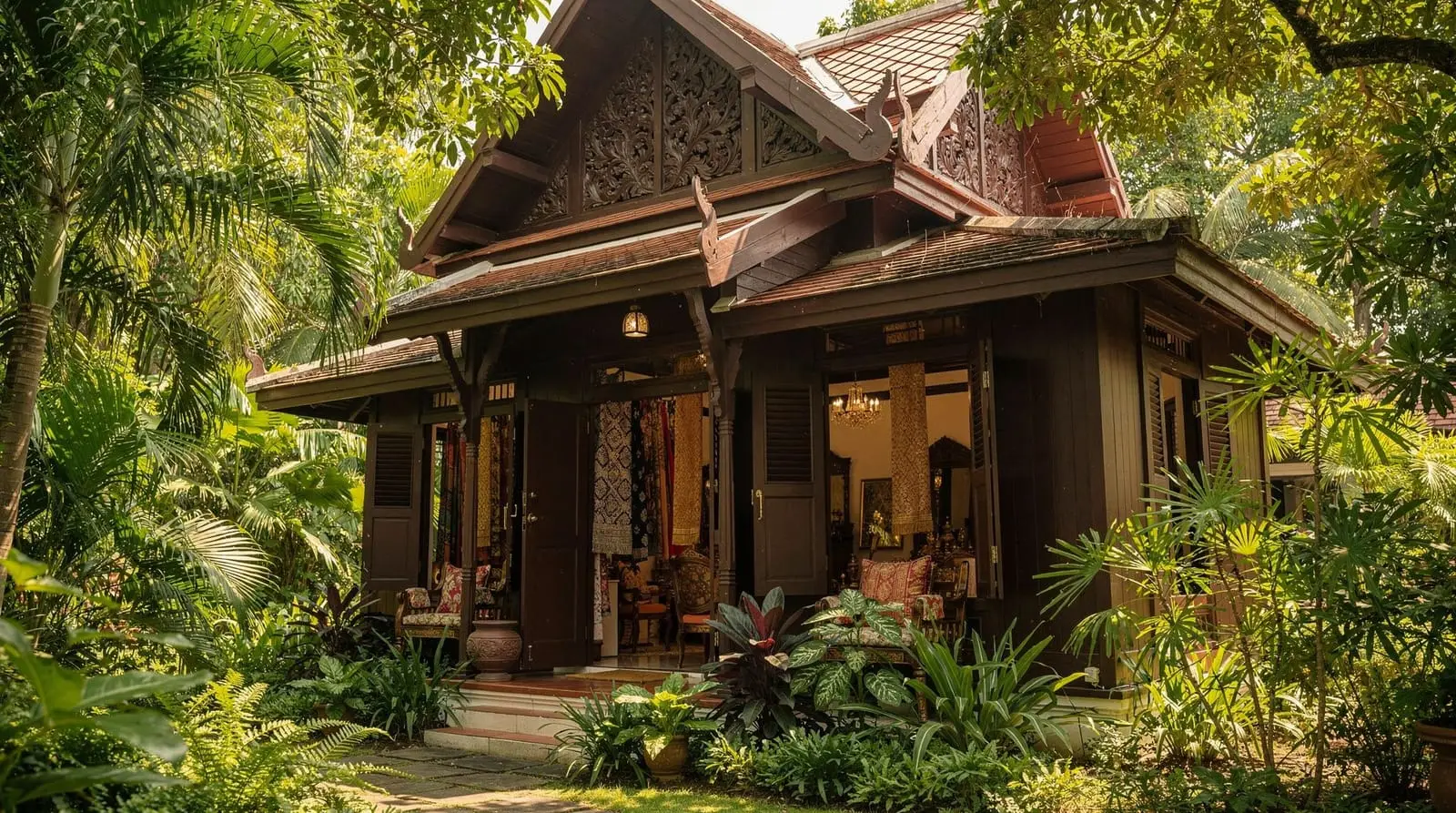
In 1959, before he disappeared, Thompson built himself a home that is now his most visible legacy. Rather than construct a single modern villa, he assembled six traditional Thai teak houses — some dismantled and brought from Ayutthaya and from the Ban Krua weaving community across the canal — and reassembled them into a single connected residence, raised on stilts in classic central-Thai style. He combined the buildings with care for tradition, keeping the steep roofs and carved gables, while adapting the interiors to display his art.
The result is one of the best surviving examples of traditional Thai domestic architecture you can actually walk through. Inside is Thompson’s collection of Southeast Asian art: Buddhist sculpture, Thai and Burmese paintings, Chinese blue-and-white porcelain, Cambodian stone carvings and antique furniture, all arranged as he left them. The house sits in a lush tropical garden in the middle of the city, beside the Saen Saep canal where longtail boats and commuter ferries still pass — a pocket of green calm a few minutes from the malls of Siam.
The full visitor logistics — opening hours, the guided-tour system, ticket details and how it fits a day — are covered in the Jim Thompson House guide.
The Ban Krua weaving community today
The house’s story is inseparable from Ban Krua, the small Muslim Cham community across the canal whose weavers Thompson worked with directly, buying their silk and helping organise production into a viable export business. The neighbourhood still has its own mosques and a distinct identity within the city, though the weaving trade that once defined it has become far smaller than in Thompson’s day, squeezed by urban development and the shift to factory production. A guided visit that includes Ban Krua — rather than just the house itself — gives a fuller picture of the human side of the silk story, and is a more respectful way to see a still-living community than wandering in unguided.
The Thai Silk Company since Thompson
The Thai Silk Company that Thompson founded did not disappear with him. It has continued as a respected textile and homeware brand for decades since, evolving under different ownership and management while keeping the emphasis on quality hand-loomed silk that Thompson established. That continuity is part of why the Jim Thompson name on a label still means something today, unlike countless “Thai silk” products with no real connection to the craft he championed.
Visiting: practical details
The Jim Thompson House sits on Soi Kasem San 2, a short, well-signposted walk from BTS National Stadium station, putting it within easy reach of the Siam shopping district, MBK and the Bangkok Art and Culture Centre. It is open daily, typically from 10h00, and the house itself is shown only by guided tour, which runs frequently and lasts around 40 to 50 minutes. Entry is around 200 THB for adults, with reduced rates for students; the garden, café and silk shop are open to all.
Allow 60 to 90 minutes in total — the tour, plus time for the garden, the rotating art exhibitions in the adjacent gallery space, the restaurant, and the shop. It is an excellent mid-morning or late-afternoon visit, offering shade and a sit-down break from the heat. Photography is permitted in the garden but usually restricted inside the houses. A guided visit gives the story real depth, and the connection to the nearby weaving community of Ban Krua makes a combined cultural outing especially rewarding.
Jim Thompson House and Baan Krua silk community guided tourThe visit pairs naturally with the wider cultural picture — see the Bangkok culture guide for how Thompson’s house fits alongside the temples and the Ancient City as part of Bangkok’s heritage.
Understanding real Thai silk
Thai silk is worth understanding before you shop, because the difference between the genuine article and synthetic imitations is large — in price, quality and ethics.
Real Thai silk is hand-loomed from the cocoons of native silkworms. Its defining characteristic is a slight, beautiful unevenness: the thread is not perfectly uniform, so the woven fabric has tiny natural irregularities and a sheen that shifts colour depending on the angle of the light (a two-tone effect prized in Thai silk). It feels soft but with a subtle warmth and a slight crispness, not the slippery coolness of synthetics. Traditional Thai silk often features distinctive weaves and motifs, and the best is dyed in rich, saturated colours.
Because it is hand-produced, genuine Thai silk is not cheap, and that is the single most useful warning for shoppers: a shimmering “silk” scarf sold for a handful of baht at a market stall is almost certainly synthetic. The classic test is the burn test — a thread of real silk burns slowly, smells of burnt hair, and crumbles to a fine ash, while synthetic melts, smells chemical, and forms a hard bead — though you obviously cannot do this before buying. The practical rule is to buy from reputable shops if you want the real thing.
| Sign | Real silk | Synthetic |
|---|---|---|
| Texture | Slightly uneven weave, subtle warmth | Perfectly uniform, slippery-cool |
| Sheen | Shifts colour with the angle | Flat or uniformly glossy |
| Price | Never bargain-basement | Suspiciously cheap for the look |
| Where sold | Jim Thompson, reputable shops, OTOP outlets | Market stalls, tuk-tuk “special deals” |
Buying silk: where to go and what to avoid
The safest place to buy genuine, certified Thai silk is from the Jim Thompson brand itself, which still operates official shops at the house, in major malls across the city, and at the airport, selling scarves, ties, cushion covers, bags and home furnishings of dependable quality. Other reputable retailers and government-supported OTOP (one tambon, one product) outlets also sell certified Thai silk.
Be wary in the opposite direction. Tailors and street vendors who steer you toward “special silk deals” — sometimes as part of the tuk-tuk commission circuit — frequently pass off synthetic or blended fabric as pure Thai silk, and the gem and tailor scam operates on the same principle. If a price seems too good for hand-woven silk, it is. For genuine souvenir shopping that supports Thai craft, the best souvenirs in Bangkok guide and the broader Bangkok shopping guide point you to trustworthy options, and the night markets covered in the Chatuchak weekend market guide have some legitimate textile sellers among the many tourist-grade ones.
Why it belongs on your itinerary
The Jim Thompson House is a rare Bangkok attraction that is calm, shaded, intellectually satisfying and genuinely beautiful — a counterweight to the heat and noise of the temples and markets. It tells a real story about Thailand’s craft heritage and an enduring mystery, and it does so in one of the finest traditional houses you can enter. For first-time visitors building a things to do in Bangkok plan or working through a Bangkok for first-timers checklist, it slots neatly between the Siam malls and the cultural core, and it gives the Thai silk you will see for sale across the city a story worth carrying home.
Pairing your visit: Siam and beyond
Because the house sits right by BTS National Stadium, it combines easily with the rest of the Siam area. The Erawan Shrine, a short ride away, makes a good contrast — a living, incense-filled shrine after the hushed calm of the teak houses. Photographers should build in time for the garden light and the best photo spots in Bangkok guide has more ideas nearby, including the view from Mahanakhon Skywalk if you want a skyline contrast to the low, traditional architecture. For a deeper hands-on link to Thai craft and cuisine, a Jim Thompson House visit combined with a Thai cooking class pairs the silk story with a practical, memorable afternoon, and works well alongside the wider Thai cooking class guide if you want to compare options.
Frequently asked questions about Jim Thompson and the story of Thai silk
Who was Jim Thompson?
How did Jim Thompson disappear?
What is the Jim Thompson House and what's inside?
How much does it cost and where is the Jim Thompson House?
Is Jim Thompson silk genuine and worth buying?
How can I tell real Thai silk from fake?
Is the Jim Thompson House worth visiting?
How long do I need at the Jim Thompson House?
Top experiences
Bookable activities with verified prices and instant confirmation on GetYourGuide.