Ancient City (Muang Boran): Thailand in a day
Bangkok: Ancient City (Muang Boran) Entry Ticket
What is the Ancient City (Muang Boran) near Bangkok?
Muang Boran, the Ancient City, is an enormous open-air park in Samut Prakan, southeast of Bangkok, shaped like the map of Thailand and dotted with full-size and scaled replicas of the country's most important temples, palaces and monuments. You cycle or drive a buggy around it in a few hours, effectively touring the whole kingdom in a day. It is one of Bangkok's most underrated half-day trips — peaceful, photogenic and almost empty of crowds.
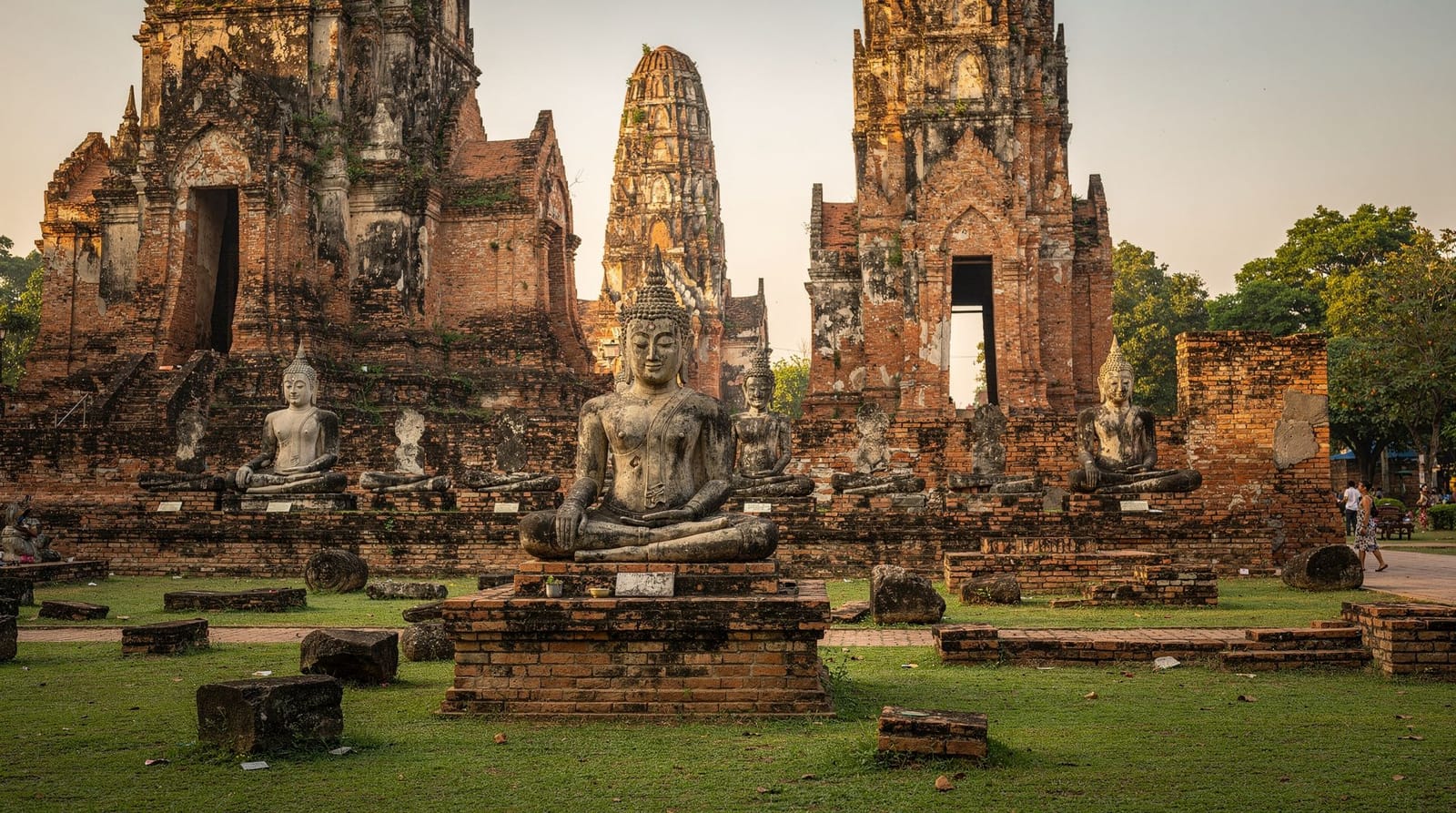
Muang Boran — the Ancient City — is the most ambitious open-air museum you have probably never heard of, and one of Bangkok’s most rewarding half-day escapes. Set in Samut Prakan, southeast of the city, the park is laid out in the shape of the map of Thailand, and scattered across its 200 acres are full-size and scaled-down replicas of the kingdom’s most important temples, palaces, pavilions and monuments — many of them faithful reconstructions of buildings that have been lost or are scattered across the country. You cycle or drive a buggy around it and, in effect, tour all of Thailand in a single peaceful, crowd-free afternoon.
Muang Boran at a glance
| Tickets | Around 800 THB (foreign adult), includes a tram ride or bicycle; self-drive buggy extra, around 250–350 THB |
| Hours | Daytime opening daily (confirm current times when booking) |
| Getting there | BTS Sukhumvit to Kheha, then 5–10 min taxi/Grab — about an hour from central Bangkok |
| Time needed | 3–4 hours for the highlights, a full half-day to explore properly |
| Best for | Architecture and photography fans, and anyone wanting a quiet, crowd-free day |
What it actually is
The Ancient City was the decades-long passion project of a wealthy Thai businessman, who commissioned scholars and craftsmen to recreate the nation’s architectural heritage in one place. The result is part theme park, part open-air museum, part landscaped garden — and unlike most replica parks, the craftsmanship is genuinely high. You will find reconstructions of the Grand Palace’s lost throne halls, Ayutthaya’s ruined temples in their imagined original glory, southern shrines, northern Lanna pavilions, and floating-market scenes, all set among lakes, canals and immaculate gardens. It is the opposite of the heaving Grand Palace: quiet, spacious and unhurried.
How the park is laid out
The park’s map-of-Thailand shape is not just a gimmick — it genuinely helps you navigate. Monuments are positioned roughly where their real-world counterparts sit within the country, so the buildings in the “south” of the park draw on Thailand’s southern peninsula, structures in the “central” zone echo Bangkok and Ayutthaya, and those toward the “north” reflect Lanna and Sukhothai style. Following the map loosely, rather than trying to see every single structure, is the most satisfying way round: pick two or three zones, cycle or buggy between them, and let the rest be scenery. A rough circuit covering the central zone’s palace reconstructions, a couple of the floating-market scenes and one or two of the northern pavilions is enough to fill 3–4 hours without feeling rushed.
Reading the replicas as a first-time visitor
It helps to know what you are looking at. Some buildings are exact-scale reconstructions of monuments that no longer stand, others are smaller models of famous originals, and a few are relocated or rebuilt traditional structures. Information boards beside many of them explain the history, so slow down at the ones that catch your eye rather than racing through. If you have already walked the real Grand Palace or Wat Pho, you will start spotting the architectural vocabulary — tiered roofs, gilded finials, mother-of-pearl doors — and the park becomes a kind of revision course. If you have not, treat it as a preview that makes the genuine sites richer later, and read the Bangkok culture guide for the wider context.
Visitors who arrive expecting a theme park with rides are sometimes surprised. There is no queue-and-thrill element: the draw is wandering, looking, photographing and stopping for a cold drink. That slower rhythm is exactly why it suits travellers who feel worn out by the intensity of the centre.
Getting there
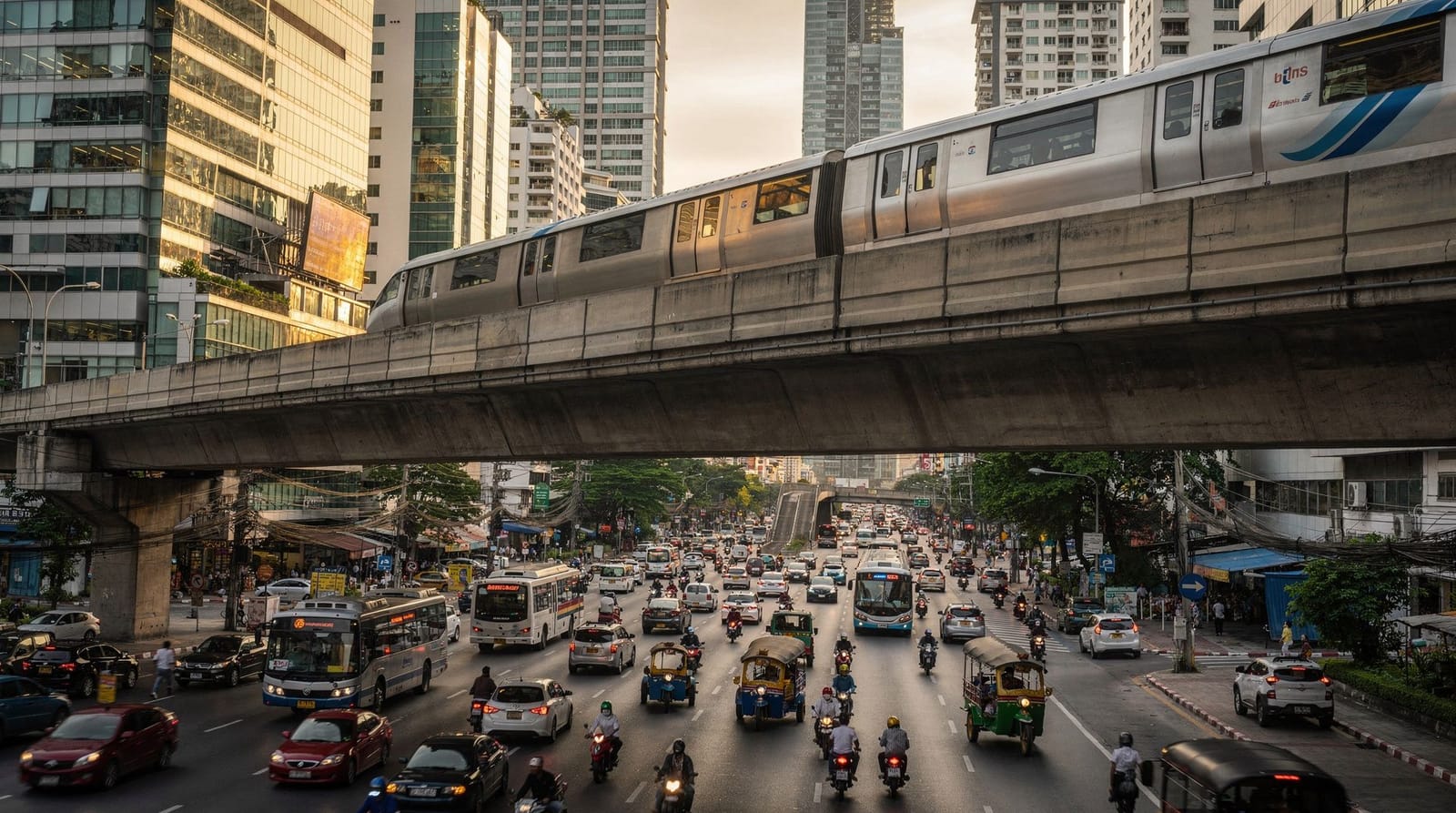
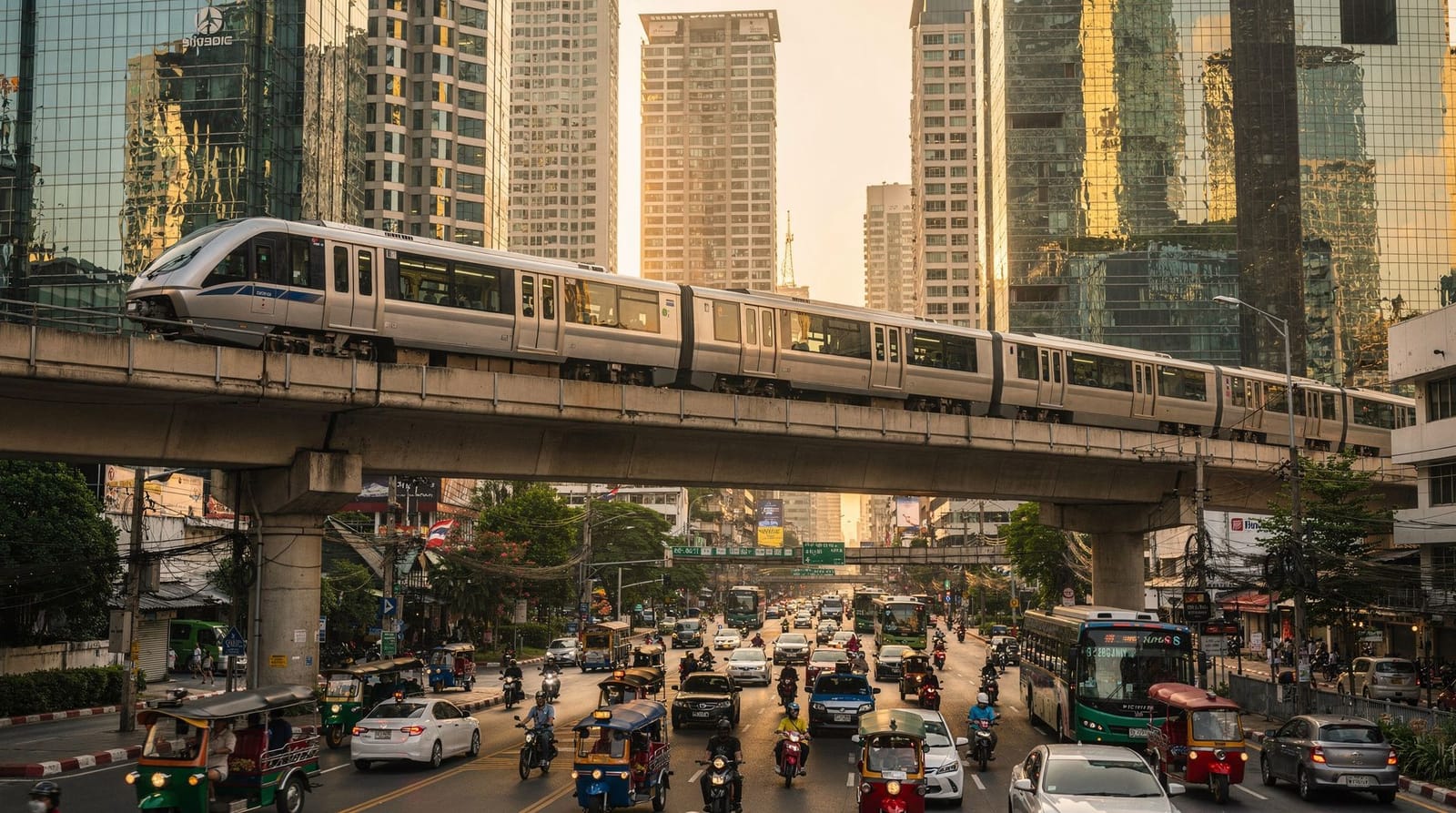
The easiest route is the BTS Sukhumvit line to its southern terminus, Kheha station, then a short taxi, songthaew or Grab (5–10 minutes) to the entrance — about an hour from central Bangkok in total. Driving or taking a Grab the whole way is equally simple. Because it sits on the same southeastern route as the Erawan Museum, the two are easy to combine.
Ancient City (Muang Boran) entry ticketFor the BTS itself, see the BTS Skytrain guide and the day-trip transport guide.
Muang Boran covers three hundred and twenty acres laid out in the shape of Thailand, with the monuments placed where they belong geographically, so it is walked or cycled rather than toured: a private tour of Muang Boran and the Erawan shrine pairs it with the museum that shares its founder.
Tickets and getting around
Foreign adult admission is around 800 THB, which typically includes a tram option or a bicycle; a self-drive golf buggy costs extra (around 250–350 THB) and is well worth it given the park’s size. The grounds are far too large to walk comfortably — most visitors rent a buggy or cycle, while trams follow a fixed route for those who prefer not to drive. Bring water and sun protection, as much of the park is open to the sky — see the what to pack for Bangkok guide for the essentials. Allow 3–4 hours for the highlights, or a full half-day to do it justice. The Ancient City destination page has more on the surrounding area if you want to extend the trip.
Why it is worth your time
Muang Boran rewards anyone who enjoys architecture, photography and space to breathe. The replicas are detailed enough to be genuinely impressive, the landscaping is beautiful, and you preview the whole sweep of Thai monumental architecture in one place — useful context before or after visiting the real temples of Bangkok and the ruins of Ayutthaya. It is also one of the better free-feeling, crowd-free experiences near the city, even with the entry fee, simply because you get so much space to yourself.
Planning your day at the park
A simple rhythm works well. Reach the gate early, choose your transport straight away, and head first for the zone that interests you most while energy and light are at their best. Take a break in the middle of the day for food and shade, then use the late part of the visit for a slower loop past lakes and gardens. Do not try to tick off every structure: the park rewards selectivity, and a relaxed loop beats an exhausted dash.
- Pick your priorities before you go. Decide whether you care most about palace architecture, northern-style pavilions or the water scenes, and let that shape your route.
- Keep your phone charged. You will take far more photos than planned, and a power bank is cheap insurance.
- Carry small essentials. Water, a hat, sunscreen and insect repellent make the day easier, especially in the green season.
- Stay flexible. If a shower rolls in, shelter under one of the many covered pavilions and carry on once it passes.
If you are building a wider trip, the Bangkok in 3 days itinerary and the Bangkok with day trips itinerary show where an Ancient City day fits without exhausting you. For a gentler pace, the how many days in Bangkok guide helps you decide whether you have room for it at all.
Who will enjoy it most
Architecture and history lovers get the most from Muang Boran, but it also suits several other kinds of traveller:
- Photographers who want clean frames without crowds in them, and who will appreciate the landscaping around each building.
- Return visitors who have already done the headline sights and want something different; the hidden gems in Bangkok guide lists similar off-centre ideas.
- Slow travellers who prefer a quiet day outdoors to another market or mall; compare it with Bang Krachao, the green lung for another escape from the concrete.
- Multi-generational groups, since the buggies and trams mean nobody has to walk far; see the Bangkok with elderly travellers guide for more on keeping the pace comfortable.
It is a weaker fit for anyone who wants only original, centuries-old buildings, or who dislikes spending hours outdoors in the sun.
Best time to visit and photography
Because the park is almost entirely outdoors, timing shapes the visit as much as the buildings do.
| Season | What to expect |
|---|---|
| Cool season (Nov–Feb) | Most comfortable, softest light for photos |
| Hot season (Mar–May) | Punishing midday heat; go early, buggy rather than cycle |
| Rainy season (Jun–Oct) | Lush, green, fewer crowds; short afternoon downpours possible |
Arriving soon after opening, before the heat builds, gives both the best light for photographs — the replicas are especially striking in soft early or late sun — and the emptiest paths, since most visitors arrive mid-morning. See the best photo spots in Bangkok guide and the Instagram spots guide for how Muang Boran compares with the city’s other photogenic sights, and the Bangkok weather by month guide for planning around the rains.
Combine with the Erawan Museum
The natural pairing is the Erawan Museum, the colossal three-headed bronze elephant you can climb inside, just a short distance away and often sold on a combined ticket. A half-hour or so at the Erawan Museum plus a half-day at the Ancient City makes a full, gentle day trip that avoids the early starts and crowds of the central sights.
Ancient City Muang Boran and Erawan Museum combined tourMaking a full day of Samut Prakan
Because the park and the museum sit close together, the rest of the day stays open. Keep the schedule loose: the park in the morning, a relaxed lunch, then the museum. Travellers who enjoy variety sometimes pair the area with a river-side evening back in the city, such as a Chao Phraya dinner cruise or a wander around Asiatique. If you would rather keep the following day light, the Bangkok day-trip overview explains the other routes out of the city and how long each tends to take.
For travellers who prefer not to organise transport themselves, the private tours in Bangkok guide explains how guided options work, and the getting around Bangkok guide covers taxis, Grab and the rail network if you go independent. Doing it on your own is perfectly manageable, and the Grab and tuk-tuk guide helps you avoid awkward fare negotiations on the last stretch from the station.
Good for families
Children love the buggies, the open space and the constant change of scenery, and there is no risk of temple-fatigue meltdowns because everyone keeps moving. It is gentler and far less crowded than central Bangkok’s attractions, and the lack of an early start makes it manageable with younger kids — see the Bangkok with kids guide for how it fits a family itinerary.
Return to the day trips from Bangkok overview to weigh it against the bigger excursions.
Respect and etiquette on site
Many of the structures are replicas, but some are modelled on sacred buildings and contain Buddha images, so the usual courtesy applies. Dress modestly, keep your voice down near shrines and do not climb on monuments or pose in disrespectful ways. The temple etiquette and dress code guide and the Thai customs and etiquette guide set out what is expected, and the monarchy and respect guide explains why some images and gestures deserve extra care. Following these simple habits keeps the visit pleasant for everyone and keeps your photographs free of awkward moments.
Rainy-day and heat fallback
If the weather turns, do not abandon the trip automatically. Covered pavilions and galleries offer breaks, and the rain often clears within a short spell. Read the Bangkok in the rain guide and the rainy season guide for realistic expectations, and keep the Bangkok rainy day with kids guide in mind as a plan B if conditions are truly bad.
Frequently asked questions about Ancient City (Muang Boran): Thailand in a day
How do I get to Muang Boran from Bangkok?
How much does it cost to enter the Ancient City?
How long do you need at Muang Boran?
Is Muang Boran worth visiting?
What is the best way to get around the Ancient City?
Can I combine the Ancient City with the Erawan Museum?
Is the Ancient City good for families?
Top experiences
Bookable activities with verified prices and instant confirmation on GetYourGuide.