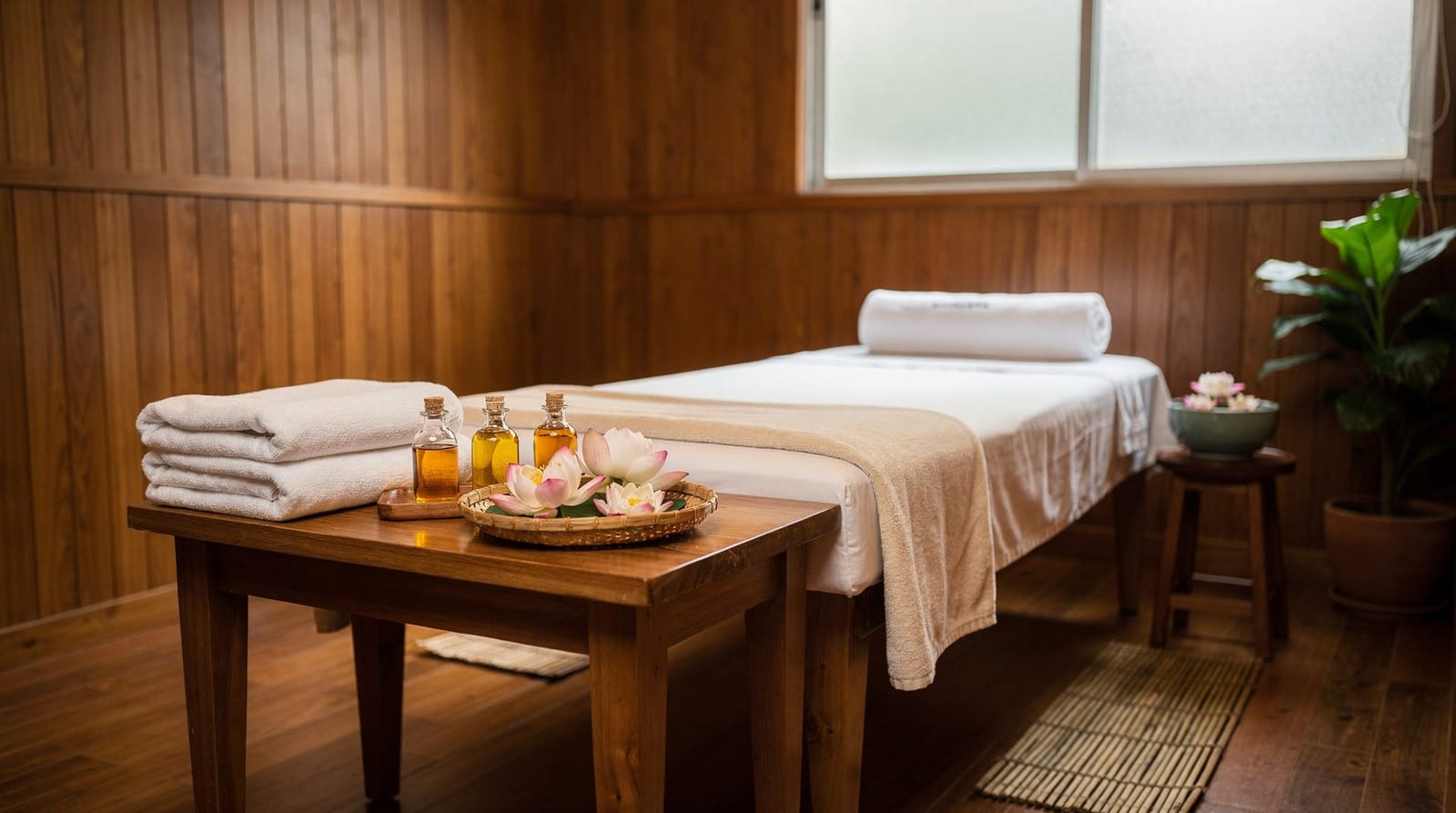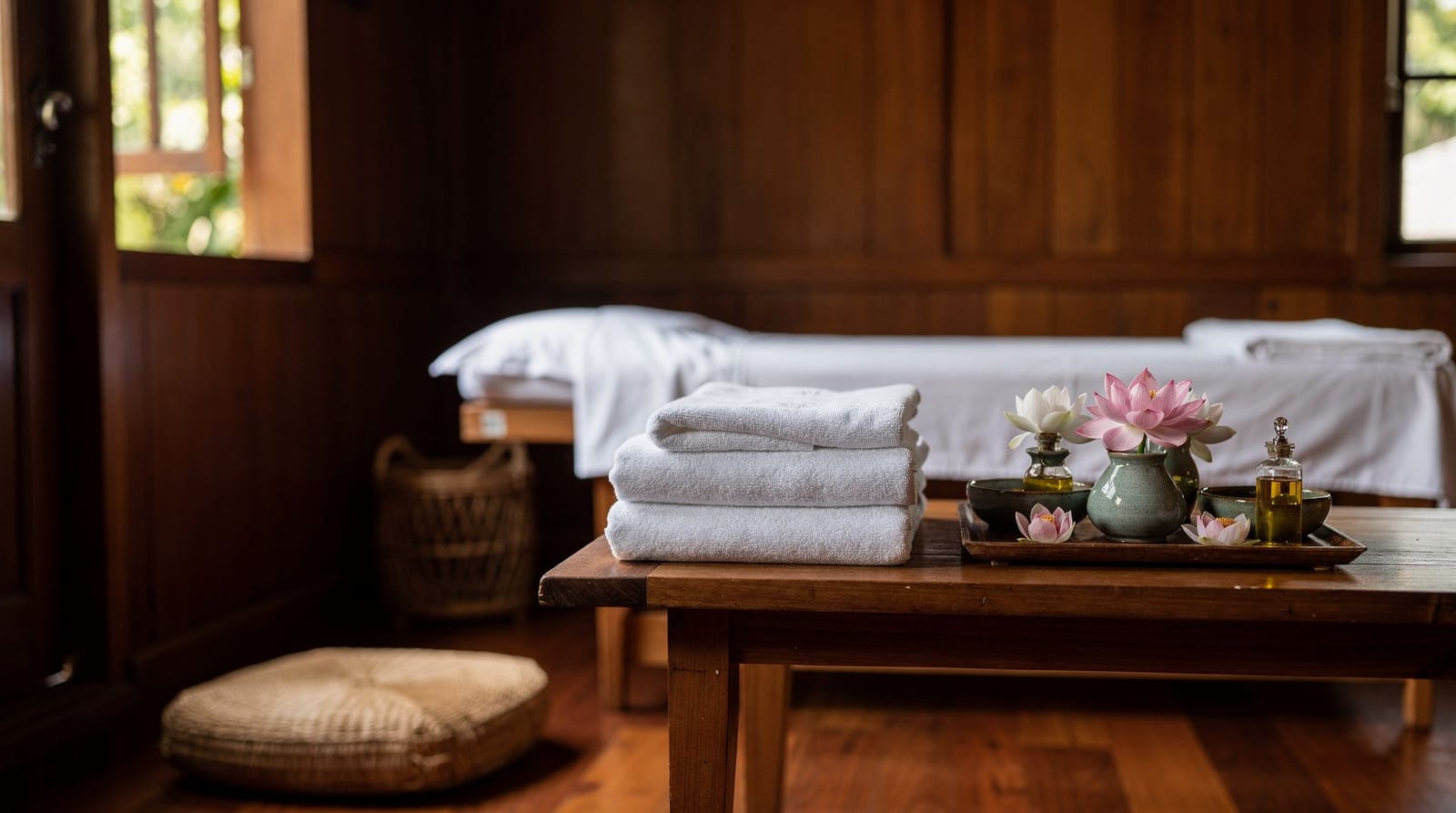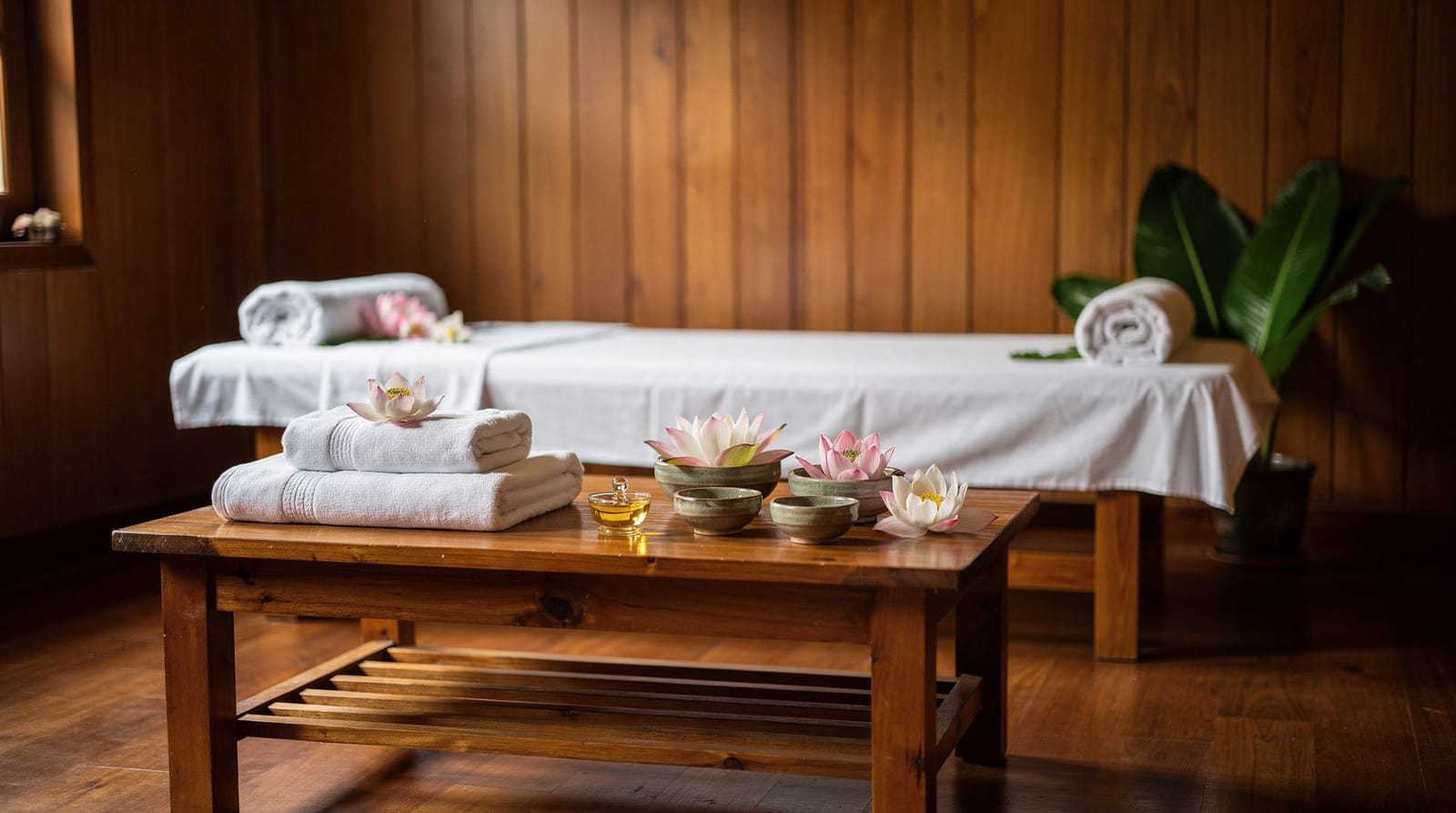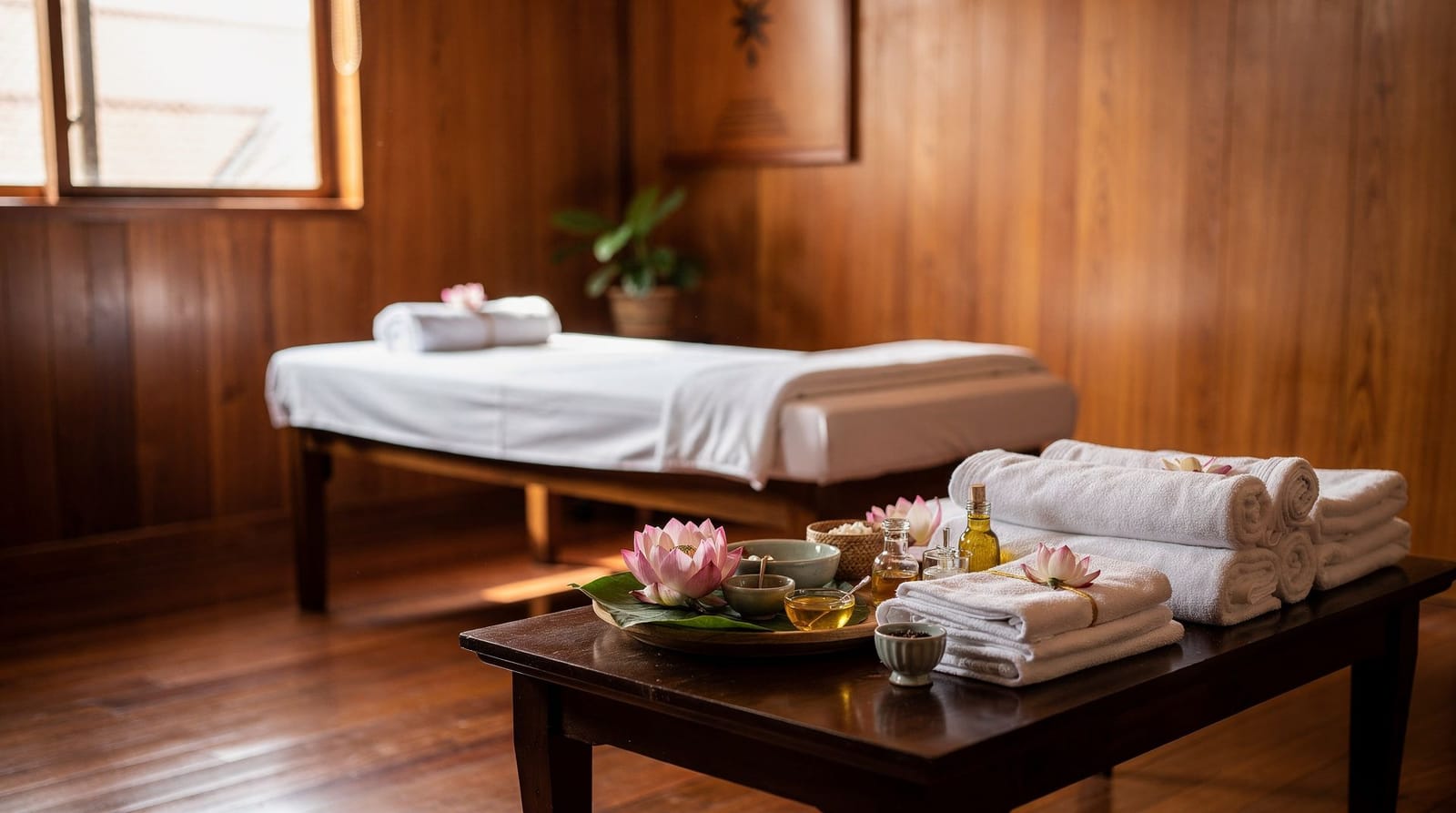
My first Thai massage: a beautiful kind of pain
I want to be honest about my first traditional Thai massage: there was a moment, somewhere around the part where a small but astonishingly strong woman was using her entire body weight to fold my leg behind my head, when I genuinely wondered if I had made a terrible mistake. And then it was over, and I floated off the mat feeling like someone had reset my entire skeleton, and I have been a devotee ever since. If you have only had the gentle, oily, candle-lit Western idea of a massage, the Thai version will surprise you. Here is what it is really like the first time, and how to do it right.
| Cost | Around 200–600 baht/hour (neighbourhood to mid-range) |
| Time needed | 60 minutes for a first session |
| Where | Any neighbourhood shop, or Wat Pho for the traditional source |
| Say this | ”Bao bao” (gently) if the pressure is too much |
| Booking | Usually walk-in; book ahead for Wat Pho or popular houses |
What Thai massage actually is
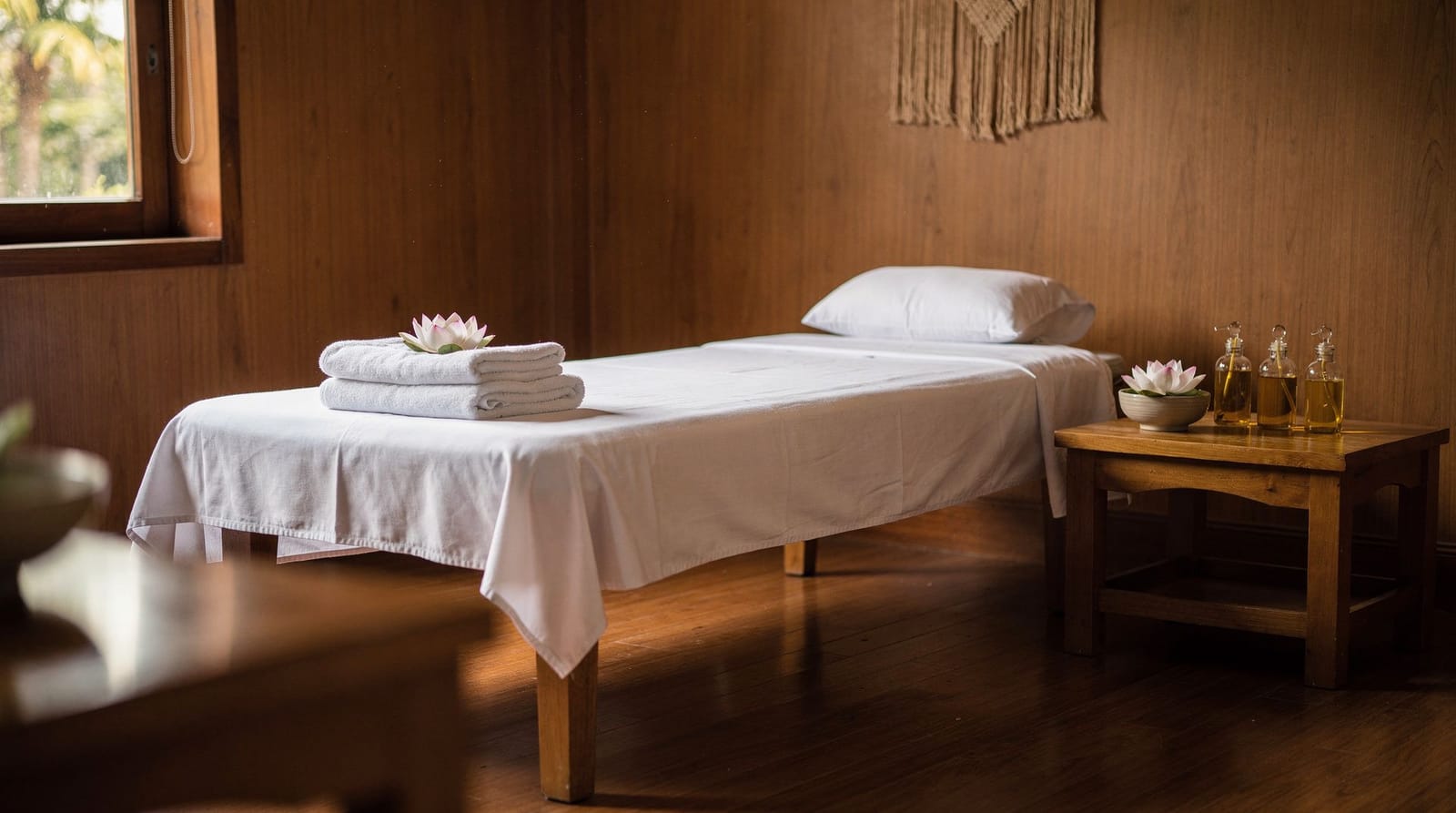
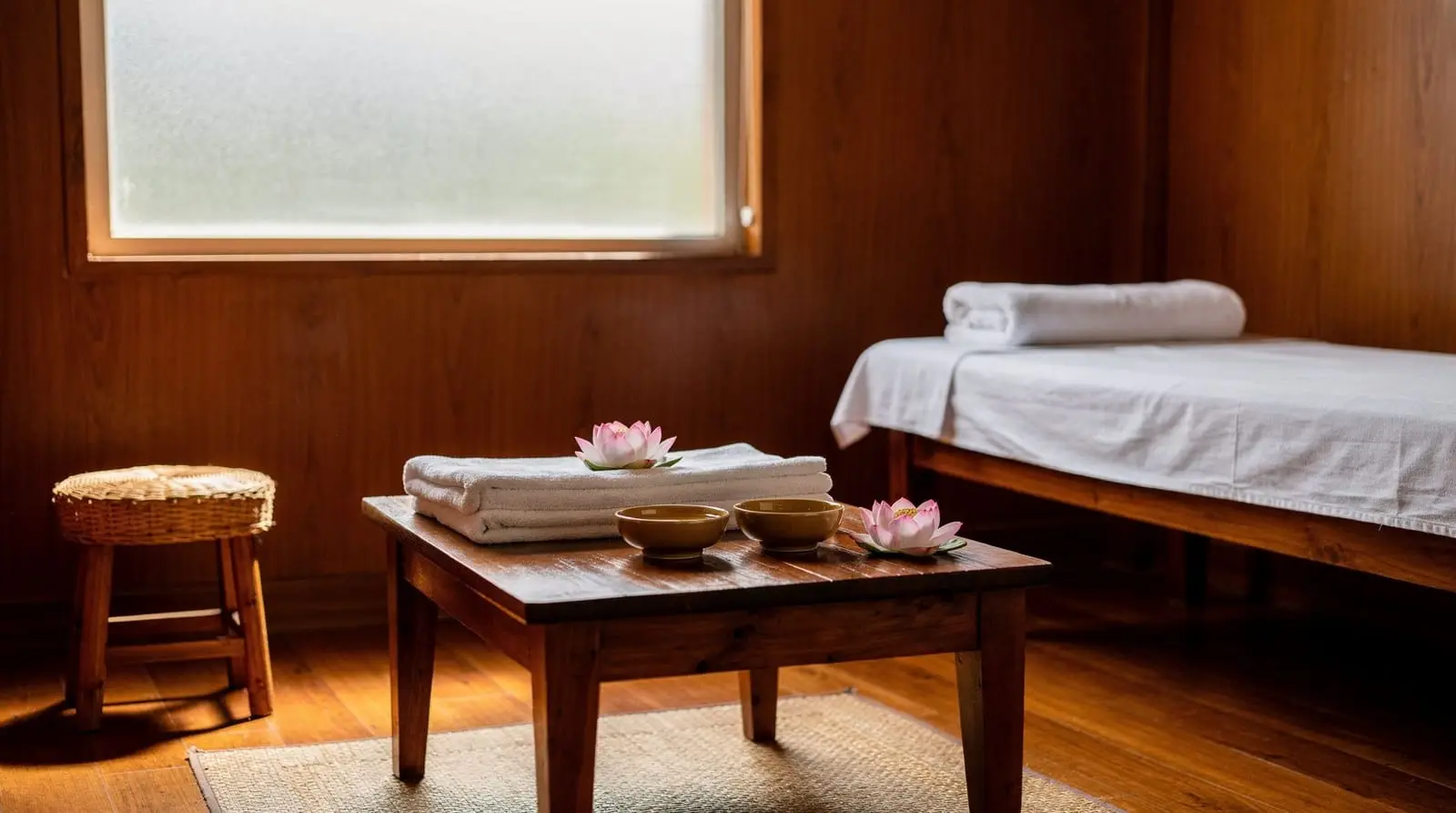
Forget the spa cliché. Traditional Thai massage — nuat phaen boran — is an active, clothed, mat-based practice with roots going back over two thousand years, blending acupressure, assisted yoga-style stretching and deep rhythmic compression. You wear loose provided clothing, you lie on a firm mat on the floor, and the therapist uses their hands, thumbs, elbows, knees and feet to press along the body’s energy lines and to pull you into a series of deep stretches. There is no oil, no candles, no whale music — just focused, methodical, occasionally intense work on your muscles and joints. The Thai massage guide explains the tradition in full, and reading it beforehand demystifies a lot of the surprise.
The “beautiful pain” of it
Here is the thing nobody quite prepares you for: a proper Thai massage can hurt, in a good way. The pressure is deep, the stretches push you to your limit, and the therapist will find knots you did not know you had and lean into them with terrifying precision. It walks a line between discomfort and relief that, once you tune into it, becomes strangely addictive. The crucial phrase to learn is “bao bao” — gently, softly — which you say if the pressure crosses from productive into genuinely painful. A good therapist constantly reads your reactions, but they will go harder than a Western masseuse unless you tell them otherwise, so do not suffer in silence out of politeness.
Where I had mine: the temple school
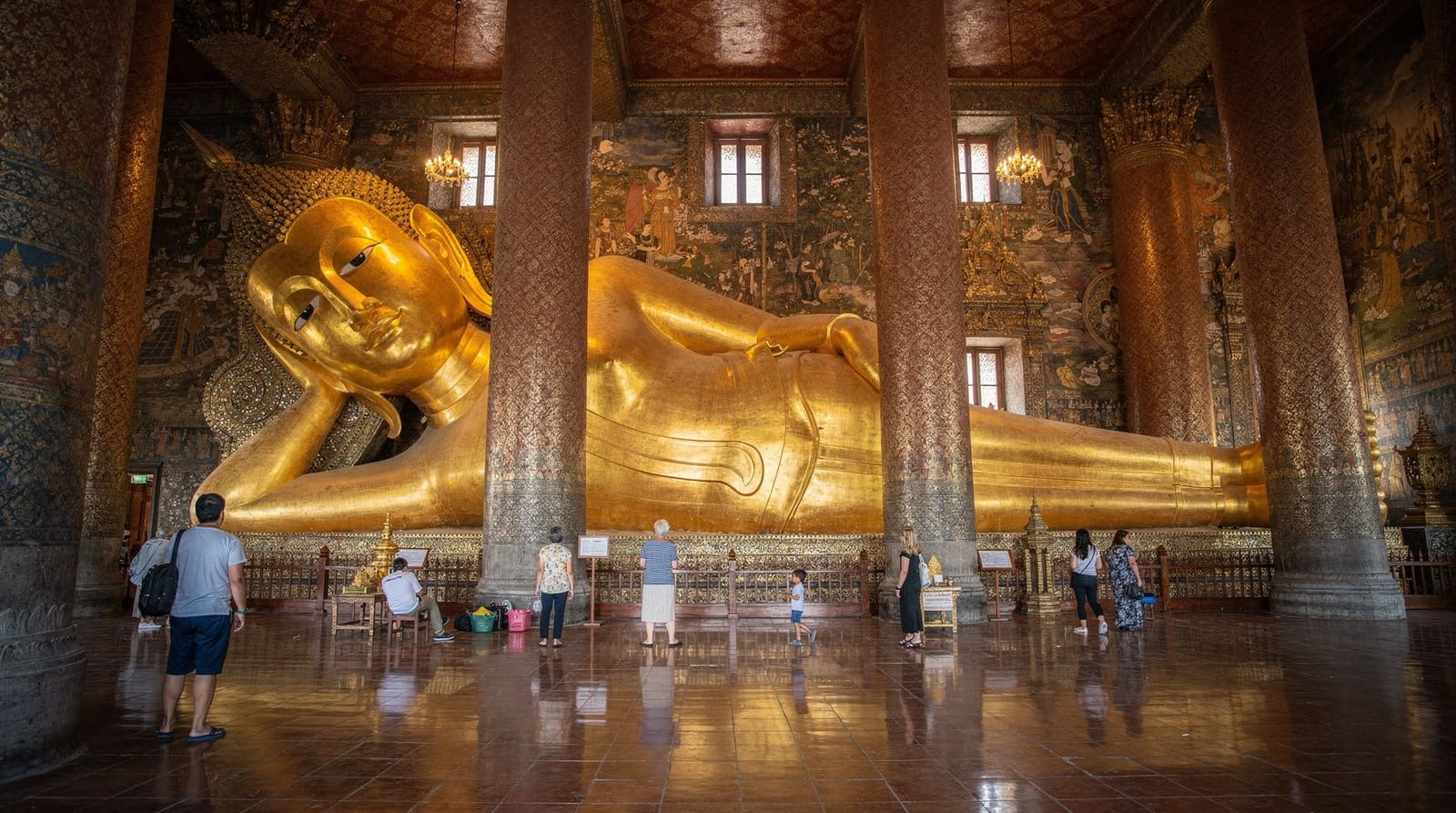
I had my first at the most fitting place possible: the massage pavilions at Wat Pho, the temple that houses Thailand’s most famous traditional medicine and massage school. The Wat Pho massage school is where the art is formally taught and certified, and getting a massage there feels like going to the source. A traditional Thai massage at Wat Pho runs around 480 baht for an hour — more than a backstreet shop, less than a hotel spa — and the therapists are rigorously trained. Pairing it with a visit to the temple’s famous reclining Buddha, covered in the Wat Pho guide, makes for a perfect morning.
The price spectrum, explained
Thai massage in Bangkok spans an enormous price range, and understanding it saves both money and disappointment. At the bottom, the no-frills neighbourhood shops — fluorescent lights, rows of mats, a fan — charge 200 to 300 baht an hour and are often excellent, staffed by genuinely skilled therapists. In the middle sit the dedicated massage houses and the Wat Pho school at 400 to 600 baht. At the top, the luxury hotel and destination spas charge 2,000 baht and well up, for which you get plush surroundings, aromatherapy add-ons and a more pampering, oil-based experience. The traditional versus luxury comparison breaks down exactly what you are paying for at each tier, and the honest truth is that the cheap neighbourhood shops often deliver a more authentic, more effective massage than the expensive spas.
How to spot a good place from a trap
A few signs of a reputable spot. It looks clean and busy with locals as well as tourists. The prices are clearly posted. The therapists wear a uniform and the place feels professional rather than seedy. Be aware that in certain nightlife areas, particularly around some Sukhumvit sois, “massage” shops are fronts for something else entirely — these are obvious from the context and the way staff solicit from the doorway, and they are not what you want. A legitimate traditional massage shop will never operate that way. The best spas and wellness guides point you toward the trustworthy end of the spectrum.
If you would rather have the quality guaranteed and the booking handled, a voucher-based option takes the guesswork out. A spa voucher at a well-regarded massage house gives you a polished, reliable experience without the risk of wandering into the wrong shop.
Tips for your first time
Do not eat a big meal right before — the stretching and abdominal pressure are uncomfortable on a full stomach. Wear or accept the loose clothing provided. Communicate constantly: say “bao bao” for less pressure, point to where it hurts, and do not be shy about it. Tip around 50 to 100 baht for a good massage if you are happy, which is customary and appreciated. And give yourself nowhere to be for the next hour, because you will emerge loose-limbed, slightly dazed, and disinclined to do anything strenuous.
Foot massage, oil massage and the other things on the menu
Most shops offer far more than the traditional dry massage, and the menu can be confusing the first time you stand in a doorway reading it. The traditional Thai body massage (nuat phaen boran) is the clothed, mat-based, stretch-heavy version I have been describing, and at 250 to 350 baht an hour it is the one I default to. Foot reflexology is the second great staple — you sit in a reclining chair while the therapist works your feet, calves and lower legs with a wooden stick and their thumbs, and after a day of pounding temple courtyards it is close to miraculous, usually 250 to 300 baht for an hour. Oil massage and aromatherapy massage are the softer, Western-style options, gentler and slower, typically 400 to 600 baht. There is also herbal-compress massage, where a steamed muslin ball of lemongrass, kaffir lime and other herbs is pressed into the muscles — lovely, fragrant, and worth the extra 100 to 200 baht once. My honest advice for a first-timer is to start with either the traditional body massage or a foot reflexology session, because those are the two that show you what Thai massage is really about. The traditional versus luxury guide goes deeper into the oil-versus-dry question.
Where the good shops cluster
You are never more than a few minutes from a massage shop in central Bangkok, but a few areas are reliably good. Along Sukhumvit, the side streets off the main road around Phrom Phong and Asok are dense with reputable mid-range houses — get off the BTS at Phrom Phong and you will pass a dozen within five minutes. The old city around Khao San and Banglamphu has cheap, busy backpacker-area shops where 200 baht an hour is normal; I have had excellent massages on Khao San for the price of a coffee back home. Silom and Sathorn have a spread from neighbourhood shops to polished day spas, covered in the Silom and Sathorn guide. And the Wat Pho school remains the destination if you want the massage tied to the temple visit. Wherever you are, the rule holds: look for clean, brightly lit, busy with a mix of locals and tourists, prices posted on a board outside.
What to expect minute by minute
Knowing the shape of the hour calms the first-time nerves. You arrive, choose your massage and length from the board, and are led to change into the loose pyjama-like top and trousers they provide. Often your feet are washed first — a small ritual that signals the session has begun. You lie face-up on the mat and the therapist starts at the feet and works upward, pressing along the legs with palms and thumbs, then the arms, then the back and shoulders, building from gentle to deep. The stretches come later: the cobra, where they kneel on your thighs and pull your arms back to arch your spine; the leg folds; sometimes the dramatic finale where they walk on your back or crack it with a sharp, alarming, wonderful release. The whole thing follows a logic, and once you sense the structure you can relax into it rather than bracing against each new move. Breathe out into the deep presses and the stretches go further with less pain.
Which type should you actually get: a quick comparison
The menu-board confusion deserves a table, not just prose.
| Type | Price/hour | Best for | Clothing |
|---|---|---|---|
| Traditional (nuat phaen boran) | 200–350 baht | First-timers who want the real deal | Loose provided pyjamas |
| Foot reflexology | 250–300 baht | After a day of temple-walking | Stays fully clothed |
| Oil / aromatherapy | 400–600 baht | Gentler, Western-style relaxation | Change into a robe |
| Herbal compress | +100–200 baht add-on | A fragrant one-off treat | Loose provided clothing |
| Hotel/destination spa | 2,000 baht+ | Pampering, not necessarily better massage | Robe, plush surroundings |
Modesty, privacy and what actually happens in the room
This is the part that quietly worries a lot of first-timers, especially solo travellers, and nobody quite says it out loud beforehand. Traditional Thai massage stays fully clothed throughout — you change into the loose top and trousers the shop provides, and nothing more comes off, unlike a Western oil massage where you typically undress to your comfort level under a sheet. Sessions are usually one-on-one in a shared room with several mats or curtained-off areas rather than a fully private room, so do not expect hotel-spa seclusion at a neighbourhood shop; ask specifically if a private room matters to you, as some houses offer one for a small premium. Therapist gender is not something you can always choose at smaller shops, though larger ones will usually accommodate a request if you ask when booking. None of this should put off a solo traveller — it is a completely normal, workaday part of Thai life, closer to a barbershop than anything intimate, and the businesslike, slightly brisk atmosphere of a good shop actually puts most first-timers at ease once they are in the room.
Chain spas vs neighbourhood shops: is the markup worth it?
Having tried both extensively, my honest take is that the chain and hotel spas are paying for the room, not necessarily a better massage. A polished chain like Let’s Relax or Divana gives you a private, air-conditioned, beautifully finished space, consistent quality across locations, and an easy online booking system — genuinely worth it if ambience and certainty matter to you, or if you are travelling with an elderly companion who will appreciate the extra comfort and clear signage. A treatment at a well-regarded Bangkok day spa is the version of this I recommend when someone wants the massage without any of the wandering-into-the-wrong-shop uncertainty. But a clean, busy neighbourhood mat shop, the kind found by the dozen around Sukhumvit or Khao San, usually delivers therapists with just as many years of training for a third of the price — the chain is buying you polish, not necessarily skill. For a first-time visitor unsure which way to go, I would still say: try one of each and decide for yourself, because the “right” answer genuinely depends on what kind of experience you are after.
Why I am now hooked
My first Thai massage rearranged my relationship with my own body for the better, and these days a 300-baht hour on a neighbourhood mat is one of the first things I do when I land in Bangkok and one of the last before I leave. It is cheap, it is everywhere, it is genuinely therapeutic, and the slightly alarming intensity is exactly what makes it work. Go in expecting an active, occasionally painful, deeply restorative experience rather than a gentle pampering, learn to say “bao bao,” and you will understand within the hour why so many travellers become quietly obsessed with it. If you want to fold it into a wider plan, the wellness guide and the best spas guide help you build a proper relax-and-recover day, and a 3-day Bangkok itinerary leaves plenty of room to slot one in.
Frequently asked questions about Thai massage in Bangkok
Does Thai massage hurt?
It can be intense — the pressure is deep and the stretches push your limits — but it should never be unbearable. Say “bao bao” (gently) if it hurts, and a good therapist will ease off immediately.
How much does a Thai massage cost in Bangkok?
Neighbourhood shops charge 200 to 300 baht an hour, dedicated houses and the Wat Pho school 400 to 600 baht, and luxury spas 2,000 baht and up. The cheaper shops are often excellent and authentic.
Where should I get my first Thai massage in Bangkok?
The Wat Pho massage school is the traditional source and pairs well with the temple visit. Clean, busy neighbourhood shops with posted prices and uniformed staff are also reliable and far cheaper. Sukhumvit around Phrom Phong and Asok, the old city near Khao San, and Silom all have good clusters.
Should I tip after a Thai massage?
Tipping is not obligatory but it is customary and appreciated for good work — around 50 to 100 baht for an hour, handed directly to the therapist rather than left at the desk. At higher-end spas a service charge may already be included on the bill.
How long should a first Thai massage be?
An hour is the standard and plenty for a first session. Two-hour sessions exist and are wonderful once you know you enjoy it, but start with sixty minutes so you can gauge how your body responds to the deep pressure and stretching.