How to watch Muay Thai in Bangkok: nights, seats, what to expect
Bangkok: Official Muay Thai Boxing Match at Rajadamnern Stadium
How do I watch a real Muay Thai fight in Bangkok?
Go to a licensed historic stadium, Rajadamnern in the Old City or Lumpinee in the far north, on a fight night, with a ticket bought in advance from the official box office or a reputable platform. Cards usually start between 18h00 and 20h00 and feature 8 to 11 professional bouts. Avoid the tourist 'Muay Thai shows' at malls and on Khao San Road.
Watching Muay Thai in Bangkok is one of the city’s best evenings, but only if you go to the right place on the right night. The two licensed historic stadiums, Rajadamnern and Lumpinee, stage real professional cards of eight to eleven bouts, complete with the live sarama band and a roaring betting crowd. The tourist “shows” at malls and on Khao San Road are a pale imitation. This guide covers exactly how to do it: which night, which seat, what the evening is actually like, and how to avoid the traps.
| Where | Rajadamnern (Old City) or Lumpinee (Ram Inthra, far north) |
| Cost | Around 1,500-2,500 THB for club/ringside |
| Time needed | 2-3 hours, start 18h00-20h00 |
| Getting there | Grab or metered taxi — neither stadium is on a rail line |
| Booking | Advance recommended, official site or reputable platform |
If you only take one thing from this page: book a stadium ticket in advance, pick club or ringside for a first visit, and arrive ready for a slow build to the big fights later in the night.
Choosing your night
Timing is the first decision, and it interacts with where you stay. Rajadamnern, central in the Rattanakosin Old City near Khao San, runs cards most evenings of the week, so whatever night you are free, there is usually a fight. That flexibility is its great practical strength. Lumpinee, far north in Ram Inthra, concentrates its main cards on selected nights, frequently Tuesday, Friday and Saturday, so it needs more planning.
Cards generally start between 18h00 and 20h00 and run two to three hours. The opening bouts feature younger or lower-ranked fighters; the headline matchups come later, so the energy builds across the evening, do not judge the night by the first fight. Schedules change for holidays and special promotions, so confirm the date and start time on the official site or your ticket platform before you travel. For the deeper head-to-head on which stadium suits which trip, see Rajadamnern vs Lumpinee and the muay-thai pillar guide.
Choosing your seat
Both stadiums use a tiered seating model, and the right choice depends on what you want from the night.
Ringside (around 2,000 to 2,500 THB / 60 to 75 USD): padded seats at the apron, the closest you can get. Best for photos, best for feeling the impact of each kick and knee. This is the premium tier.
Club / second class (around 1,500 to 1,800 THB / 45 to 55 USD): elevated, set-back seating with a clear view of the whole ring and the band. Comfortable and good value, the sensible default for most visitors.
Third class: the standing section behind a barrier, packed with the local betting crowd, cheapest where available. The atmosphere here is the most intense on the night, but the view is partial and it is restricted or priced differently for foreigners at some venues.
For a first visit, club or ringside give you the cleanest experience; third class is an adventure for those who want to stand among the gamblers and do not mind a compromised sightline. The full tier-by-tier breakdown, including what each one really gets you, is in the Muay Thai ticket guide.
To fix your price and seat in advance, an official Rajadamnern fight-night ticket or a Lumpinee fight-night ticket takes the gamble out of seating and skips the touts entirely.
What a fight night is actually like
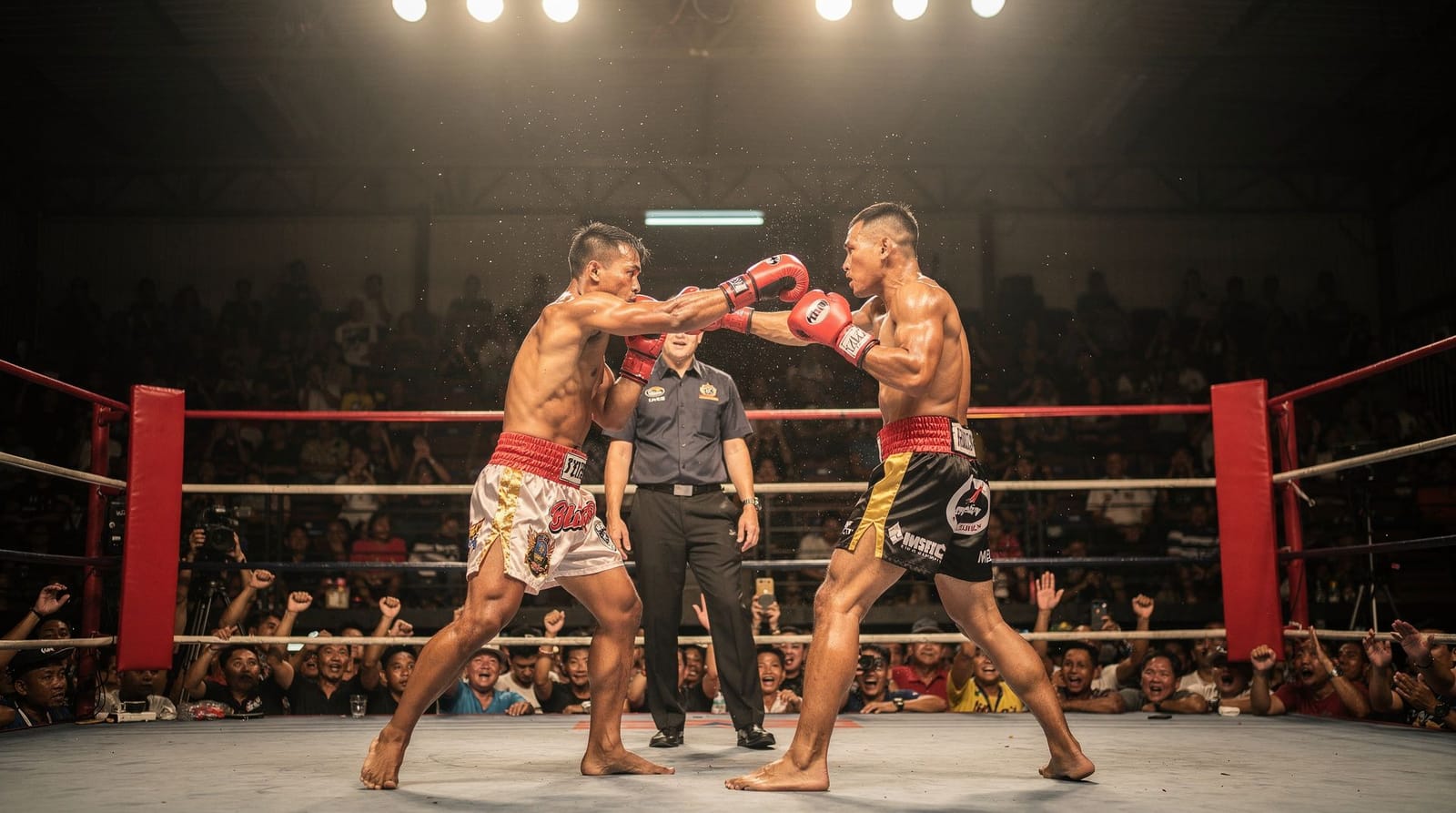
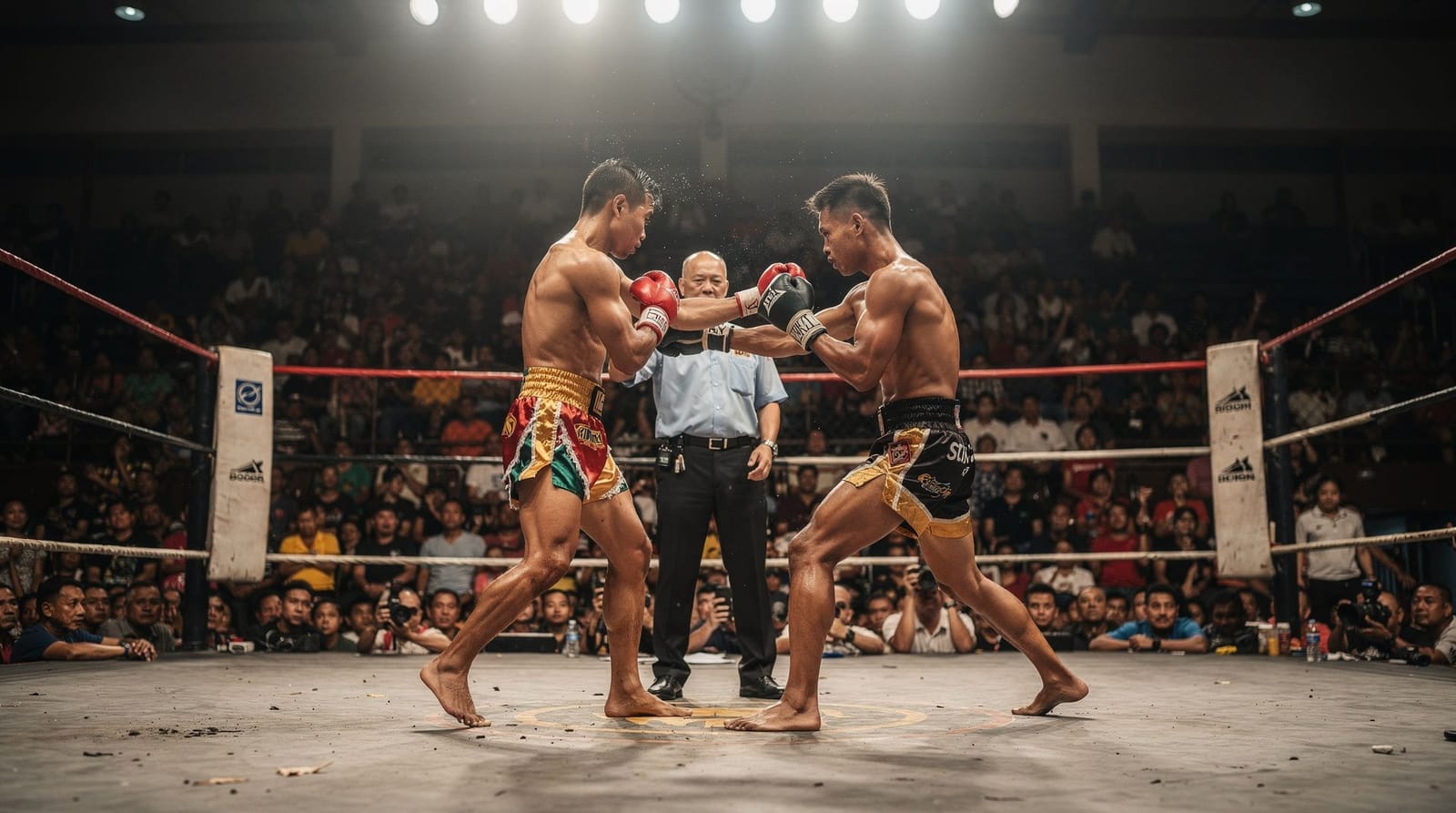
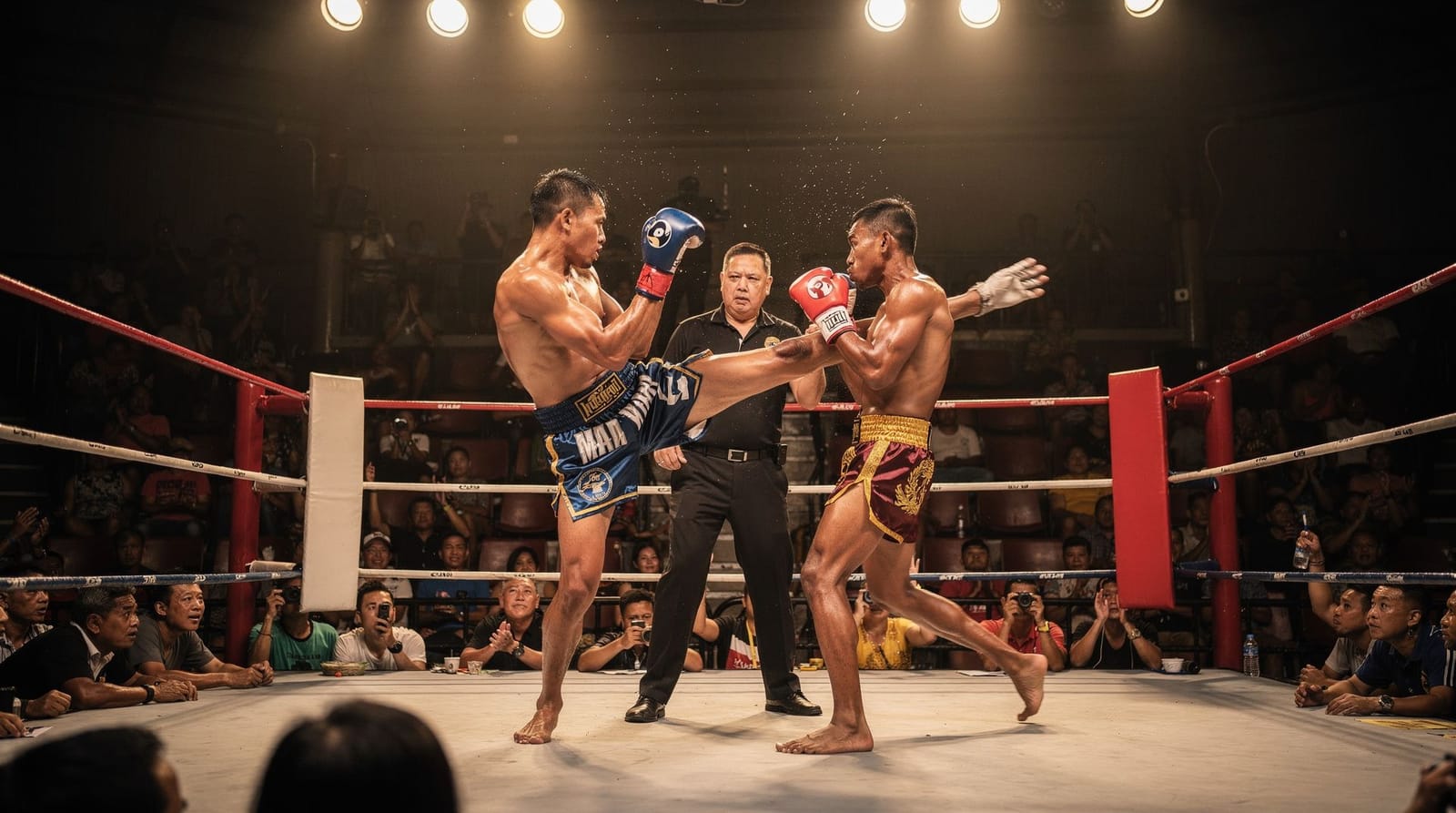
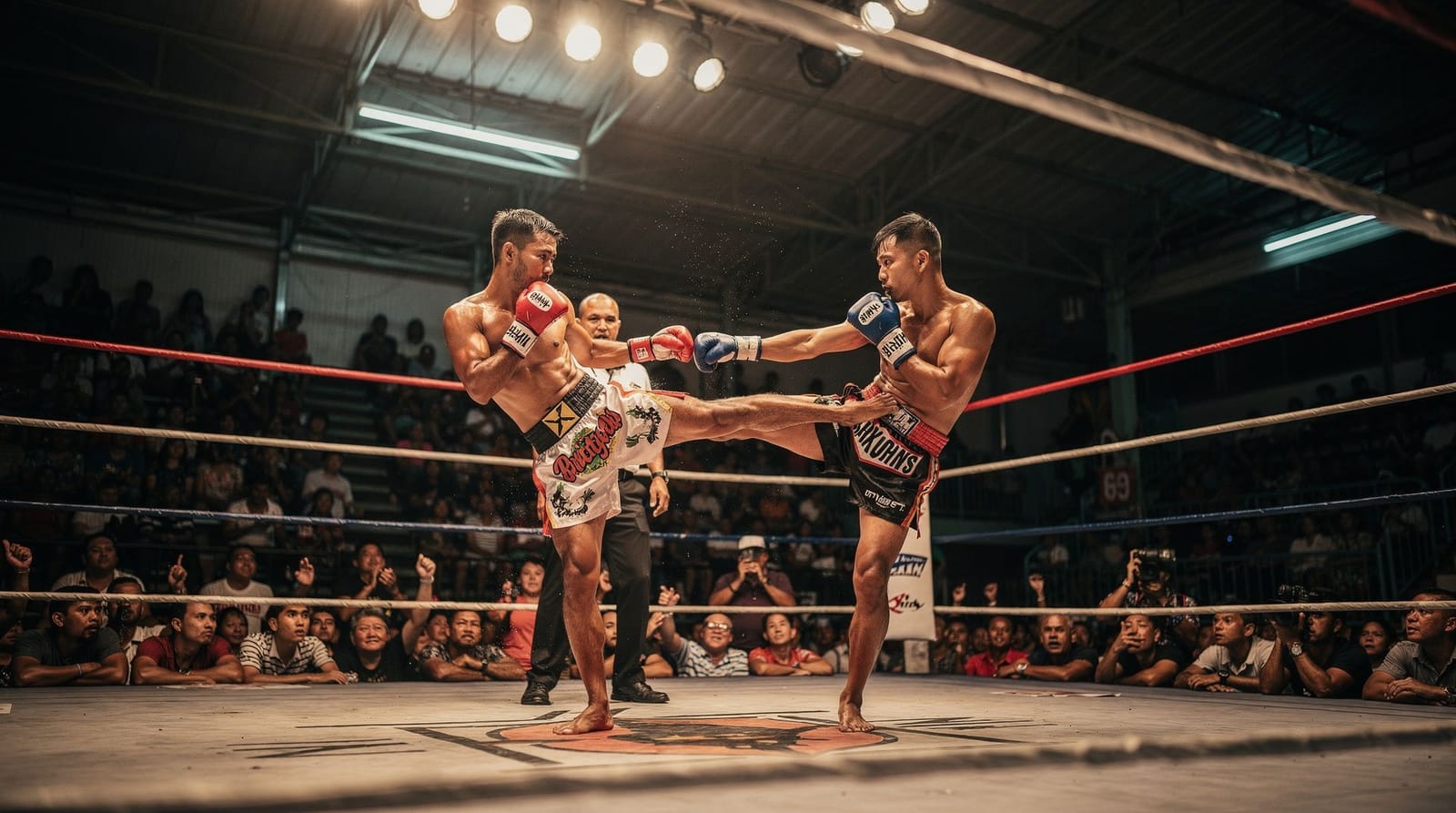
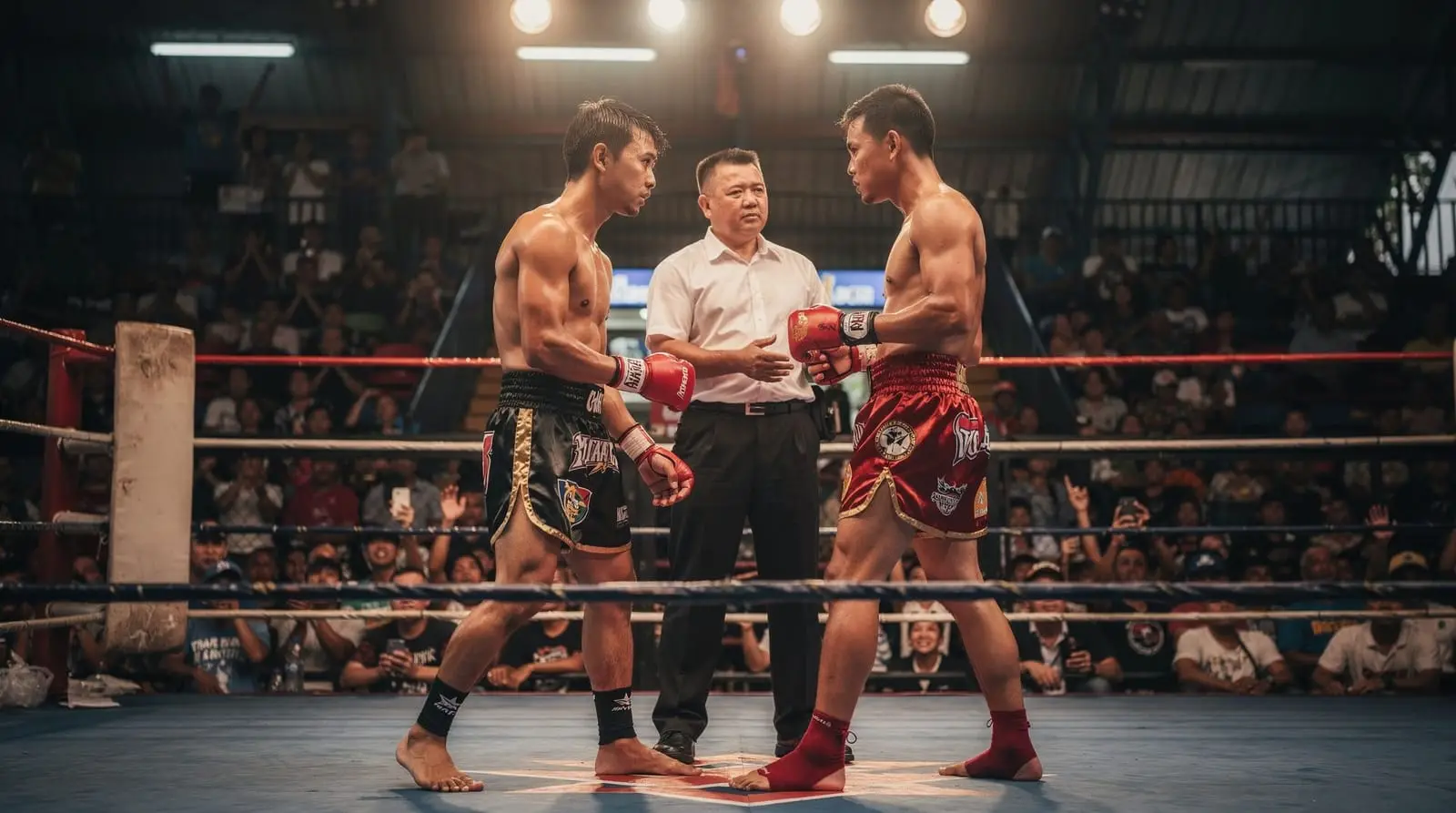
Here is the texture of the evening, so you know what to expect. Each bout opens with the wai khru ram muay, a slow, ritual dance the fighter performs to honour his teacher and his camp; it is graceful and meditative, the calm before the violence. Then the live sarama band, a four-piece of Java pipe, drums and cymbals, strikes up, and its tempo tracks the rounds, quickening as the fighters open up. By the headline bouts, the band, the crowd and the betting section in the cheap seats are all roaring together.
The fights themselves are full-contact and rule-bound: up to five three-minute rounds, scored on clean strikes with fists, elbows, knees and shins. The standing third-class section runs a frantic hand-signal betting market that surges with every exchange, a spectacle in its own right. Watch it; do not join it. It is run by and for locals and is easy to misread.
The whole thing is deeply Thai and, by Western standards, cheap for the spectacle delivered. It pairs well with the rest of a Bangkok at night itinerary, especially from a central base near the Old City.
Avoiding tourist shows and touts
Two pitfalls separate a great Muay Thai night from a disappointing one. The first is the tourist “show”: exhibition-grade bouts staged at malls, on Khao San Road, and at some riverside dinner venues, marketed hard to foreigners and missing the live band, the ranked fighters and the real crowd. They are not the sport. Skip them as your main event.
The second is the touts outside the stadium gates. They inflate prices, push you toward overpriced tiers, claim cheaper tiers are “sold out,” and occasionally sell fake “ringside” tickets that turn out to be second class. This is the same playbook as the wider common Bangkok scams and tuk-tuk scams, concentrated at the gate. The defence is simple: buy in advance, know your tier, and walk past anyone selling tickets on the street. More on the gate-side tactics is in the Bangkok tourist traps guide.
Getting there and combining your evening
Neither stadium is on a rail line, so use Grab or a metered taxi, see the Grab, taxi and tuk-tuk guide and the getting around Bangkok overview. From a central base, Rajadamnern is a short, cheap ride and folds neatly into an Old City day: temples and the Grand Palace by afternoon, dinner near Khao San Road, then the fight. Lumpinee, far north, is better as a standalone evening; eat near your hotel first and Grab out to Ram Inthra rather than chaining it onto a city-centre day.
A fight night anchors an evening well and slots into most 3-day Bangkok itineraries or a first-timer’s plan.
Want to understand the sport first
Watching hits differently once you have thrown a few kicks yourself. Many gyms run drop-in beginner classes of 60 to 120 minutes, no experience needed, covering stance, the basic strikes and pad work, with gear lent or rented for a small fee. A beginner Muay Thai class for roughly 500 to 1,500 THB is a fun, hard introduction that transforms how you read the fights. The full rundown is in the Muay Thai class for beginners guide.
Do it right, book ahead, pick a sensible seat, skip the shows and the touts, and a Muay Thai night becomes one of the most memorable evenings of your Bangkok trip.
Frequently asked questions about How to watch Muay Thai in Bangkok: nights, seats, what to expect
What time do Muay Thai fights start in Bangkok?
How many fights are on a Muay Thai card?
Which seats should I choose at a Muay Thai stadium?
Is it safe to watch Muay Thai in Bangkok?
Can I take photos at a Muay Thai fight?
Are Muay Thai fights suitable for children?
Should I book Muay Thai tickets in advance or at the door?
What is the live band playing during Muay Thai?
Top experiences
Bookable activities with verified prices and instant confirmation on GetYourGuide.