Thai cooking class in Bangkok: is it worth it? 2026 review
Bangkok: Hands-on Thai Cooking Class and Market Tour
Worth it? The honest verdict upfront
Yes — a Thai cooking class is one of the most consistently rewarding experiences in Bangkok, and one of the few that you take home with you. In a single half-day you learn to cook three to five classic Thai dishes from scratch, pound your own curry paste in a stone mortar, take the recipes away, and — crucially — eat everything you make. It is hands-on, social, fun, and genuinely useful: the skills outlast the holiday in a way a temple visit does not.
The honest caveat is time. A good class with a market tour eats half a day, so it competes with sightseeing. But because you cook and consume a full meal, it doubles as lunch or dinner, which makes the cost easier to justify. And the market tour at the start — learning to recognise galangal, lemongrass and kaffir lime — adds real depth to how you understand the food you have been eating all trip.
For a hands-on class that includes the all-important market visit, the hands-on Thai cooking class with market tour is the core experience. If you would rather a half-day session in a particular setting, the Silom cooking class with garden and market is a relaxed, well-rated option.
What’s included
A typical cooking class includes:
- A local fresh-market tour to learn and buy Thai ingredients (on most classes)
- All ingredients and equipment, plus an apron
- Hands-on instruction in English for 3–5 dishes, including making curry paste from scratch
- The meal you cook — you eat each dish as you finish it
- A recipe booklet to take home
Not included on many classes: hotel transfer (most start at a central school or meeting point, though tuk-tuk versions include pickup), alcoholic drinks, and tips. Confirm whether the market tour is included or an add-on.
What to expect
The market tour. Many classes begin at a local fresh market, where the chef walks you through the Thai pantry — galangal, lemongrass, kaffir lime leaves, Thai basil, palm sugar, fish sauce, shrimp paste — explaining what each does. It is genuinely educational and makes the cooking that follows click into place. See best food markets for the wider market scene.
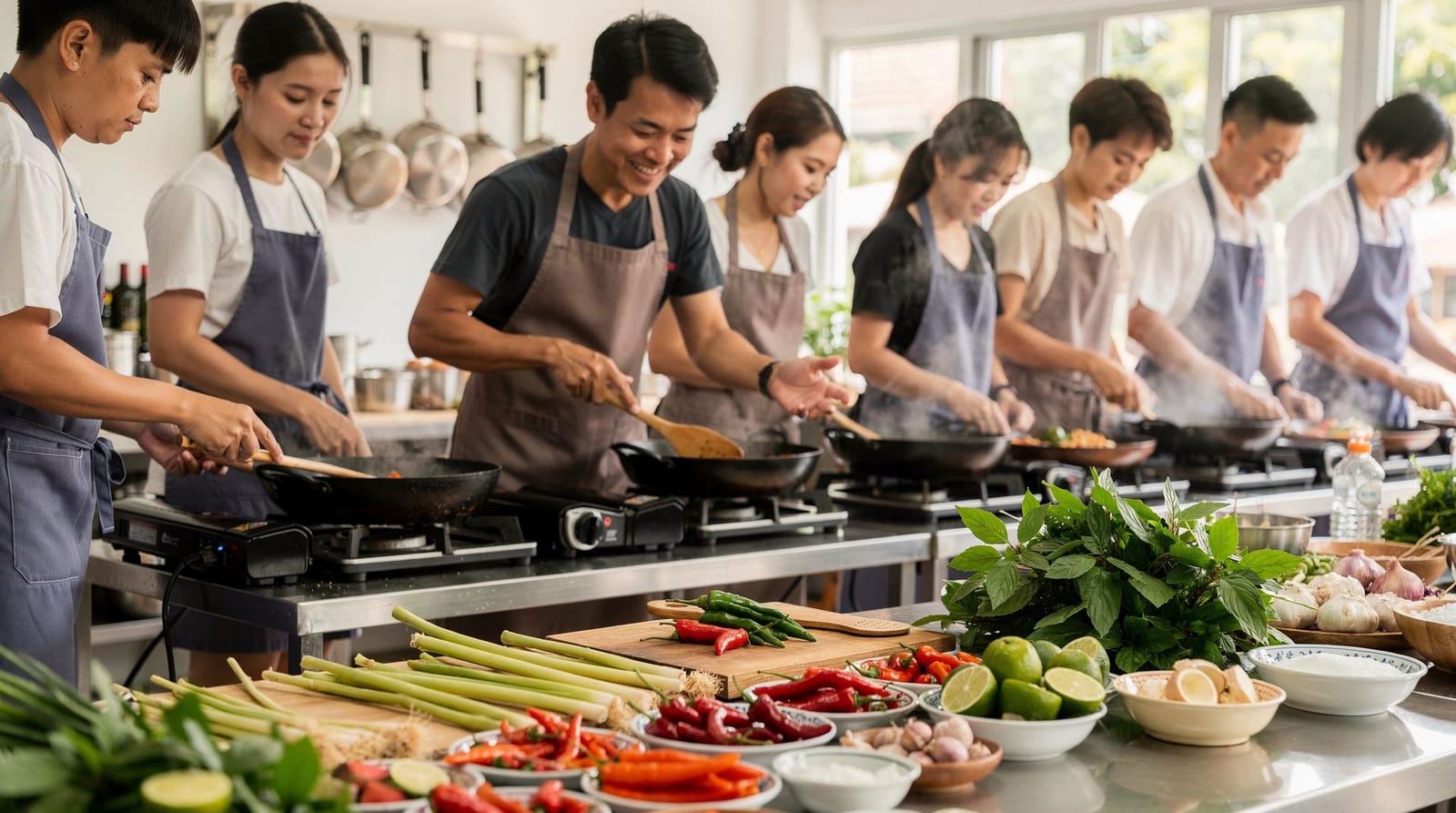
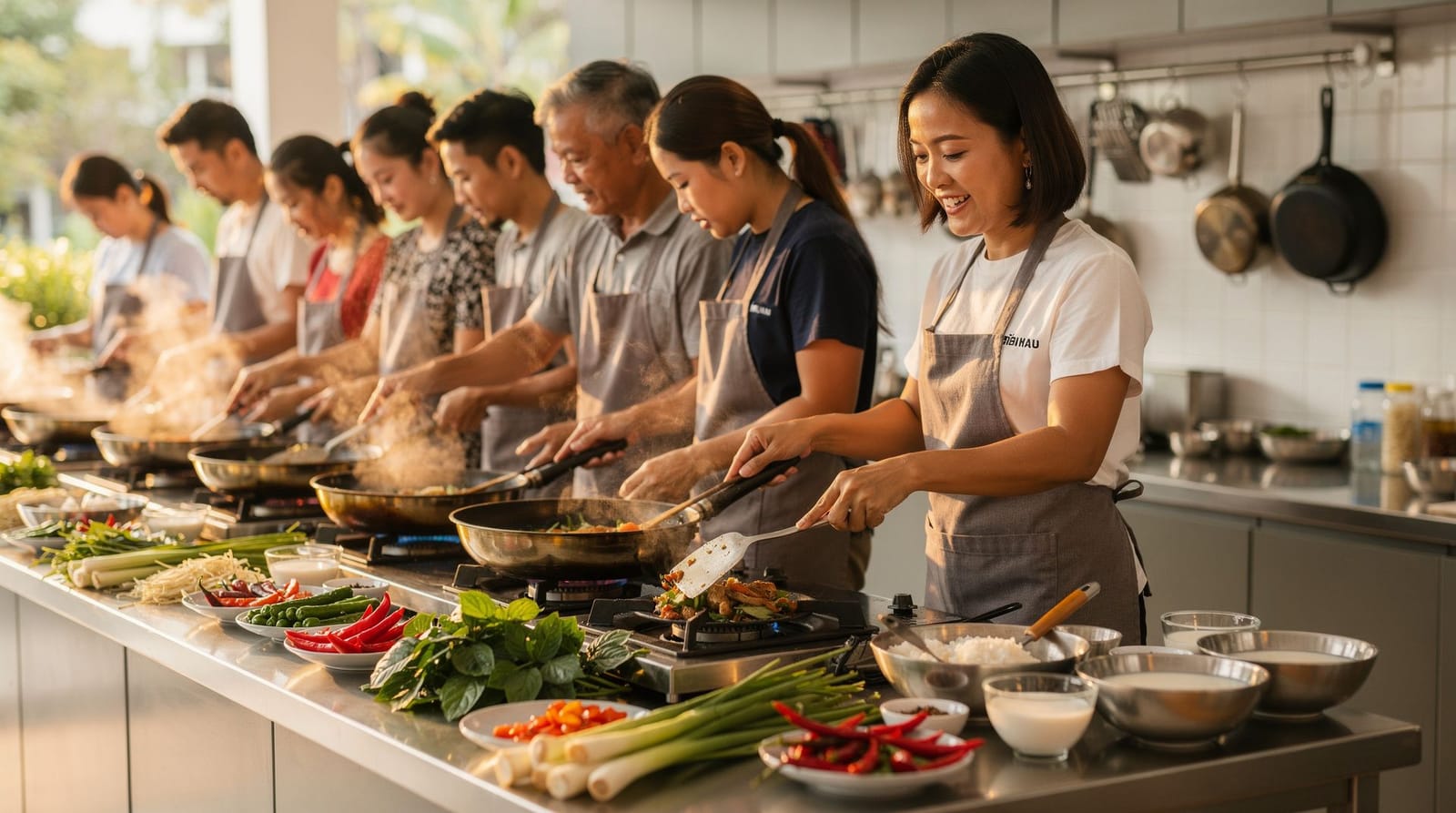
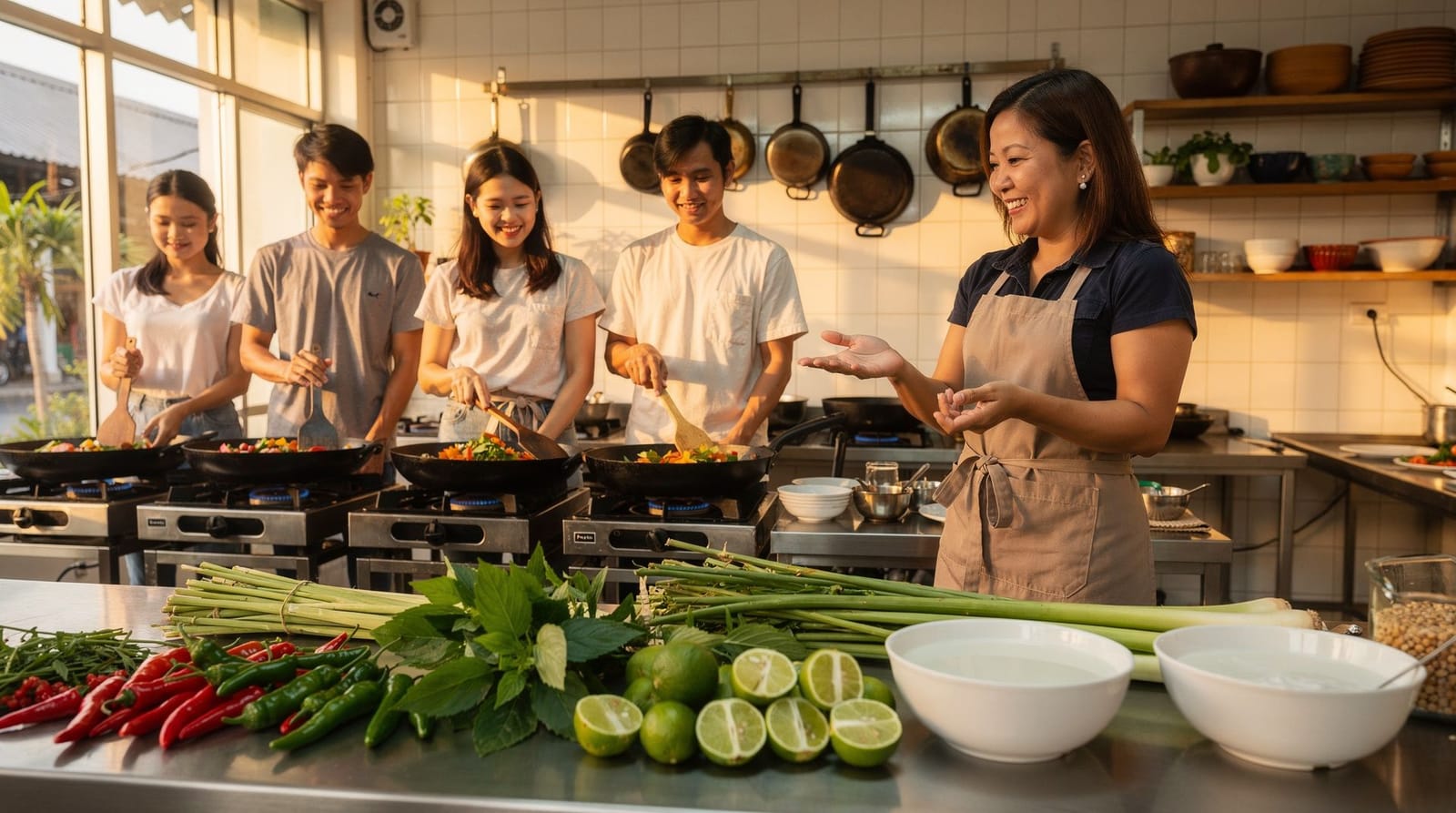
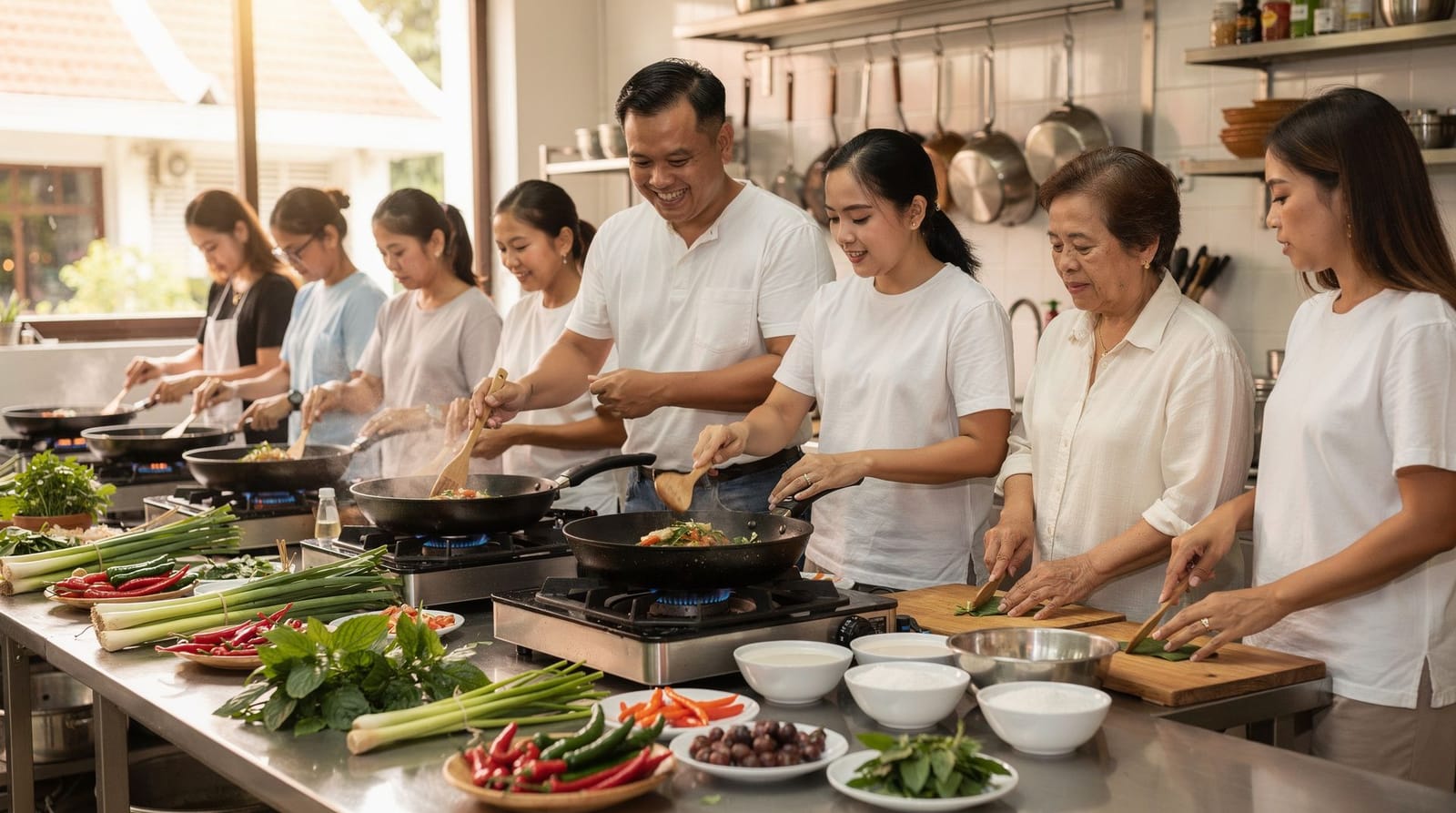
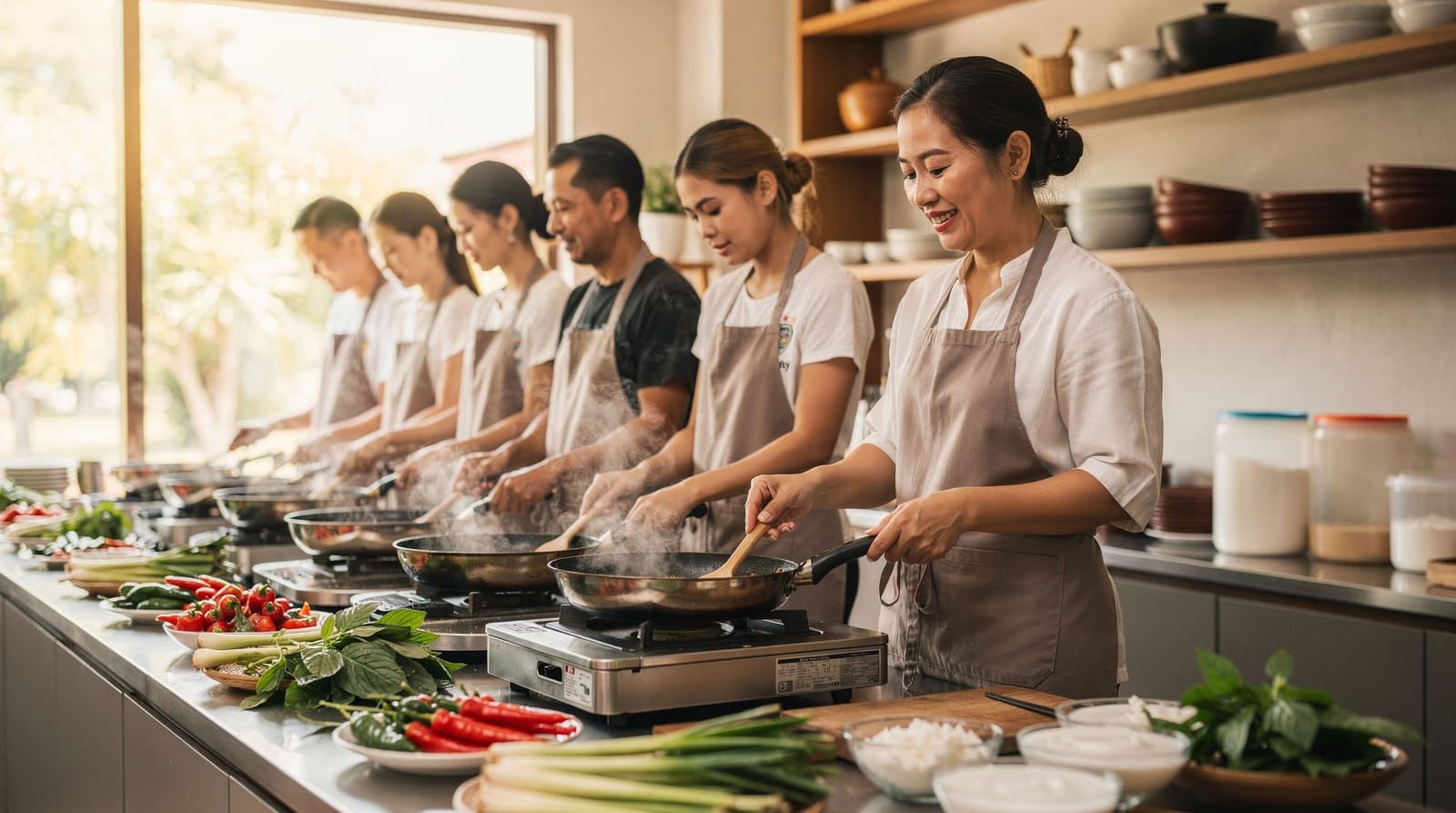
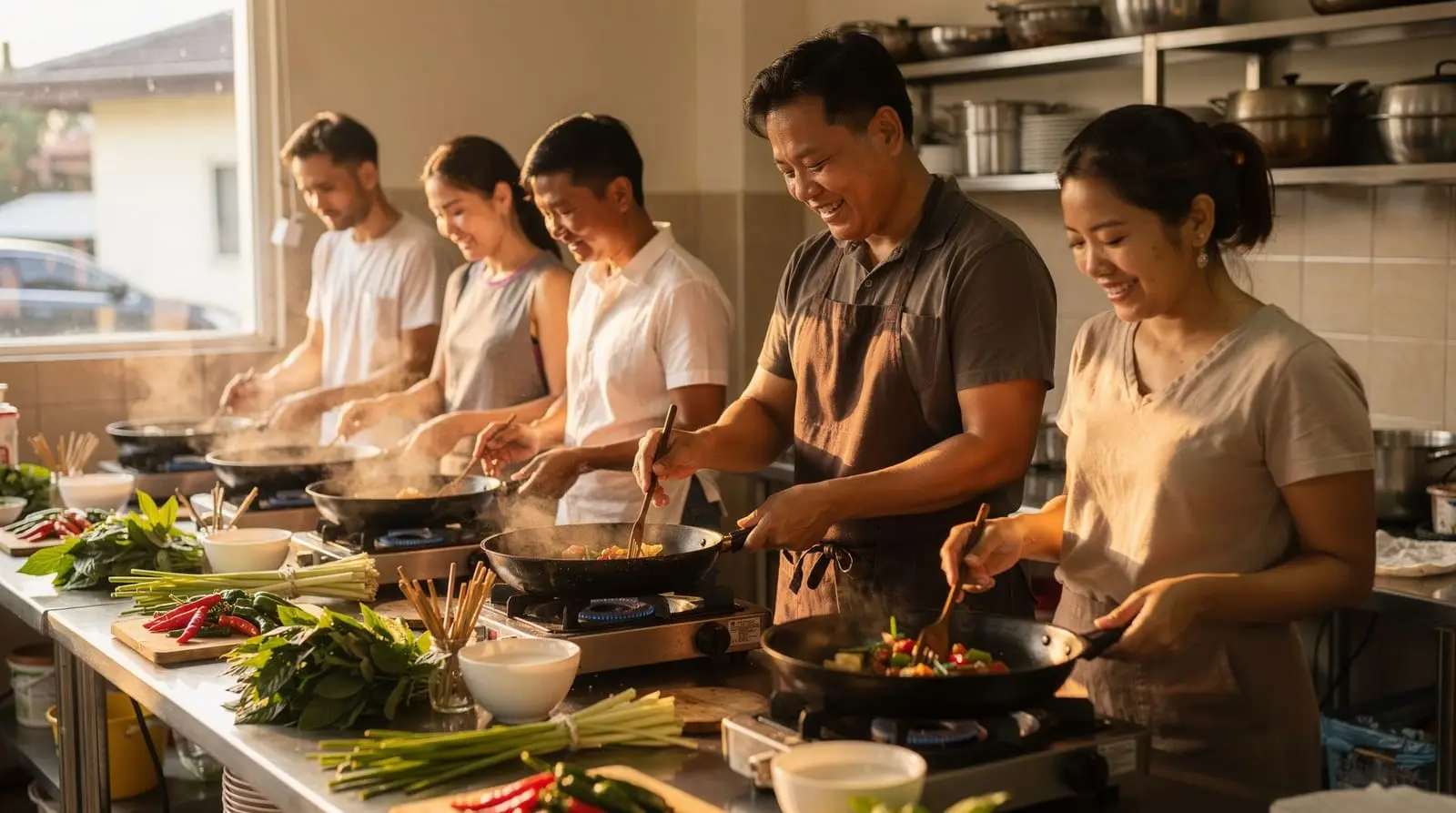
The kitchen. Back at the school, you cook at your own station, guided dish by dish. Expect to make a soup (tom yum or tom kha), a stir-fry (pad thai is popular), a curry — usually pounding the paste yourself in a stone mortar, the highlight for many — and a dessert like mango sticky rice. The instruction is forgiving and beginner-friendly.
Eating your work. You eat each dish as you finish it, so the class builds into a satisfying multi-course meal. Come hungry; portions add up.
The atmosphere. Classes are sociable and hands-on, a good way to meet other travellers, and they suit families with older children. See bangkok unique experiences for more in this vein.
Real prices and what they buy you
- Half-day group class with market tour: about 1,000–2,000 THB (USD 28–56).
- Premium schools (e.g. Blue Elephant): about 2,800–3,500 THB.
- Private class: higher, with personalised attention and menu.
- Shorter two-hour class: lower, usually without the market tour.
Because you eat a full meal you have cooked, the class effectively bundles a dining experience into the price.
Who it’s for
Food lovers: the standout takeaway experience — skills and recipes that last.
Couples and groups: a fun, social half-day — see bangkok for couples.
Families with older children: hands-on and engaging for teens.
Curious eaters who want context: the market tour decodes the cuisine you have been enjoying — see what to eat in Bangkok.
Scam and overpricing warnings
Cooking classes are low-risk, but a few sensible checks:
- Confirm what is included: market tour, ingredients, recipe booklet and the meal should be covered; read the inclusions so there are no surprise add-ons.
- Book a reputable school in advance: avoid following street touts; book online with an established operator.
- Transfer clarity: most classes meet at the school. If a tuk-tuk pickup is promised, confirm the area covered — see grab, taxi and tuk-tuk.
- Dietary needs: flag vegetarian, vegan or allergy requirements when booking; reputable schools accommodate them easily.
Alternatives and how it compares
If you want a different hands-on Thai skill, a fruit carving class teaches the decorative art of Thai fruit and vegetable carving. For broader food experiences, a Bangkok street food tour lets you eat your way through Chinatown rather than cook. Among cooking classes, the cooking class with tuk-tuk market run adds transport flavour, and the half-day cooking class with market tour is a straightforward, well-priced option. Compare schools in best cooking classes and read cooking class experience for a first-person account.
How to book and get there
Getting there: schools cluster in Silom and Sathorn, Sukhumvit and the old town. Most are reachable by BTS or MRT — see getting around Bangkok — or by Grab. Tuk-tuk-inclusive classes pick you up.
Booking: reserve online in advance, especially for popular schools and small classes, which fill quickly. Choose morning (with the freshest market) or afternoon, and note dietary needs and spice preferences. Come hungry. For planning, see the bangkok foodie itinerary and bangkok unique experiences.
Practical tips for a better class
A cooking class is hard to get wrong, but these details improve it:
- Choose a class with the market tour. Learning to identify galangal, lemongrass, kaffir lime, palm sugar and the rest makes the cooking click into place and helps you shop for ingredients back home — the market visit is where much of the lasting value lies.
- Pick the morning session if you can. Morning classes usually catch the market at its freshest and finish in time to leave your afternoon free for sightseeing.
- Come hungry. You eat every dish you cook, so the class doubles as a generous multi-course meal — plan it as your lunch or dinner.
- Flag dietary needs when booking. Vegetarian, vegan and allergy requirements are easily accommodated by reputable schools with advance notice; be specific given the wide use of fish sauce and shrimp paste.
- Embrace the curry paste. Pounding your own paste in a stone mortar is the highlight for most people and the skill that most impresses back home — don’t rush it.
- Keep the recipe booklet. It’s what lets you recreate the dishes later, the part of the experience that genuinely follows you home.
Choose a school by location and setting — Silom and Sathorn and Sukhumvit both have well-rated options, from garden kitchens to heritage buildings. Our best cooking classes guide compares them, and the bangkok foodie itinerary shows how a class fits alongside a street food tour and market visits for a food-focused few days in the city.