Lopburi
Lopburi is Thailand's monkey city: hundreds of macaques roaming Khmer ruins north of Bangkok. How to visit, the temples to see, and how to handle the monkeys.
Bangkok: Ayutthaya & Lopburi Monkey Temple Private Day Trip
Quick facts
- Distance from Bangkok
- ~150 km north (2–3 hr by train; often paired with Ayutthaya)
- Getting there
- SRT train (direct, easy), private car, or tour combined with Ayutthaya
- Key sight
- Phra Prang Sam Yot (monkey temple), Phra Kan Shrine, San Phra Kan macaques
- Time needed
- A few hours; a half-day, or a full day paired with Ayutthaya
- Best time
- Nov–Feb (cooler); the Monkey Buffet Festival is late November
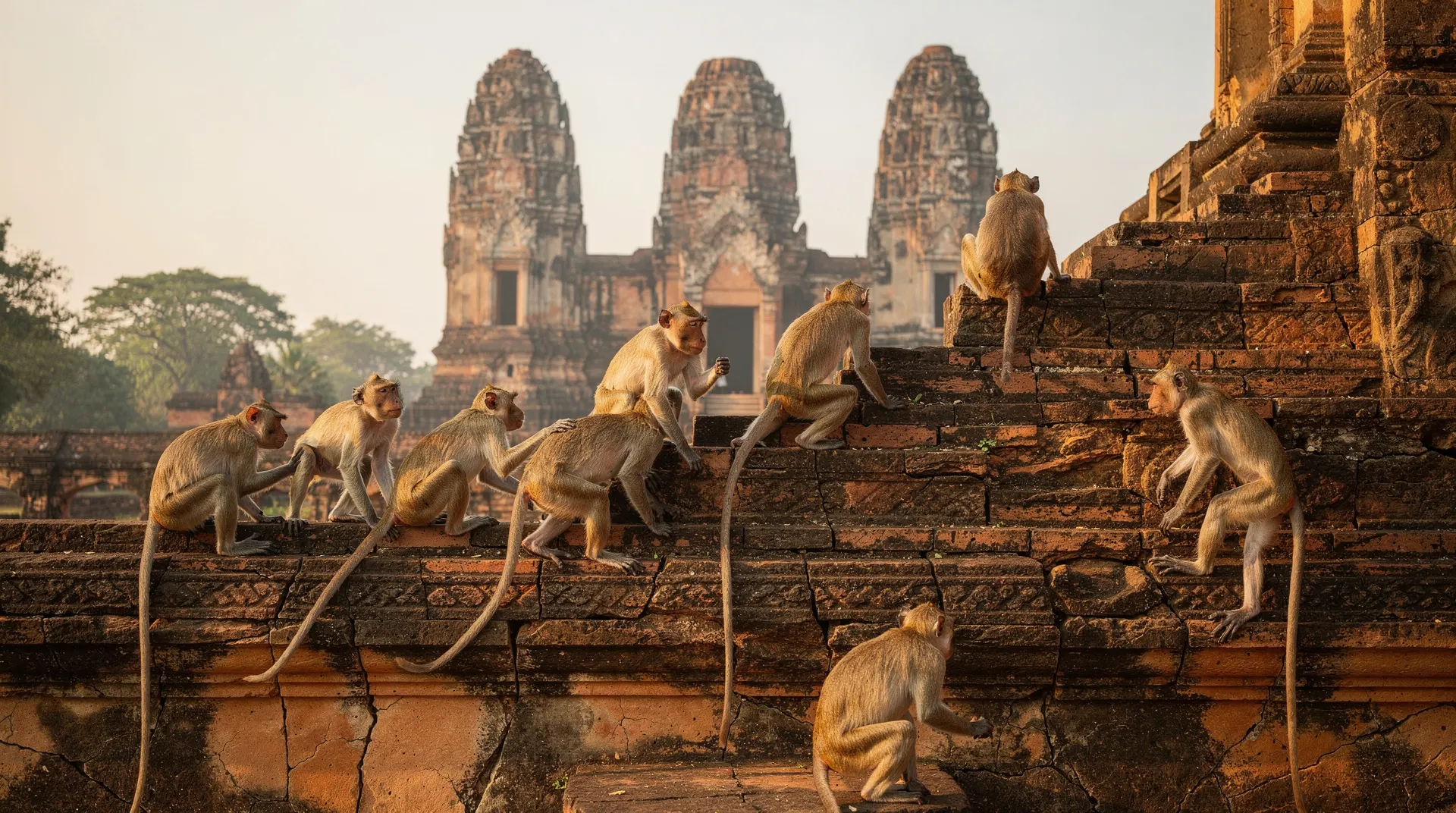
Lopburi is the day trip people remember for one reason: the monkeys. In this ancient town about 150 km north of Bangkok, hundreds of crab-eating macaques have colonised the old quarter, swarming over Khmer-era ruins, lounging on power lines, raiding shops, and posing — with absolute confidence — for photographs at the foot of a thousand-year-old temple. Lopburi is one of Thailand’s oldest cities, with layers of Dvaravati, Khmer, and Ayutthaya-era history, but it is the macaques that have made it famous, even hosting an annual “Monkey Buffet Festival” in their honour.
Is it worth the trip? For a quirky, offbeat half-day — and especially if you pair it with Ayutthaya on the same northern line — yes. Lopburi is genuinely fun and far less touristed than the headline day trips, and the train ride up is easy. But go in with a clear sense of how to behave around the monkeys (they are bold, occasionally aggressive thieves) and a realistic expectation that the “sights” are modest ruins enlivened by wildlife rather than grand monuments. This page covers what to see and how to handle the macaques.
The monkey temples
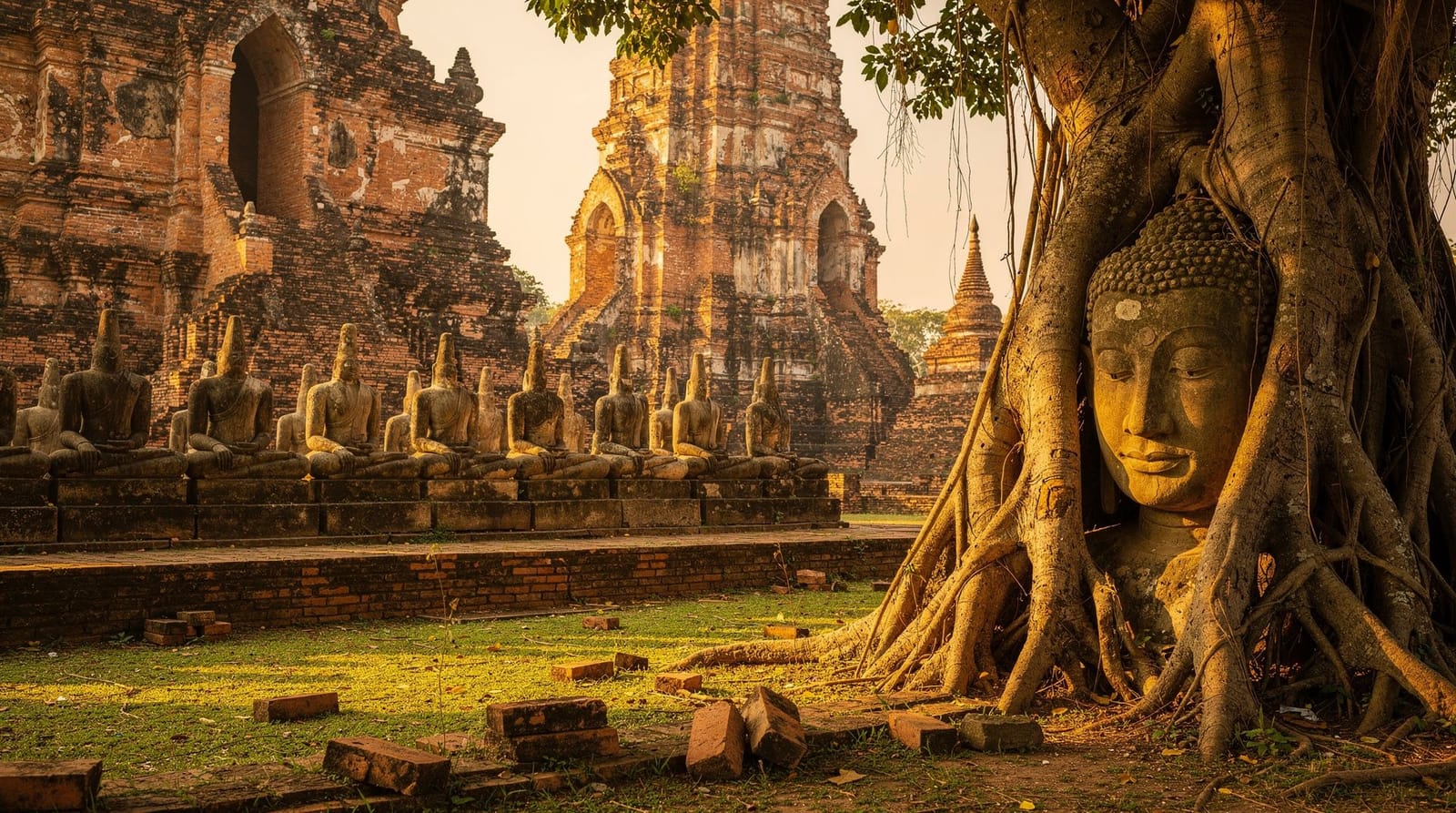
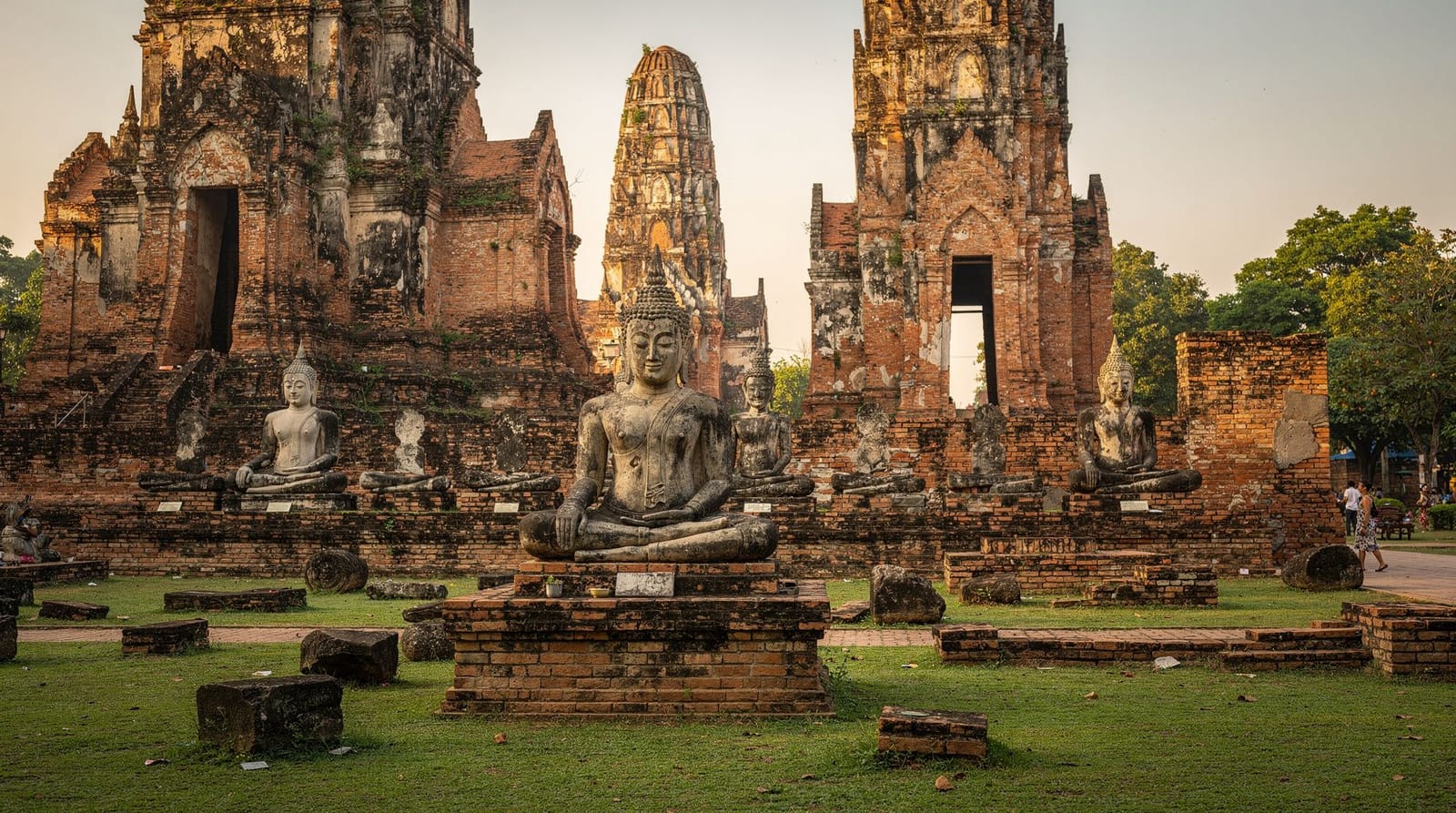
The epicentre of monkey life is Phra Prang Sam Yot, a 13th-century Khmer temple of three laterite towers in the heart of the old town. Built when Lopburi was an outpost of the Khmer empire, it is a handsome ruin in its own right — but you will spend most of your time watching the troupe of macaques that treats it as home, scaling the towers and chasing one another across the courtyards. Across the railway tracks stands San Phra Kan (Phra Kan Shrine), another monkey stronghold, where the macaques cluster around a Hindu-Buddhist shrine and are fed by visitors and locals.
Beyond the monkeys, Lopburi has real historical depth: the Phra Narai Ratchaniwet palace complex (now the Somdet Phra Narai National Museum), built by King Narai in the 17th century when Lopburi served as a second capital and a hub of Siamese diplomacy with Europe; Wat Phra Si Rattana Mahathat near the station, a large prang-topped temple ruin; and the curious Ban Wichayen, the residence built for the Greek adventurer Constantine Phaulkon, who rose to power at Narai’s court. These quieter sites are largely monkey-free and worth an hour if you have the time. For where Lopburi sits among day trips, see day trips from Bangkok.
How to handle the monkeys
The macaques are wild, habituated, and opportunistic, and a little caution goes a long way. They will snatch anything loose — sunglasses, water bottles, phones, snacks, hats, dangling bag straps — sometimes straight from your hand or head. Practical rules:
- Carry as little as possible and keep bags zipped and held in front of you. Leave shiny dangly items at the hotel.
- Do not carry visible food or plastic bags (they associate bags with food).
- Do not make direct eye contact or bare your teeth — to a macaque, a toothy grin is a threat.
- Do not try to pet, feed by hand, or take selfies pressed up against them; keep a respectful distance.
- If one grabs something, do not chase or fight it; this can provoke a bite. Locals sometimes help retrieve items.
- Bites and scratches carry a rabies risk — seek medical advice promptly if you are bitten or scratched.
Treated with sense, the monkeys are a delight to watch and the visit is great fun. Treated carelessly, they will relieve you of your phone.
The Monkey Buffet Festival
Once a year, usually on the last Sunday of November, Lopburi throws the Monkey Buffet Festival — long tables piled with fruit, vegetables, and sweets laid out for the macaques in front of Phra Prang Sam Yot, accompanied by performances and a carnival atmosphere. It is a genuinely unique spectacle and draws photographers from around the world, but it is also extremely crowded and chaotic (with thousands of monkeys at peak excitement). If you go, go early and guard your belongings even more carefully than usual. Check timing against the Bangkok festivals calendar.
Getting there from Bangkok
Train: the easiest and most pleasant way, and a natural extension of an Ayutthaya trip. Northern-line trains from Bangkok’s Krung Thep Aphiwat terminal run directly to Lopburi in roughly 2 to 3 hours; the station sits right in the old town, a short walk from the monkey temples. Cheap, frequent enough, and simple. The same line serves Ayutthaya, so you can do both. See Ayutthaya by train (DIY) for how the northern line works.
Private car / tour: the convenient way to combine Lopburi with Ayutthaya in one day without timing trains. The Ayutthaya and Lopburi monkey temple private day trip pairs the ancient capital’s ruins with the monkey city in a single guided day — a satisfying combination of serious history and pure novelty. For Lopburi alone with a driver, the private car hire to Lopburi, the monkey city gives you door-to-door flexibility. See Bangkok to day trips transport.
A sensible plan
If going independently by train, aim to arrive late morning, walk to Phra Prang Sam Yot and San Phra Kan for the monkeys, see Wat Phra Si Rattana Mahathat by the station, and add the Narai palace museum if the heat and your stamina allow. A few hours covers Lopburi comfortably. To make a full day, combine it with Ayutthaya — many travellers do Ayutthaya in the morning and Lopburi in the early afternoon, or vice versa, using the shared train line or a private car. For the wider plan, see the best Bangkok tours.
Practical information
Belongings: secure everything; the macaques are expert thieves. Leave sunglasses and loose items behind.
Bites: any monkey bite or scratch carries rabies risk — clean it and seek medical advice promptly.
Ruins: modest entry fees apply at some sites (Phra Prang Sam Yot, the Narai palace museum); most monkey areas are free.
Heat: the ruins are open-air; go earlier in the day, especially March–May.
Train: the station is central; check return times so you are not stranded in the late afternoon.
A combined day with Ayutthaya
| Time | Stop |
|---|---|
| Morning | Ayutthaya’s temple ruins — Wat Mahathat, Wat Chaiwatthanaram |
| Midday | Lunch in Ayutthaya, or on the road north |
| Early afternoon | Lopburi — Phra Prang Sam Yot and San Phra Kan for the monkeys |
| Late afternoon | Wat Phra Si Rattana Mahathat near the station, then the train or car back |
This order works better than the reverse, since Ayutthaya’s ruins are more pleasant to see before the day heats up, and the monkeys are just as active in the afternoon regardless of when you arrive.
Life in a monkey-run old quarter
Beyond the temples, ordinary Lopburi life carries on around the macaques with a kind of resigned good humour. Shopkeepers near the ruins have monkey-proofed their storefronts with wire mesh and netting; some businesses have simply given up and moved elsewhere in town, ceding the busiest corners to the troops entirely. It gives the old quarter an odd, almost surreal texture — a working Thai town where ancient Khmer prangs, old shophouses and troops of wild primates share the same block. It’s this collision, more than any single sight, that makes Lopburi memorable. Even a short walk between the two main monkey sites turns up small, unplanned moments — a macaque family grooming on a shopfront awning, a vendor good-naturedly shooing one off a fruit cart — that no single photograph of the temple ruins quite captures.
Frequently asked questions about Lopburi
Why is Lopburi famous for monkeys?
Over decades, a large population of crab-eating macaques has settled in Lopburi’s old quarter, particularly around the Khmer-era temple Phra Prang Sam Yot and the Phra Kan Shrine. Fed by locals and visitors and protected by their association with the sites, they now number in the hundreds and dominate the town’s identity — even celebrated with an annual Monkey Buffet Festival.
Is Lopburi worth a day trip from Bangkok?
For a quirky, offbeat outing — yes, especially paired with Ayutthaya on the same northern train line. It is far less touristed than the headline day trips and genuinely fun. Set expectations correctly: the appeal is wild monkeys clambering over modest ancient ruins, not grand monuments, so a few hours (or a full day combined with Ayutthaya) is the right scale.
How do I get to Lopburi from Bangkok?
The easiest way is the direct northern-line train from Krung Thep Aphiwat terminal (~2–3 hours), which arrives in the old town near the monkey temples. Alternatively, a private car or organised tour is convenient — particularly to combine Lopburi with Ayutthaya in one day without juggling train schedules.
Are the monkeys in Lopburi dangerous?
They are wild and bold rather than dangerous if you behave sensibly. They will snatch loose items — phones, sunglasses, food, bags — and a careless toothy grin or direct stare can be read as a threat. Keep belongings secured, avoid carrying visible food, don’t try to pet or feed them by hand, and don’t chase one that grabs something. Any bite or scratch carries rabies risk and warrants prompt medical attention.
Can I combine Lopburi with Ayutthaya?
Yes, and it is the most popular way to do it. Both sit on the same northern railway line, and many private tours pair the ancient capital’s ruins with Lopburi’s monkey temples in a single day. It is an appealing mix of serious UNESCO history and pure novelty. See our Ayutthaya page for that side of the trip.
When is the Monkey Buffet Festival?
It is typically held on the last Sunday of November, when long tables of fruit and sweets are laid out for the macaques in front of Phra Prang Sam Yot, with performances and a festival atmosphere. It is a remarkable spectacle but extremely crowded — go early and guard your belongings carefully. Confirm the date each year against the Bangkok festivals calendar.
Top experiences
Bookable activities with verified prices and instant confirmation on GetYourGuide.