Ayutthaya by train, DIY: the slow, cheap, lovely way
There is a particular kind of romance in deciding, at 7am, to take a third-class Thai train to a 600-year-old ruined capital for the price of a coffee. I had been weighing a guided tour against doing Ayutthaya myself, and in the end the train won purely because it cost 15 baht and felt like an adventure. It was the right call, mostly, and here is exactly how it went — fan-cooled carriages, rented bicycle, sweat, and all.
| Where | Ayutthaya, about 80km north of Bangkok |
| Cost | Around 500 baht all-in (train, ferry, bike, entries, food) |
| Time needed | A full day, roughly 7am departure to 6pm return |
| Getting there | Third-class train from Hua Lamphong or Krung Thep Aphiwat |
| Best time | November–February for cooler cycling; go early any season |
Getting there: the train is the whole point
Ayutthaya sits about 80 kilometres north of Bangkok, and trains leave from the grand old Hua Lamphong station — or, increasingly, the vast new Krung Thep Aphiwat (Bang Sue) terminal, so check which one your service departs from. The cheapest third-class ordinary trains cost as little as 15 to 20 baht for the roughly 90-minute to two-hour journey. There is no air-conditioning; there are ceiling fans, open windows, vendors wandering through selling grilled chicken and sticky rice, and a view of the suburbs giving way to rice paddies. It is slow, it is hot, and it is wonderful.
You can also pay more for a faster, air-conditioned service, and the Bangkok day trips transport guide lays out the full range of train classes and minivan alternatives. I would take the slow train again every time. The Ayutthaya day trip guide covers all the logistics, and the DIY versus tour comparison is honest about the trade-offs — which I will get to.
Crossing the river and renting wheels
Ayutthaya is technically an island, ringed by rivers, and the train station sits on the eastern bank outside the historical park. From the station you walk a couple of minutes to a tiny ferry jetty and cross the river for 5 baht. On the island side, dozens of shops rent bicycles for around 50 baht a day and motorbikes for more. I took a bicycle, which in retrospect was both the best and the most punishing decision of the day.
The ruins are spread across a wide area, far too much to walk comfortably in the heat, and a bicycle gives you exactly the right pace — fast enough to cover ground, slow enough to stop whenever a crumbling chedi catches your eye. Just understand that you will be cycling through midday heat that hovers around 35 degrees, so bring water, sunscreen and a hat, and pace yourself.
The ruins worth your sweat
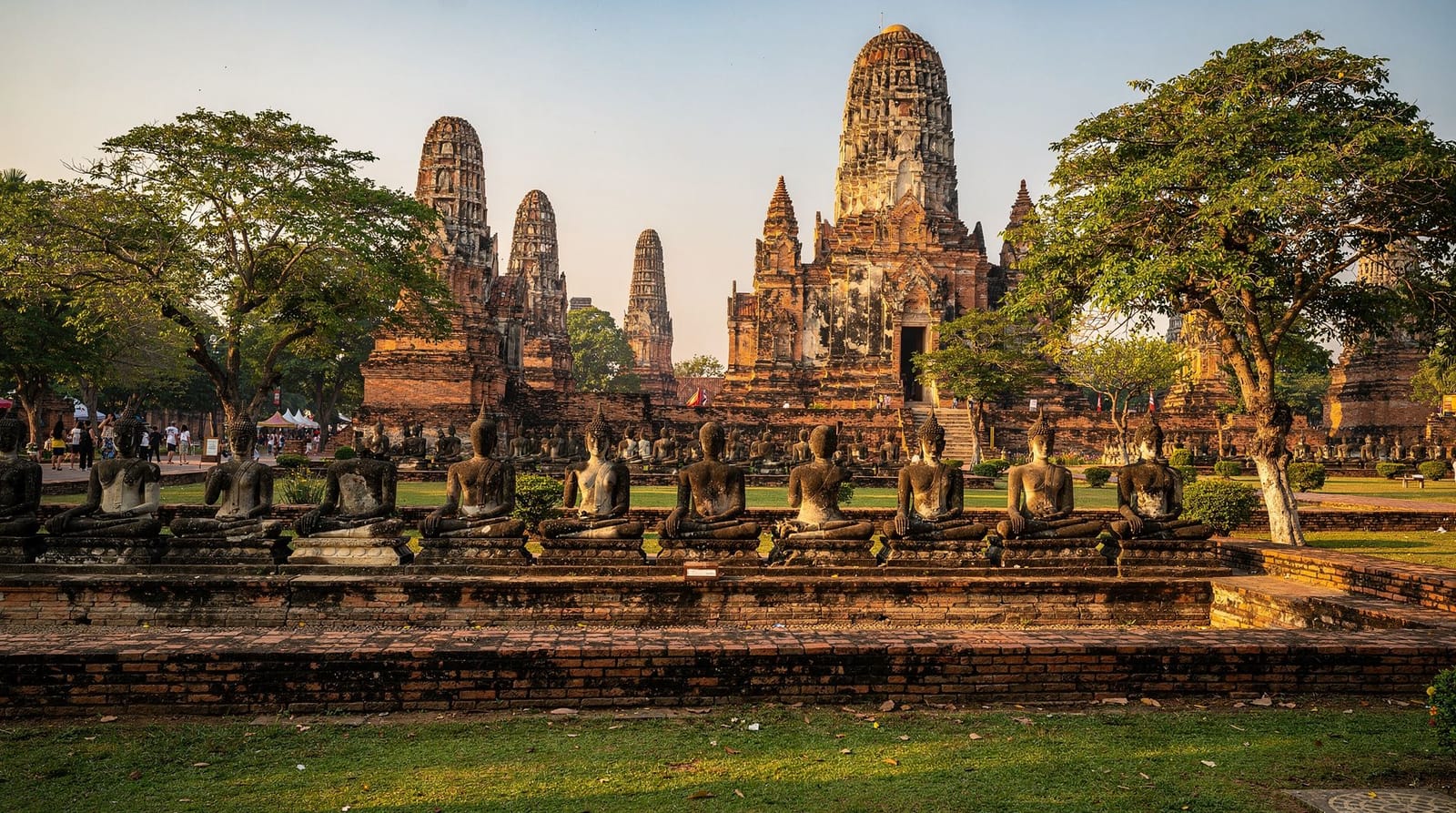
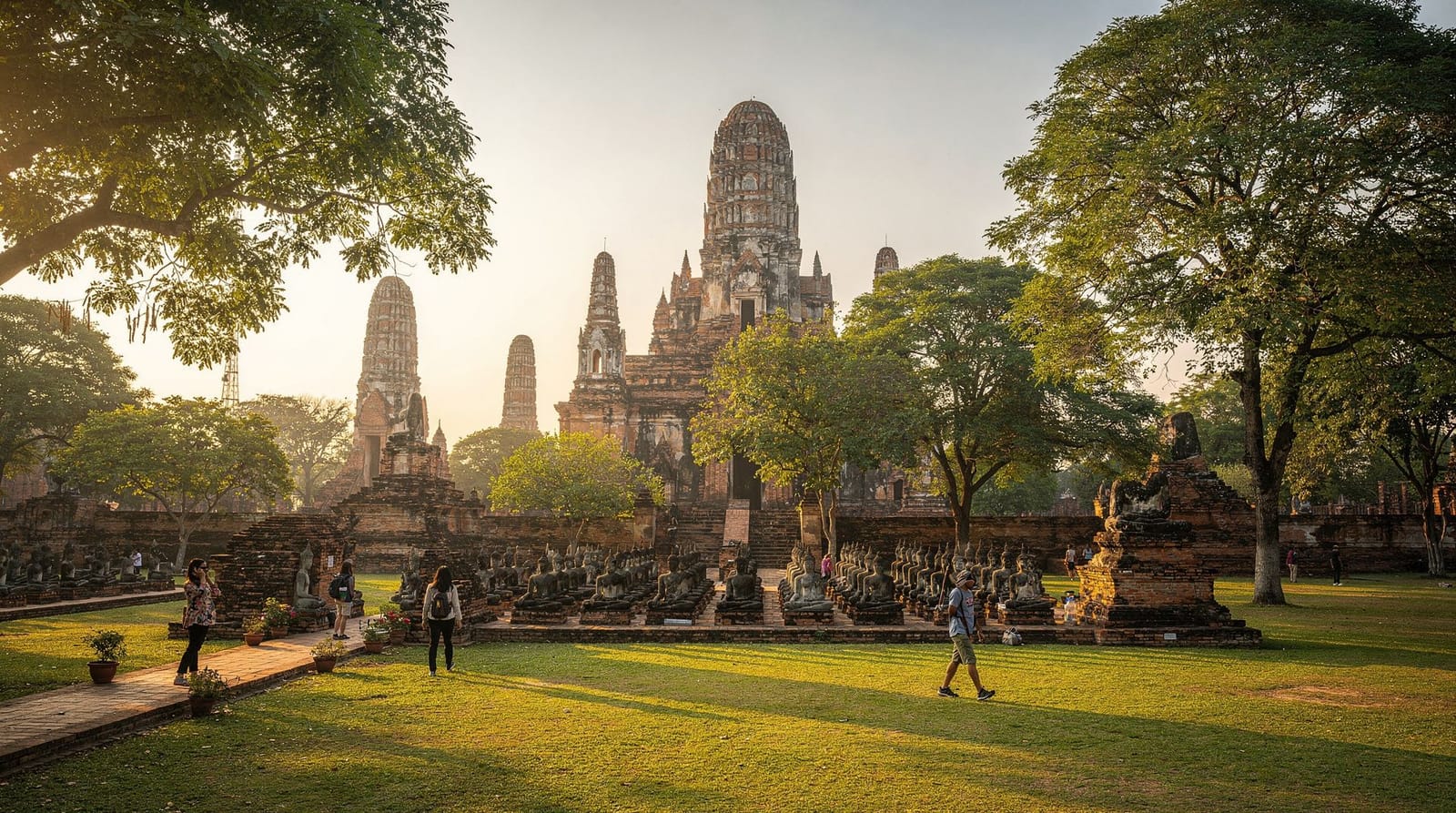
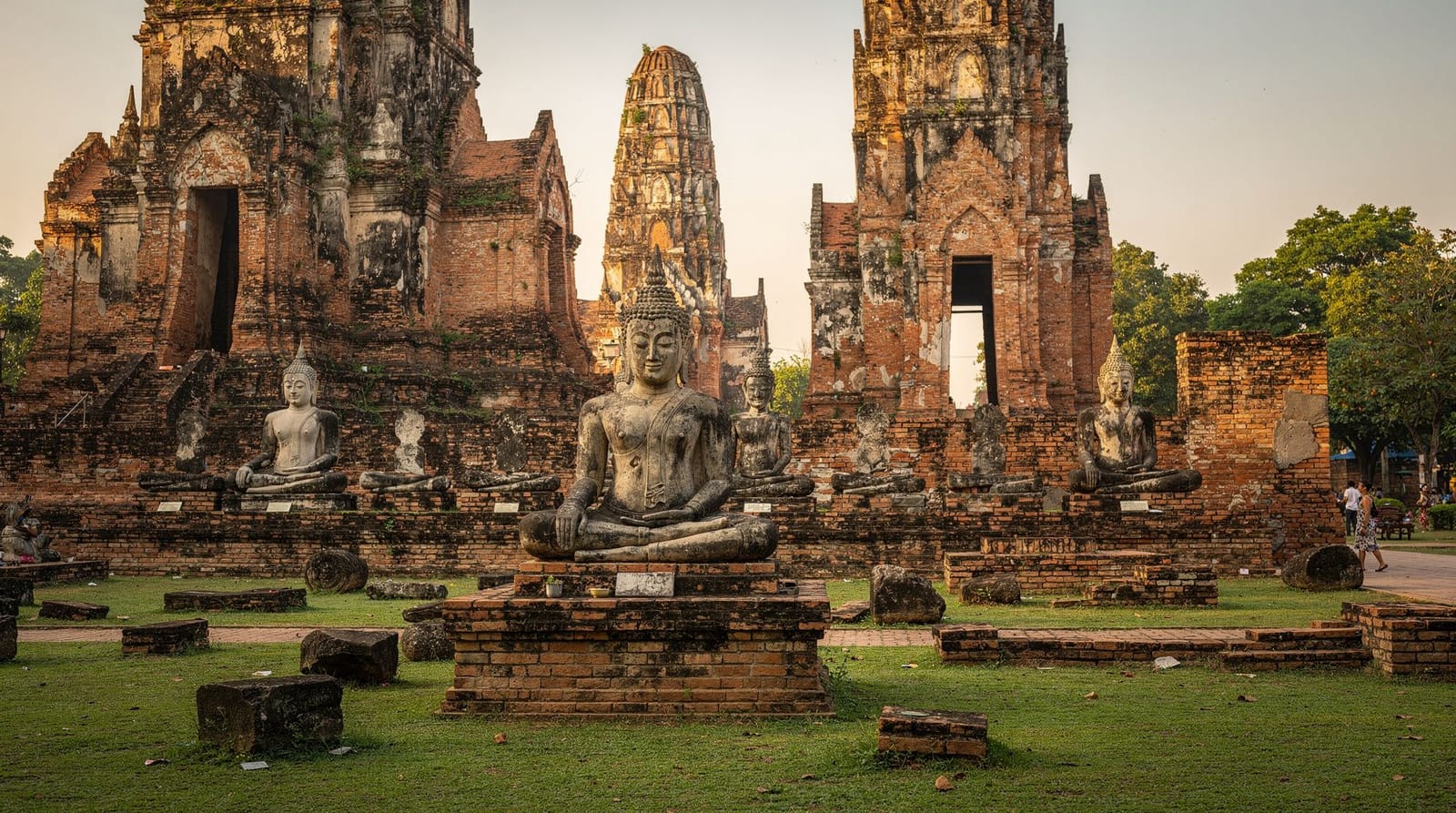
Ayutthaya was the capital of the Siamese kingdom for four centuries until the Burmese sacked it in 1767, and what remains is a sprawling archaeological park of brick prangs, headless Buddhas and root-wrapped stone. You cannot see all of it in a day, so here is where I spent my time.
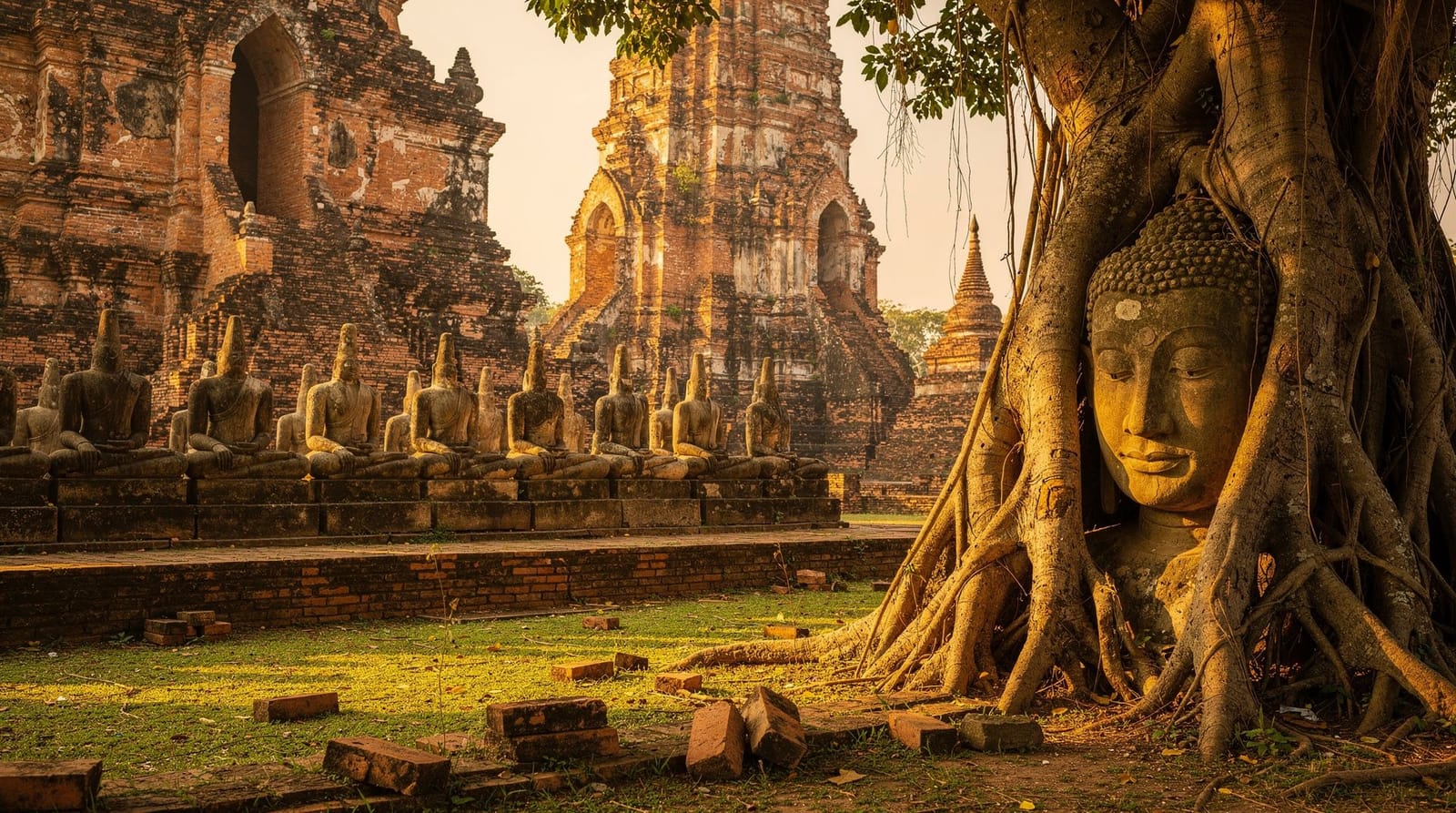
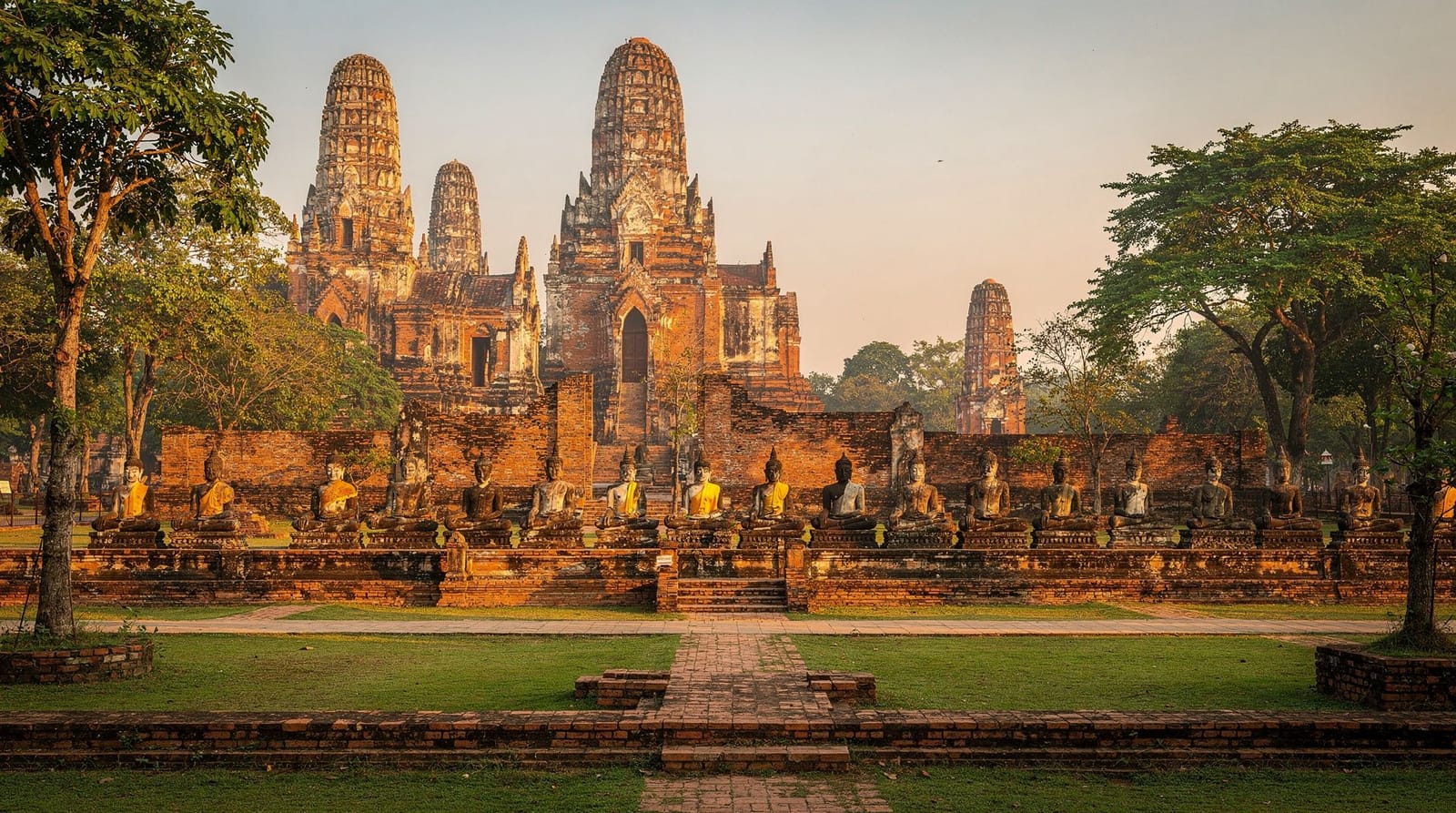
Wat Mahathat is the one everyone comes for — home to the famous Buddha head cradled in the roots of a banyan tree, one of the most photographed images in Thailand. It is genuinely moving in person, and the rest of the temple’s toppled prangs are atmospheric. Wat Phra Si Sanphet, with its three restored bell-shaped chedis, is the postcard skyline of Ayutthaya and was once the holiest temple of the royal palace. Wat Chaiwatthanaram, across the river to the west, is the grandest single complex, a Khmer-style temple best at sunset when the light turns the brick gold. Entry to each major temple is around 50 baht, or you can buy a combined pass for the main sites for about 220 baht.
What the DIY route gets right and wrong
The DIY train approach is unbeatable for cost and freedom. I spent perhaps 200 baht all in on transport and bike rental, plus temple entries, and I came and went entirely on my own schedule. For an independent traveller who enjoys a bit of friction, it is deeply satisfying.
What it costs you is context and comfort. Cycling between ruins in punishing heat with no guide means you understand what you are seeing only as well as your phone’s signal allows, and there is no air-conditioned van to retreat to. On a brutally hot day, or with kids, or if you simply want the history explained, a guided trip earns its price. An Ayutthaya tour that returns to Bangkok by river cruise turns the journey itself into a highlight, and a guided bicycle tour of the ruins keeps the cycling adventure I loved while adding a guide to make sense of the stones. The Ayutthaya versus Sukhothai comparison is worth a read if you are deciding which ancient capital to prioritise.
A realistic timetable for the day
Because the train schedule shapes everything, here is roughly how I structured a successful DIY day, and how I would do it again. I left central Bangkok on a 7am-ish departure, which got me to Ayutthaya around 8:30 to 9am while the air was still merely warm rather than punishing. Ferry across, bike rented and on the road by 9:30. The cool-ish window from then until about 11:30 is when you want to be cycling the open-air ruins — Wat Mahathat and Wat Phra Si Sanphet first, while you can still bear direct sun. By noon I retreated for a long lunch in the shade near the park, somewhere with a fan and cold drinks, and waited out the worst of the midday heat over a plate of boat noodles and an iced coffee for under 100 baht. From around 2:30 I cycled the western temples, saving Wat Chaiwatthanaram for late afternoon when the light goes gold. Trains back run into the evening, so I caught one around 5:30 to 6pm and was home by dusk. The day trips from Bangkok transport overview lists the current departure windows, but always photograph the return timetable at the station when you arrive so you are not stranded.
What it actually cost, line by line
People ask whether DIY really saves enough to justify the friction, so here is the honest accounting from my day. The third-class train out was 15 baht; the return roughly the same. The river ferry was 5 baht each way. The bicycle rental was 50 baht for the whole day. Temple entries came to around 220 baht for the combined pass covering the main sites. Lunch, water, an afternoon coconut and a coffee added maybe 200 baht. All in, I spent under 500 baht — call it 14 dollars — for a full day at one of Thailand’s great historical sites. A comparable guided group tour with hotel pickup, air-conditioned van, lunch and a guide runs somewhere around 1,200 to 2,000 baht per person. So the saving is real and substantial, but what you are buying with that extra money is shade, comfort, context and zero logistics, which on a 38-degree day is not nothing. The Ayutthaya DIY versus tour comparison weighs this up case by case, and the Ayutthaya day trip guide covers the booked options.
Beyond the four famous temples
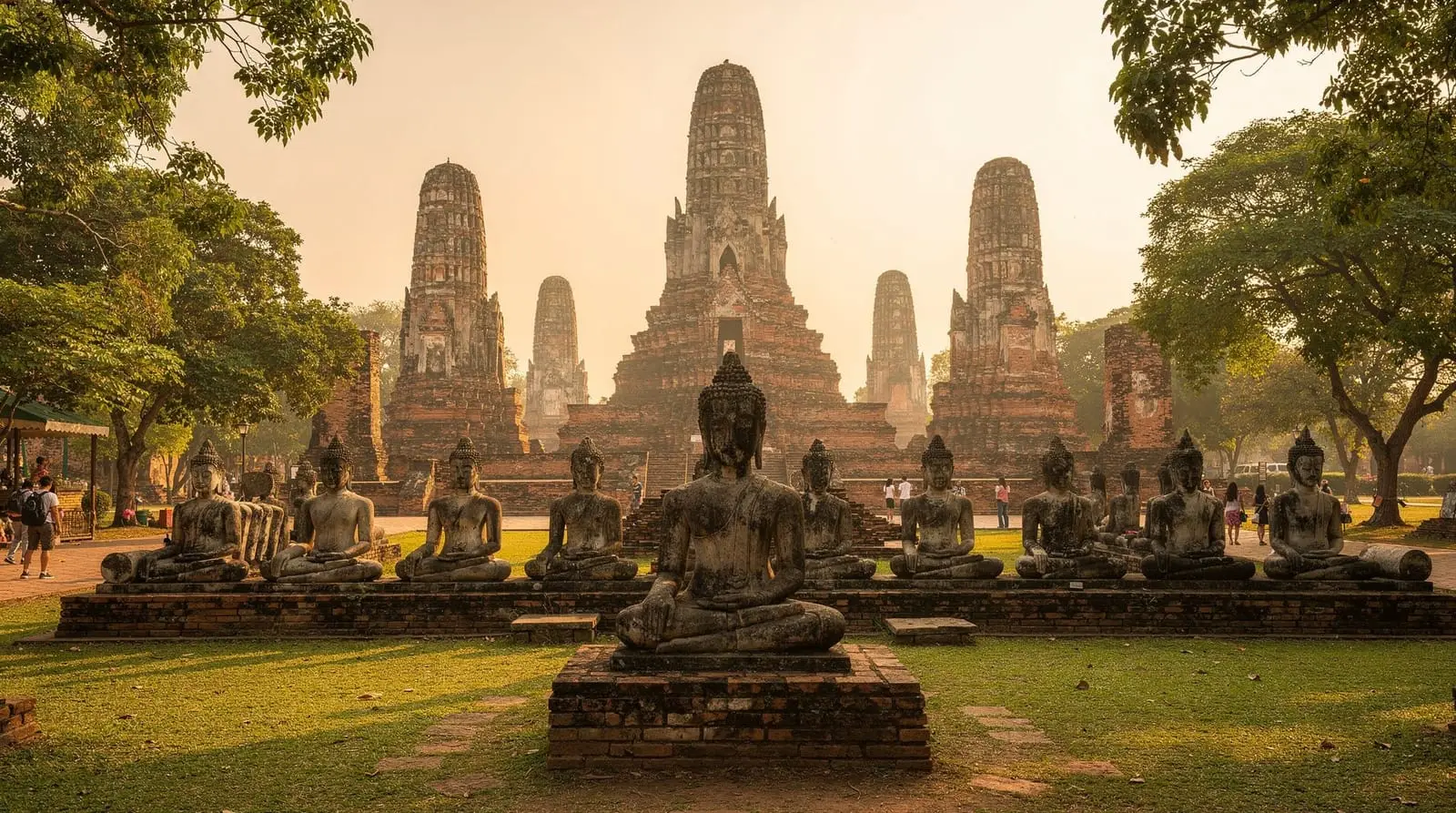
If the heat and your legs hold out, Ayutthaya rewards going a little further than the headline ruins. Wat Yai Chai Mongkhon, southeast of the island, has a towering chedi you can climb and rows of seated Buddhas draped in saffron cloth, and it is gloriously uncrowded compared with Wat Mahathat. Wat Lokayasutharam holds a huge reclining Buddha out in the open, free to visit and often deserted. And if you are a history-minded sort, the Ayutthaya Historical Study Centre and the Chao Sam Phraya museum give the toppled stones the context the DIY route otherwise denies you. None of this fits comfortably into a single sweltering day by bicycle, which is the honest argument for either an overnight stay or, frankly, a guided van. If you are torn between ancient capitals altogether, the Ayutthaya versus Sukhothai guide and the Sukhothai overview help you choose.
A day that earned its sweat
I got back to Bangkok at dusk, sunburnt, legs aching, with a phone full of headless Buddhas and root-wrapped stone, having spent less than ten dollars on transport for the whole day. The slow train, the little ferry, the rented bicycle — none of it was efficient, and all of it was the point. Ayutthaya rewards the unhurried, and the DIY train route is the most unhurried way to reach it. Just go early, drink more water than you think you need, and accept that the heat is part of the deal. The broader day trips from Bangkok guide has a dozen more in this spirit, but Ayutthaya by slow train remains my favourite.
Pairing the ruins with Bang Pa-In Palace
If the train timetable gives you a longer window than I had, Ayutthaya pairs naturally with the Bang Pa-In Palace, the eclectic royal summer palace about 20 kilometres south of the historical park, mixing Thai, Chinese and European architectural styles around a lake — one of several combinations covered in the itinerary with day trips if you are planning a longer Bangkok stay. It is not reachable by the same third-class train line, so doing it DIY means a songthaew or a negotiated tuk-tuk from Ayutthaya town, which eats into your cycling time and is honestly more hassle than it is worth on a single hot day. This is the one addition where I would take a tour over DIY: a private Bang Pa-In Palace and Ayutthaya day trip covers both in a single air-conditioned loop, which is the only realistic way to see both properly without sacrificing half your ruins time to transport logistics.
Solo, safety and the practical stuff nobody mentions
A few things I would have liked to know before I went. Third-class carriages are safe and normal for solo travellers, families and elderly passengers alike — this is how a huge number of Thais travel every day, not some edgy backpacker stunt, and conductors and fellow passengers were unfailingly helpful when I looked lost. There is no reserved seating on third class, so on a busy morning you may stand for a stretch; keep valuables in a bag on your lap rather than the overhead rack. Toilets on board are basic squat facilities, so use the station toilet before boarding if you can. Mobile signal is generally fine throughout the journey and around the historical park, so offline maps are a backup rather than a necessity, though I still download the getting around Bangkok guide before I go in case coverage drops. And bring small notes — bicycle rental shops and temple ticket booths rarely break a 500-baht bill first thing in the morning. If Ayutthaya leaves you wanting more of this kind of DIY history day, the Kanchanaburi Death Railway is a similarly reachable, similarly moving day trip, though it is a longer ride out.
DIY versus tour, side by side
The Bangkok travel costs guide has more context on how a day like this compares to other spending in the city, but the DIY-versus-tour trade-off is worth laying out plainly.
| DIY by train | Guided tour | |
|---|---|---|
| Cost per person | ~500 baht (~14 USD) | ~1,200–2,000 baht |
| Time control | Entirely your own schedule | Fixed pickup and return times |
| Comfort | Fan-cooled train, cycling in full heat | Air-conditioned van throughout |
| Context | Self-guided, phone signal dependent | Guide explains the history on site |
| Best for | Independent travellers who enjoy friction | Hot days, kids, or wanting it explained |
Frequently asked questions about Ayutthaya by train
How much is the train from Bangkok to Ayutthaya?
Third-class ordinary trains cost as little as 15 to 20 baht, taking 90 minutes to two hours. Faster air-conditioned services cost more but still under a few hundred baht.
Is it better to do Ayutthaya independently or on a tour?
DIY by train is cheaper and more flexible and ideal for independent travellers. A guided tour is worth it on very hot days, with kids, or if you want the history explained and the logistics handled.
How do you get around Ayutthaya’s ruins?
Rent a bicycle near the ferry crossing for around 50 baht a day, or a motorbike for more. The ruins are too spread out to walk comfortably, and a bike is the ideal pace.
What time should I leave Bangkok for Ayutthaya?
Aim for a train around 7am so you reach the ruins by 8:30 to 9am, while the air is still bearable. The open-air temples are brutal by midday, so front-load your cycling and save the indoor breaks and the golden-hour temples for the afternoon.
Which Ayutthaya temples are the best?
Wat Mahathat for the iconic Buddha head in the tree roots, Wat Phra Si Sanphet for the three bell-shaped chedis, and Wat Chaiwatthanaram across the river for sunset. Wat Yai Chai Mongkhon, which you can climb, is a quieter standout worth the extra ride.
Can I do Ayutthaya as a day trip from Bangkok?
Easily. It sits about 80 kilometres north and the train takes 90 minutes to two hours, so a comfortable day trip is very doable. Leave early, accept the heat as part of the deal, and the Ayutthaya day trip guide covers both DIY and organised options.
Can I visit Bang Pa-In Palace on the same DIY train trip?
Not easily. Bang Pa-In is not on the same train line, so combining it with Ayutthaya’s ruins by DIY transport means a separate songthaew or tuk-tuk that eats into your cycling time. If both are on your list, a private day tour covering both sites is the more realistic option.
Is third-class train travel safe for solo travellers?
Yes. It is how a huge number of Thais travel daily, and conductors and fellow passengers are generally helpful. Keep valuables on your lap rather than the overhead rack, and use the station toilet before boarding since onboard facilities are basic.