Nakhon Pathom
Nakhon Pathom is home to Phra Pathom Chedi, the world's tallest Buddhist stupa, an easy train day trip west of Bangkok. How to visit and what to see.
Bangkok: Nakhon Pathom Day Trip by Train with Tuk-Tuk Ride
Duration: `day-trips`
Quick facts
- Distance from Bangkok
- ~55 km west (1–1.5 hr by train, minivan or car)
- Getting there
- SRT train (easy day trip), minivan from Bangkok, or private car
- Key sight
- Phra Pathom Chedi — the world's tallest Buddhist stupa (~120 m)
- Time needed
- A few hours; a half-day, or a stop en route to Kanchanaburi
- Best time
- Cool season (Nov–Feb); the chedi fair is around November
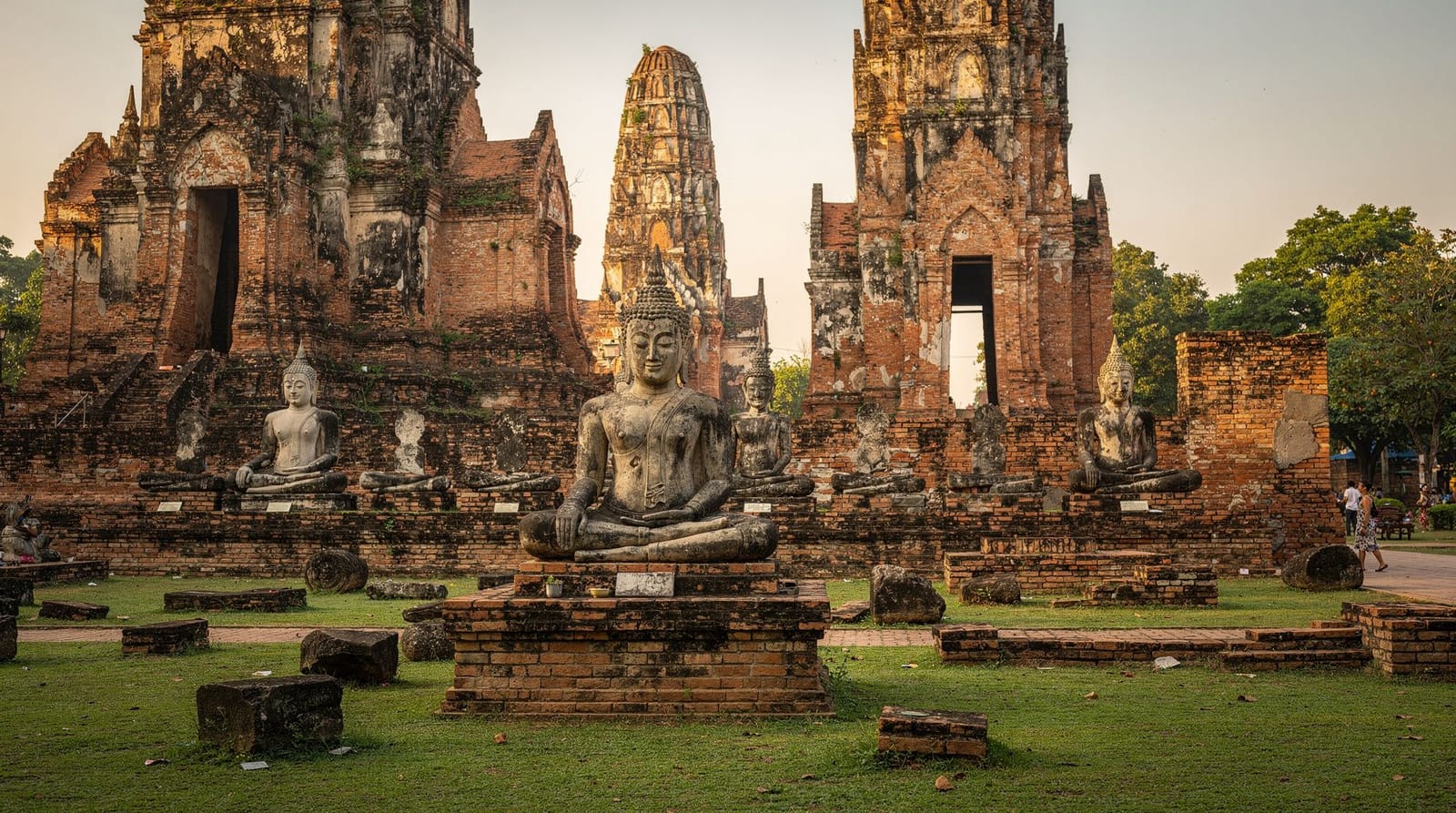
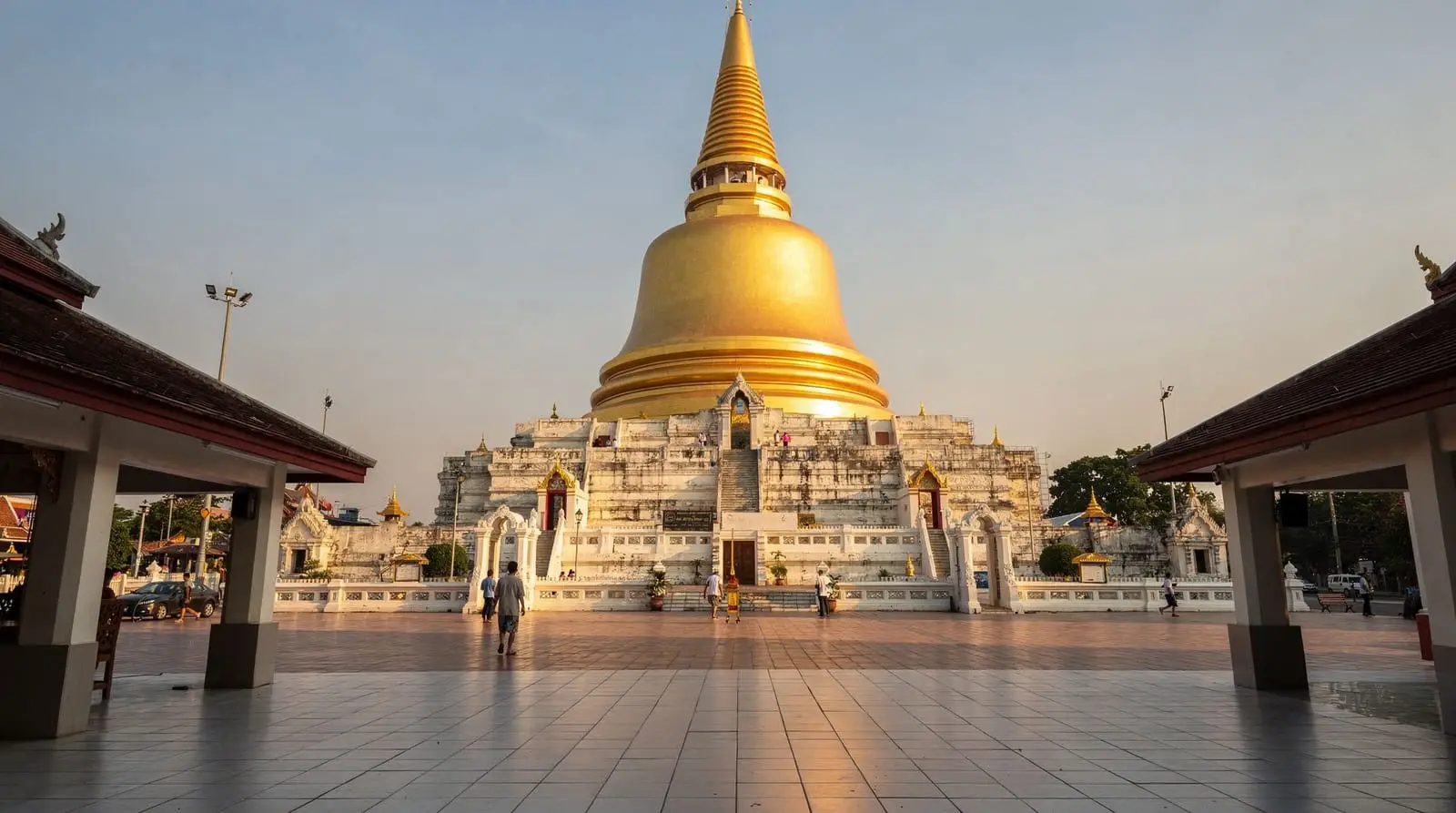
Nakhon Pathom is an easy, low-key day trip that most visitors to Bangkok never make — and that is part of its charm. About 55 km west of the city, this provincial town is home to Phra Pathom Chedi, the tallest Buddhist stupa in the world, a colossal orange-gold bell rising some 120 metres above a wide, tree-shaded temple precinct. The site marks one of the oldest centres of Buddhism in Thailand, on ground that goes back to the ancient Dvaravati civilisation more than a thousand years ago. It is a place of genuine pilgrimage rather than tourism, calm and dignified, and reaching it by train is one of the simplest day trips you can do from Bangkok.
Is it worth a dedicated trip? For temple and culture enthusiasts, or anyone wanting a relaxed half-day among locals rather than tour groups, yes. For many travellers, though, Nakhon Pathom makes most sense as a stop en route to Kanchanaburi or the floating and railway markets, all of which lie in the same western direction. This page covers the great chedi, what else there is to see, and how to combine it.
Phra Pathom Chedi
The reason to come is overwhelming in scale. Phra Pathom Chedi is a vast bell-shaped stupa clad in glazed orange-brown tiles, set on a circular terraced platform that you can walk around, with viharns (assembly halls) at the four cardinal points housing important Buddha images — including a standing Buddha and a reclining Buddha. The present structure, completed in the 19th century under King Mongkut (Rama IV), encases a much older Dvaravati-era stupa, making the site a continuous place of worship for well over a millennium. It is the holiest landmark of the region and a national symbol of Thai Buddhism.
Walking the circular gallery around the base, visiting the four halls, and simply sitting in the shade of the surrounding park is the experience. It is active and revered, so dress and behave respectfully — covered shoulders and knees, shoes off where required, no turning your back on or pointing your feet at the Buddha images. See temple etiquette and dress code and, for the broader context, Buddhism in Bangkok and best temples.
There is no foreigner entry fee for the chedi grounds (donations welcome); the small museum on site has Dvaravati artefacts for a modest fee.
Around the town
Nakhon Pathom is an unpretentious working town, and a wander beyond the chedi rewards the curious. The market around the temple base is excellent for local food — the town is known for its khao lam (sticky rice and coconut roasted in bamboo), pomelo, and pork dishes — and feels genuinely local. The Sanam Chandra Palace, a short ride away, is an elegant early-20th-century royal residence built by King Rama VI in a blend of Thai and European styles, set in pleasant grounds. Neither is essential, but together with the chedi they make a satisfying half-day.
The annual Phra Pathom Chedi temple fair, usually held around November, transforms the precinct with stalls, food, and pilgrims — lively if your timing coincides, though crowded.
Getting there from Bangkok
Train: the classic and easiest route, and a pleasant one. Trains on the southern line from Bangkok’s Thonburi (Bangkok Noi) and Krung Thep Aphiwat stations stop at Nakhon Pathom in roughly 1 to 1.5 hours; the station is a short walk or tuk-tuk ride from the chedi, which dominates the skyline. Cheap and simple. This is the same line that continues to Kanchanaburi, which is why the two pair so naturally. The Nakhon Pathom day trip by train with tuk-tuk ride packages the train journey and local tuk-tuk transport for an easy guided version.
Minivan: minivans run from Bangkok to Nakhon Pathom in about an hour for a low fare, departing from points including the Southern Bus Terminal.
Private car / Grab: door-to-door in around an hour depending on traffic; the simplest way to combine the chedi with onward travel to Kanchanaburi or the markets. The Bangkok and surrounding provinces private full-day tour can take in Nakhon Pathom as part of a tailored day. See Bangkok to day trips transport.
Combine it on the way west
The smartest way to fit Nakhon Pathom in is as the first stop on a longer westward day. It sits directly on the route to:
- Kanchanaburi and the Death Railway — the trains run the same line, so a culture-and-history pairing works well.
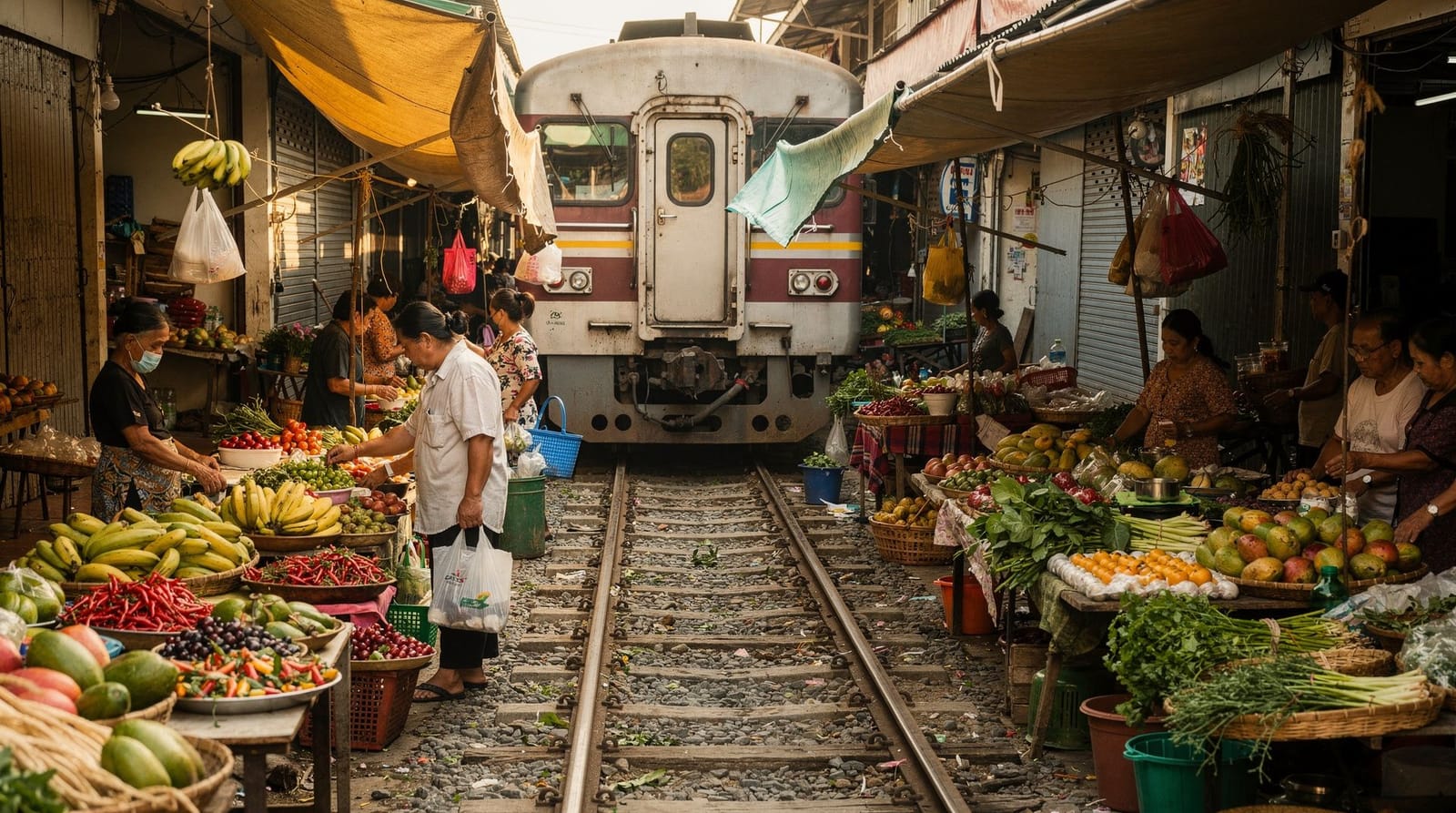
- Damnoen Saduak and the Maeklong railway market — in roughly the same direction, though usually visited as their own circuit.
Treating the great chedi as a 60–90 minute morning stop before continuing west lets you see one of Thailand’s most important Buddhist monuments without committing a whole separate day. For the wider picture, see day trips from Bangkok.
Practical information
Dress code: covered shoulders and knees; remove shoes in the halls; respectful behaviour around Buddha images.
Entry: no foreigner fee for the chedi grounds (donations welcome); small fee for the on-site museum.
Food: try khao lam (bamboo-roasted sticky rice) and local pork dishes at the market around the temple base.
Heat: the grounds are partly open; the cool season is most comfortable, and mornings are best.
Pairing: ideal as a morning stop en route to Kanchanaburi by the southern railway line.
Standalone trip or a stopover?
| Approach | Time needed | Best for |
|---|---|---|
| Standalone half-day | 3–4 hours round trip | Temple and culture enthusiasts, relaxed pace among locals |
| Morning stopover en route to Kanchanaburi | 60–90 minutes | Travellers who want the chedi without sacrificing a full day |
| Combined with Damnoen Saduak / Maeklong | Add ~30–45 minute detour | Those already heading west for the markets |
Most travellers get the best value from the stopover approach — a serious monument seen properly, without committing a whole day to a town whose other sights are modest.
The chedi at different times of day
Morning light on Phra Pathom Chedi’s glazed orange-brown tiles is the most photogenic — the tiles catch a warm glow and the grounds are at their coolest and quietest before the day’s heat builds. By midday the terraces can feel exposed and hot, though the four viharns offer shaded relief and a chance to sit with the Buddha images at a slower pace. Evening brings a different mood again, as local worshippers circulate the base for evening prayers and the giant stupa is lit, though most day-trippers will already be moving on by then.
Frequently asked questions about Nakhon Pathom
What is Phra Pathom Chedi?
It is the tallest Buddhist stupa in the world — a vast orange-gold bell rising about 120 metres on a terraced platform in Nakhon Pathom, west of Bangkok. The present structure, built in the 19th century, encases a much older Dvaravati-era stupa, marking one of the oldest centres of Buddhism in Thailand. It is a major pilgrimage site and a national symbol of Thai Buddhism.
Is Nakhon Pathom worth a day trip?
For temple and culture enthusiasts, or anyone wanting a calm, untouristed half-day among locals, yes. The great chedi is genuinely impressive and the town is pleasantly unpretentious. Many travellers, though, treat Nakhon Pathom as a morning stop on the way to Kanchanaburi or the floating markets rather than a standalone full-day trip.
How do I get to Nakhon Pathom from Bangkok?
The easiest way is the southern-line train (~1–1.5 hours), which stops a short walk from the chedi and continues on toward Kanchanaburi. Minivans (about an hour) and private cars or Grab are also straightforward. A guided option combines the train with a local tuk-tuk to get around once you arrive.
Can I combine Nakhon Pathom with Kanchanaburi?
Yes — they sit on the same southern railway line heading west, so it is a natural pairing. You can stop at the great chedi in the morning and continue to Kanchanaburi for the Death Railway and war history. A private car makes the combination especially easy. See our Kanchanaburi page for that side of the trip.
What should I know about visiting the chedi respectfully?
It is an active, deeply revered place of worship. Cover your shoulders and knees, remove your shoes where required in the halls, and never turn your back on or point your feet toward the Buddha images. Keep your voice down and behave with the dignity locals show the site. See our temple etiquette guide for the full rules.
When is the best time to visit?
The cool season (November to February) is most comfortable for the partly open grounds, and mornings are best — both for the heat and for pairing the visit with onward travel. The annual Phra Pathom Chedi temple fair, usually around November, brings stalls, food, and pilgrims if you enjoy a festival atmosphere, though it is crowded.
Top experiences
Bookable activities with verified prices and instant confirmation on GetYourGuide.