Damnoen Saduak: a floating market reality check
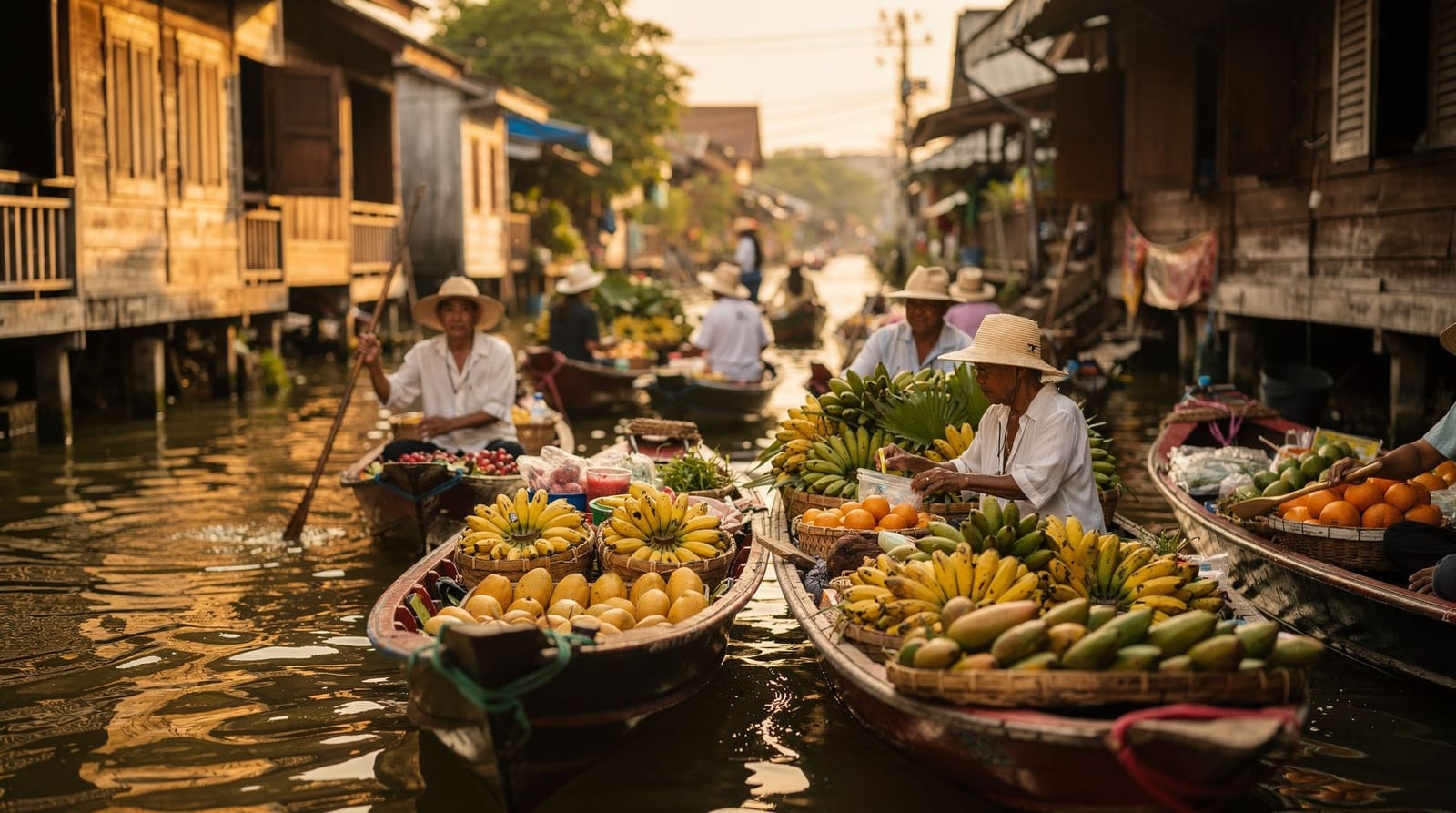
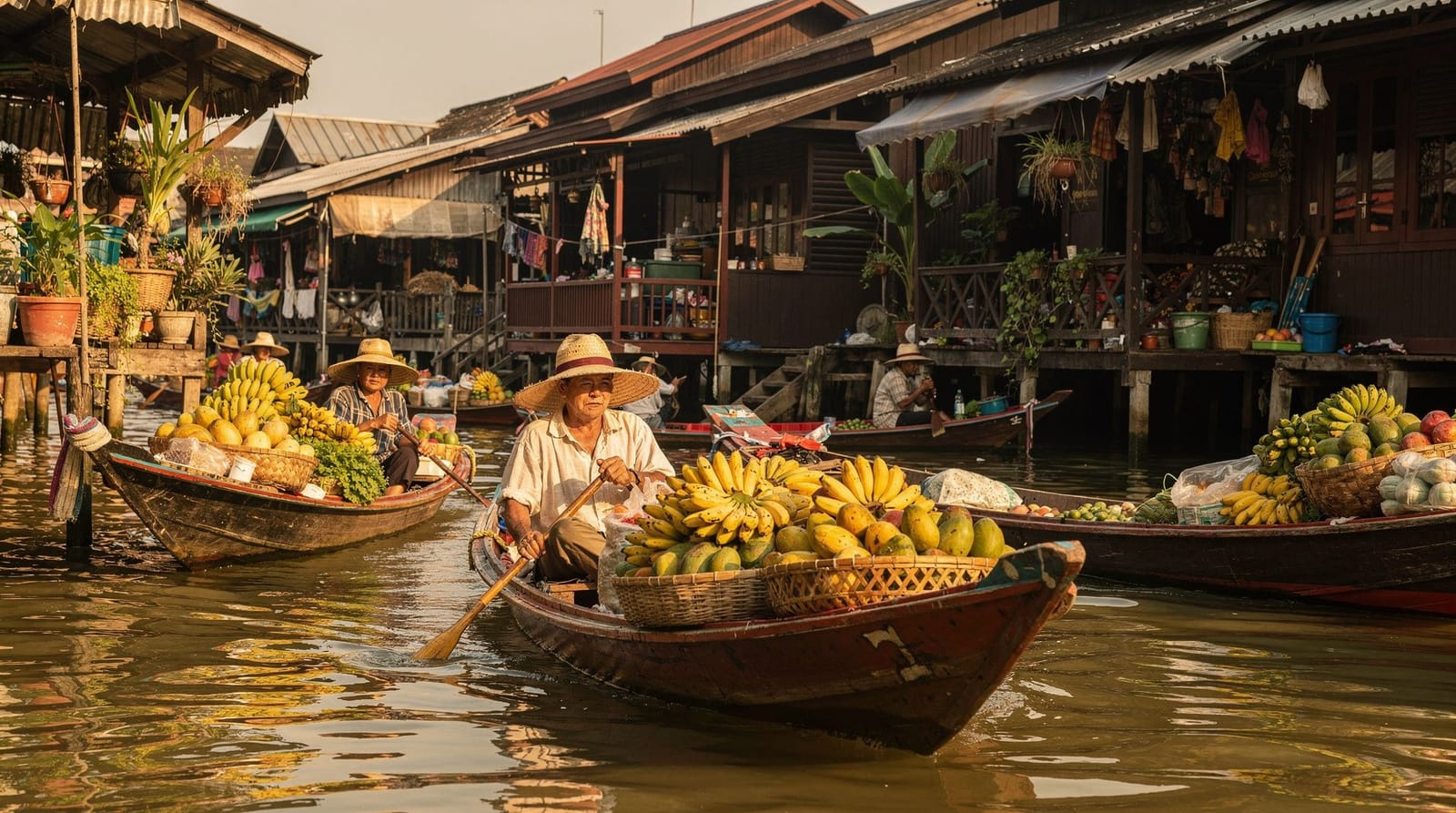
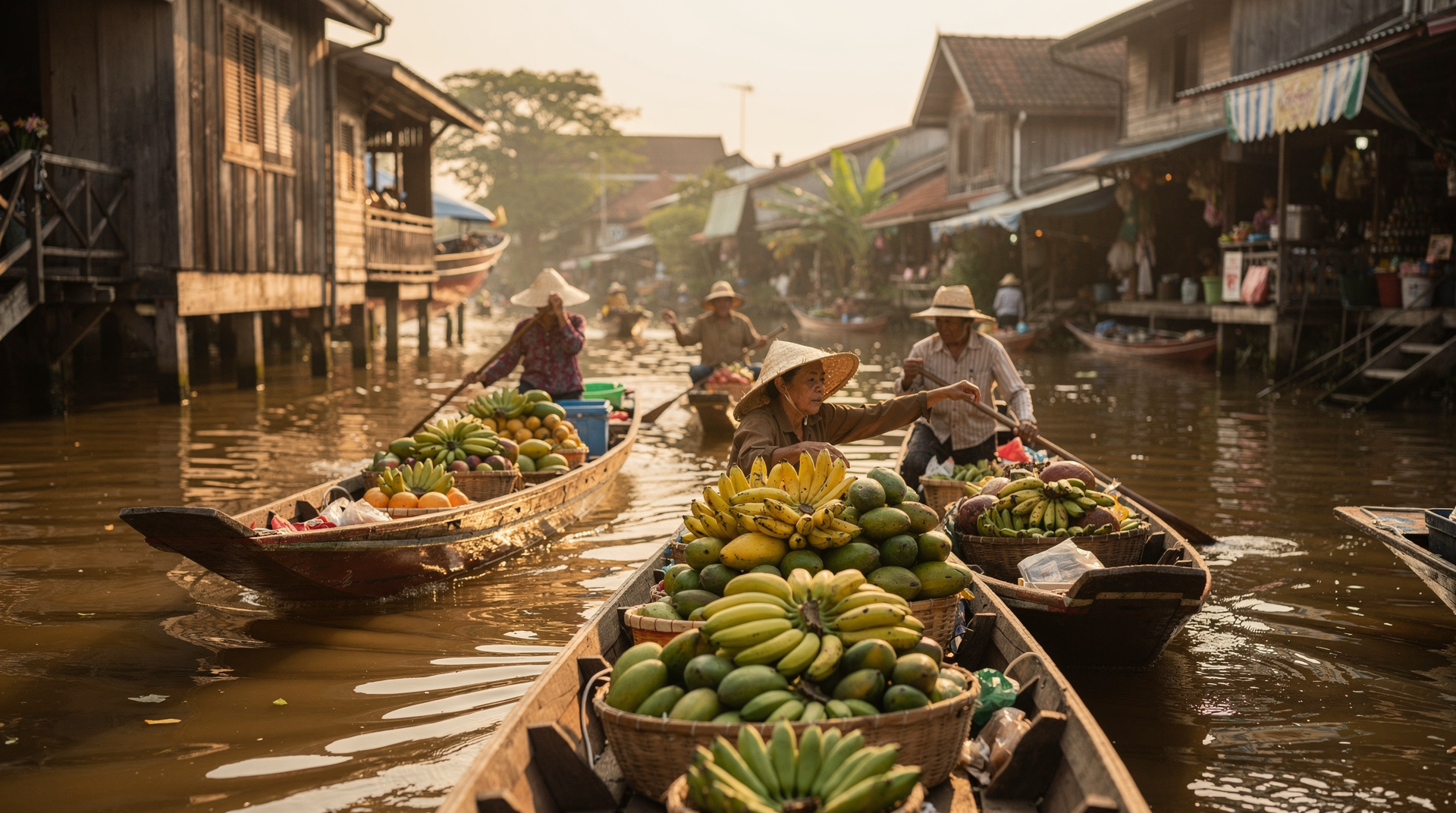
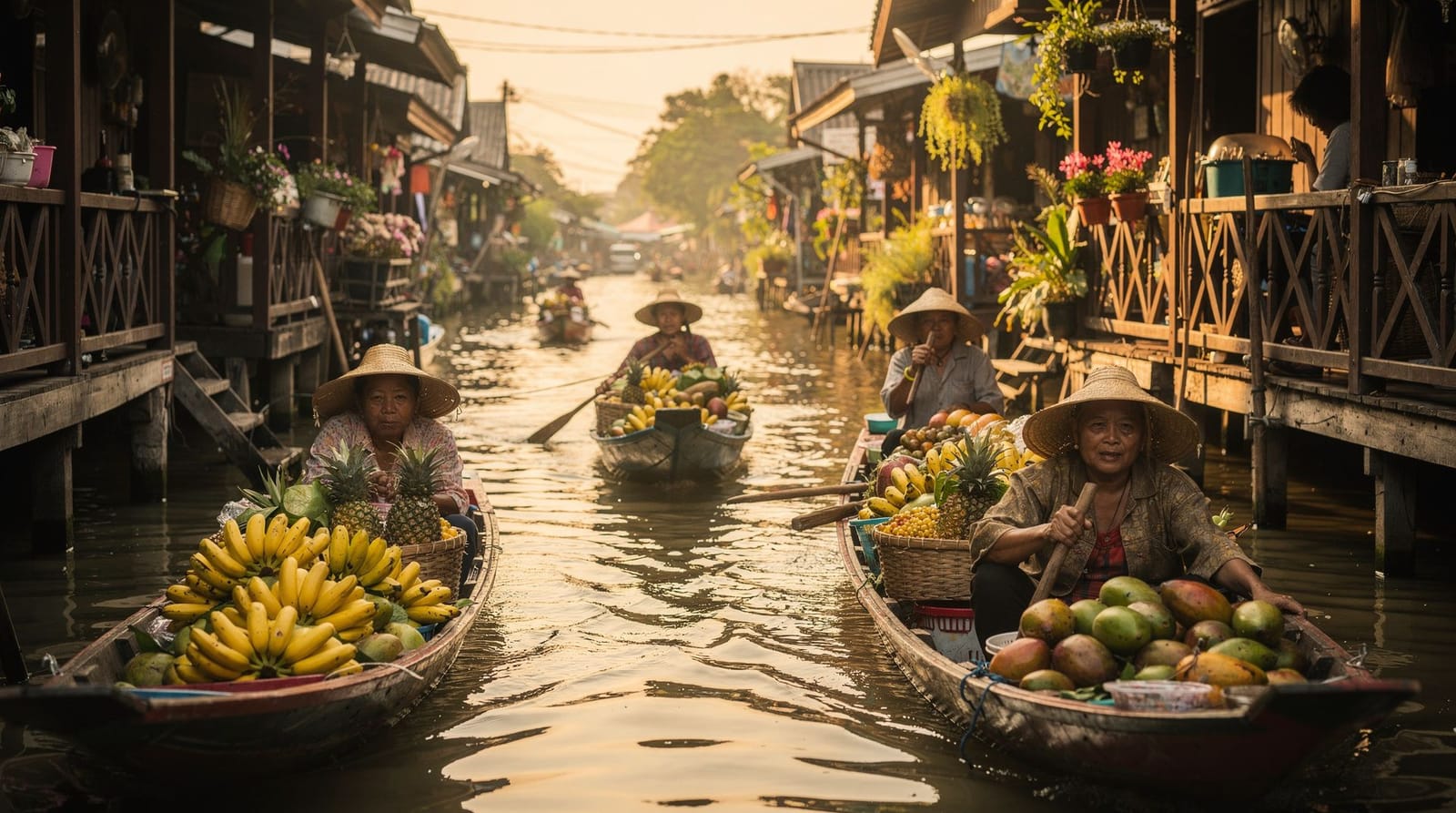
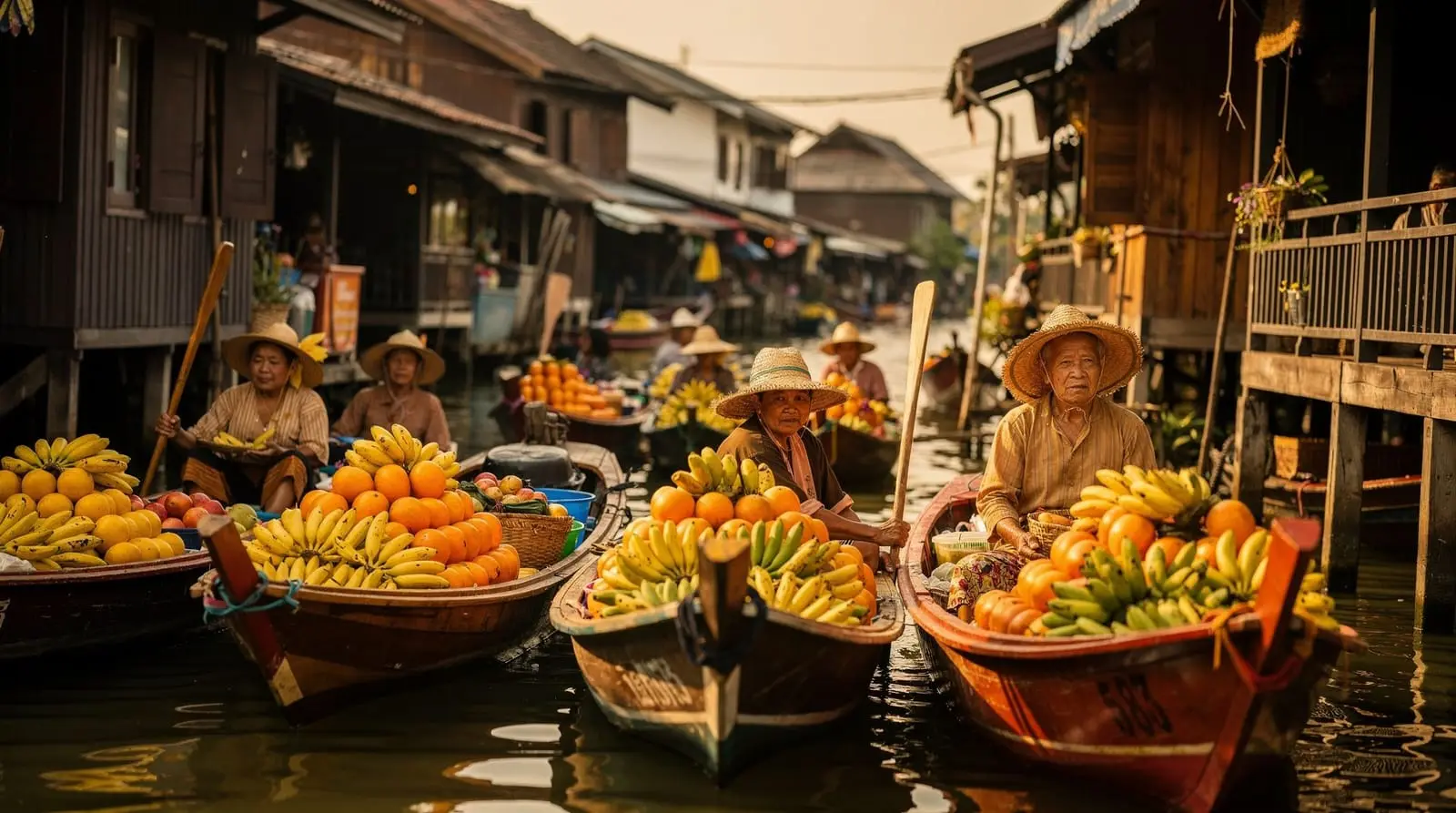
Let me save you some disappointment, or at least set your expectations correctly: the famous postcard image of Bangkok’s floating markets — serene wooden boats, conical hats, a smiling vendor paddling baskets of mangoes through misty canals — is a real thing that exists for about forty-five minutes at dawn before the tour buses arrive and turn Damnoen Saduak into a watery shopping mall. I have been twice. The first time I left grumbling; the second time I went in with my eyes open and had a fine morning. Here is the honest reality check, so you can decide whether to go and how to do it right.
| Where | Ratchaburi province, about 100km southwest of Bangkok |
| Cost | ~80–100 baht bus + boat fees if wanted (150–500 baht/person) |
| Time needed | Half a day, ideally dawn to 9am for the real atmosphere |
| Getting there | Public bus from Southern Bus Terminal, or organised tour |
| Best time | Arrive at opening, around 7am, before the tour buses |
What Damnoen Saduak actually is now
Damnoen Saduak, about 100 kilometres southwest of Bangkok in Ratchaburi province, was once a genuine working market where farmers sold produce from boats along the canals. Today it is, candidly, a tourist attraction first and a market a distant second. By mid-morning the main canal is jammed gunwale-to-gunwale with longtail boats full of visitors, the “produce” is mostly souvenirs and overpriced snacks aimed squarely at tourists, and the prices quoted to foreigners can be several times what a local would pay. The is it worth it guide does not pull punches, and neither will I: if you arrive at 10am expecting tranquillity, you will be sorely disappointed.
That said, it is not a scam exactly — it is a real place, the setting is genuinely photogenic, and the chaos has its own carnival energy. It is simply not the peaceful authentic scene the marketing promises.
It helps to understand how it got this way. The canals here were dug in the nineteenth century under King Rama IV to connect the Mae Klong and Tha Chin rivers, and for generations this was an ordinary agricultural backwater where people genuinely lived and traded on the water. Then the tourism industry discovered how photogenic it was, the working market withered, and a parallel economy grew up entirely to serve visitors. So when people complain that it feels “fake,” they are half right: the floating market as a living institution largely moved on decades ago, and what remains is a performance of it staged for cameras. Knowing that going in stops you feeling cheated and lets you enjoy it for what it actually is.
How to actually get there
Damnoen Saduak sits about 100 kilometres southwest of Bangkok, and reaching it independently is the awkward part. The cheapest route is a public bus from the Southern Bus Terminal (Sai Tai Mai), which takes roughly two hours and costs around 80 to 100 baht, after which you still need a local songthaew or motorbike taxi the last few kilometres to the market itself, adding another 50 to 100 baht. By private taxi or Grab you are looking at well over 1,500 baht each way, and the early start makes a return fare painful to arrange. This logistical friction, combined with the need to arrive before dawn, is exactly why so many people end up on an organised tour for this particular trip even if they normally travel independently. The day trips from Bangkok guide compares the transport options honestly.
The dawn window that changes everything
The single most important piece of advice is this: arrive at opening, around 7am, before the buses. In that early window the light is soft, the canals are quiet, real vendors are setting up, and you can actually get the photograph and the atmosphere you came for. This means leaving central Bangkok around 5 to 5:30am, which is brutal but transformative. By 9am the magic has evaporated and the crowds have arrived. The floating markets guide and the dedicated Damnoen Saduak guide both hammer this point, because it genuinely is the difference between a memorable morning and a tourist-trap slog.
The boat-fee trap
Here is where people get fleeced. You do not strictly need to take a paddle boat to enjoy Damnoen Saduak — you can walk the canalside walkways and bridges for free and see plenty. But the touts will push hard, and the longtail and paddle boat hires can run 150 to 500 baht per person or more, with the price climbing the longer you negotiate. If you do want a boat, agree the price firmly and in writing before you board, know that the paddle boats are slower and more atmospheric than the engine-roaring longtails, and do not feel pressured. The tourist traps guide flags Damnoen Saduak’s boat-fee game specifically.
The smarter alternatives
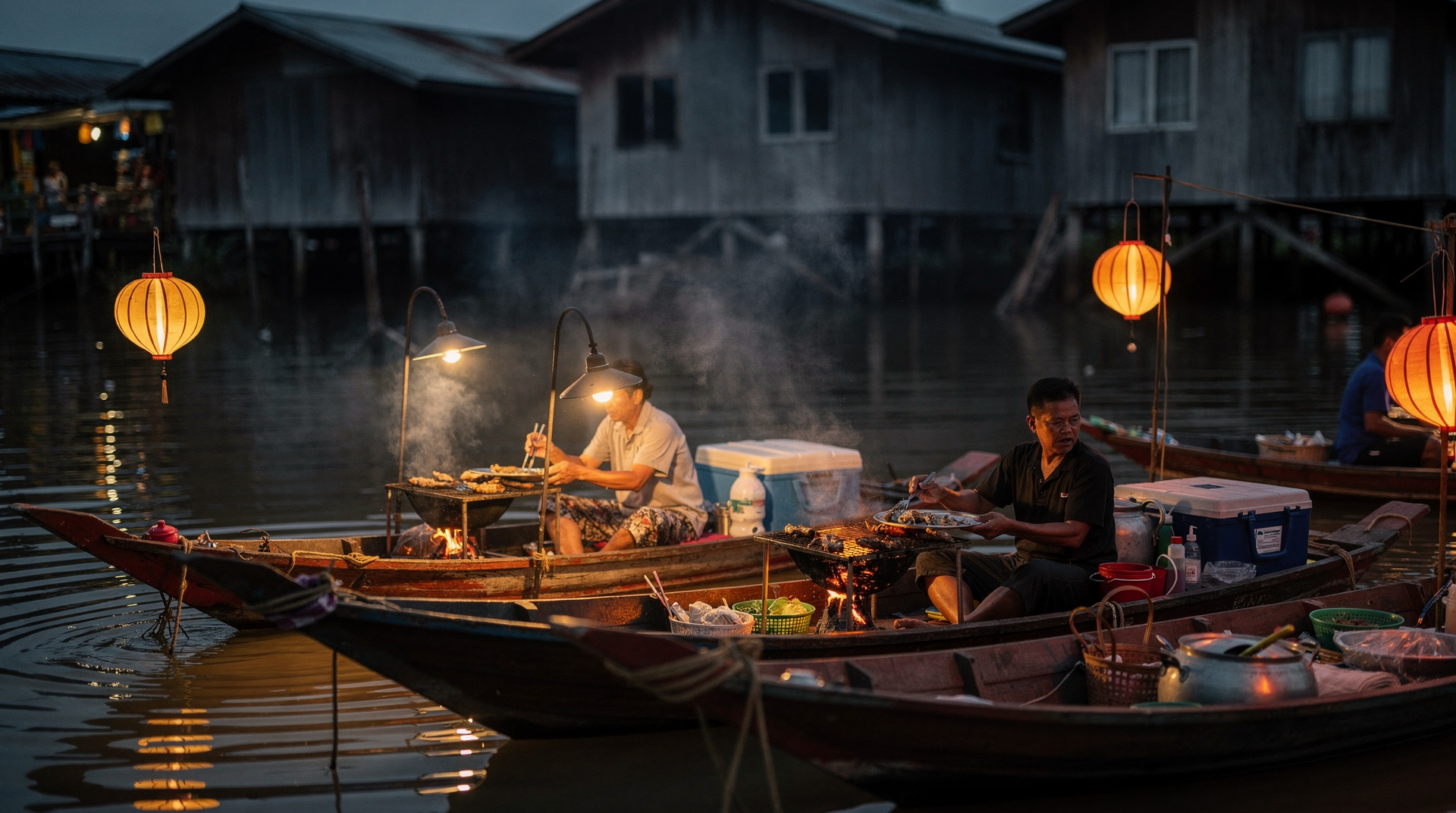
This is the part I most want you to hear. If a floating market that is more market and less circus appeals to you, Amphawa is the better choice for most travellers. It runs mainly on weekend afternoons and evenings, draws a largely Thai crowd, sells genuinely good food cooked on the boats — grilled seafood especially — and has a fraction of Damnoen Saduak’s tour-bus intensity. The Damnoen Saduak versus Amphawa comparison lays out the trade-offs clearly, and nine times out of ten I now point friends toward Amphawa instead.
There is also the genuinely charming nearby attraction that often gets bundled with Damnoen Saduak: the Maeklong railway market, where vendors fold their awnings back as a train passes inches from their produce, then reopen as if nothing happened. That is a real, weird, wonderful spectacle and arguably the better reason to make the trip out this direction at all. The train passes through roughly eight times a day, and the timings are worth checking so you catch the awning-folding moment rather than just an empty track. The Damnoen Saduak versus Amphawa guide and the wider floating markets guide both rate this stretch of canal country as best done as a combination rather than a single market.
Closer to Bangkok there are gentler options too. Khlong Lat Mayom and Taling Chan, both on the Thonburi side of the city, are small weekend canalside food markets that locals actually use, reachable in under an hour without the pre-dawn alarm. They are not the bucket-list image, but they are honest, cheap, and full of good food, and on more than one occasion I have steered a friend toward one of these instead of the long haul to Damnoen Saduak with no regrets.
What it really costs and what to skip
Let me put numbers on the day, because the floating-market economy nickel-and-dimes you at every turn. The boat hire is the big one, at 150 to 500 baht per person and often quoted as a flat boat fee of 2,000 baht or more that the touts hope a group will split without doing the maths. Beyond that, expect everything on the water to carry a heavy tourist markup: a coconut that costs 30 baht in the city is 80 here, a bowl of boat noodles that should be 40 baht is 100, and the “1 dollar” souvenirs are anything but. None of it is ruinous, but it adds up, and the relentless selling can sour the mood if you let it.
My honest advice on spending, and on eating safely once you are there (the street food safety guide’s queue-reading rule applies on the water too): walk the free canalside paths and bridges, which give you the best photographs anyway from above the water; buy one bowl of noodles from a boat purely for the experience of eating it on the canal; haggle hard and cheerfully on anything you genuinely want, starting at around a third of the asking price; and treat the whole thing as a forty-five-minute photo opportunity rather than a half-day of shopping. Do that, arrive at dawn, and you can have a genuinely good morning here for well under 1,000 baht beyond your transport. The tourist traps guide and the blunt is it worth it verdict are worth reading before you commit.
How to actually do the trip
Because Damnoen Saduak is far, awkward to reach by public transport, and best experienced at an ungodly hour, this is one day trip where an organised tour genuinely earns its keep. A pre-dawn pickup means you arrive in that golden early window without having to navigate buses and boats yourself, and a good tour bundles in the Maeklong railway market to make the long drive worthwhile.
A combined Damnoen Saduak and Maeklong railway market tour handles the early start and the logistics, and a Maeklong and Amphawa floating market day trip is my preferred alternative for travellers who want the more authentic, less crowded version. The day trips from Bangkok guide weighs all the options.
Doing it with kids
Damnoen Saduak actually works reasonably well as a family outing, with a few caveats. The boats and the colour and noise genuinely delight small children, and it makes for an easy, contained morning compared with a temple circuit. The pre-dawn start is the real challenge, not the market itself — waking a child at 5am to make a 7am opening is a hard sell, so if you are travelling with kids, an organised tour with hotel pickup closer to 6am is usually more manageable than the public bus. Keep life jackets on for younger children if the operator does not provide them automatically, and treat the boat ride itself as the main event rather than expecting a toddler to appreciate the produce. The Bangkok with kids guide has more on pacing a family day around an early start like this one.
The vendors’ side of the story
It is worth pausing on what the tourist-market shift actually means for the people who work the canals. Many of the vendors paddling boats at Damnoen Saduak today are not farmers selling surplus produce, as the postcard image suggests, but small business operators who have adapted to a tourism economy because it pays better than the agriculture that used to define the area. That is not necessarily a tragedy — livelihoods shifted, and plenty of families here now make a decent living from photographs and mangosteens rather than wholesale produce — but it does explain why prices are tourist-calibrated and why the “authentic” market atmosphere the marketing promises largely moved elsewhere decades ago. Understanding this contextualises the haggling too: a vendor asking three times the local price is not scamming you exactly, they are pricing for the market they now serve.
Best months for the light and the crowds
Timing by season matters almost as much as timing by hour. The cool, dry months from November to February bring the most comfortable dawn temperatures and the clearest light for photographs, and they are also, unsurprisingly, the busiest with tour groups, so the 7am arrival rule matters even more. The hot season from March to May is punishing by mid-morning, which paradoxically makes the early window even more rewarding, since almost nobody wants to be there past 9am. The rainy season from June to October brings the fewest crowds and a lush, green canal backdrop, with the trade-off of unpredictable showers; the monsoon travel tips post has more on planning around them. Whatever the season, the golden rule does not change: dawn light, thin crowds, gone by nine.
So, should you go?
If a bucket-list photo of a floating market is non-negotiable and you can stomach a 5am start, go to Damnoen Saduak, arrive at dawn, skip the overpriced boat unless you really want one, and leave by 9am. If you would rather experience a floating market that locals actually use, go to Amphawa instead. And if you are short on time and easily irritated by tourist traps, you have my full permission to skip the floating-market experience altogether — Bangkok has a hundred better mornings on offer. The honesty here is the whole point: Damnoen Saduak is not a disaster, but it is wildly oversold, and knowing that going in is the difference between disappointment and a decent day out.
The floating markets compared
| Market | Distance from Bangkok | Crowds | Best for |
|---|---|---|---|
| Damnoen Saduak | ~100km, ~1.5–2hrs | Heavy after 9am | The bucket-list photo, at dawn |
| Amphawa | ~80km, ~1.5hrs | Moderate, weekends only | Genuine local food, evening atmosphere |
| Khlong Lat Mayom | Within Bangkok (Thonburi) | Light | A no-alarm weekend option |
| Taling Chan | Within Bangkok (Thonburi) | Light | Similar to Lat Mayom, smaller |
Frequently asked questions about Damnoen Saduak
Is Damnoen Saduak floating market worth it?
Only if you arrive at dawn, around 7am, before the tour buses. By mid-morning it becomes a crowded tourist trap. Many travellers prefer the more authentic Amphawa floating market instead.
How much does a boat at Damnoen Saduak cost?
Paddle and longtail boats run 150 to 500 baht per person or more, and touts push hard. Agree the price firmly before boarding, or simply walk the free canalside paths and skip the boat.
What is the best alternative to Damnoen Saduak?
Amphawa floating market, which runs on weekend afternoons, draws mostly Thai visitors, and serves excellent boat-cooked food with far fewer crowds. The nearby Maeklong railway market is also a unique highlight.
How do I get to Damnoen Saduak from Bangkok?
A public bus from the Southern Bus Terminal takes around two hours and costs 80 to 100 baht, plus a short local ride at the end. A private taxi runs well over 1,500 baht each way, which is why most visitors take an organised tour for the pre-dawn start.
What time should I arrive at Damnoen Saduak?
Aim for opening around 7am, which means leaving central Bangkok by 5 to 5:30am. The soft light and real vendors are only there in the first window; by 9am the tour buses arrive and the magic evaporates.
Are there floating markets closer to central Bangkok?
Yes. Khlong Lat Mayom and Taling Chan on the Thonburi side are small weekend canalside food markets that locals use, reachable in under an hour with no pre-dawn alarm and far less tourist pressure. The getting around Bangkok guide covers reaching the Thonburi side.
Is Damnoen Saduak good for families with young kids?
Reasonably, though the pre-dawn start is the hard part, not the market. An organised tour with a later hotel pickup is usually more manageable than the public bus with children, and the boat ride itself tends to be the highlight for younger kids.