Bang Krachao: Bangkok's green escape, by bike
There is a place where, in fifteen minutes and for four baht, you can leave one of the loudest cities on earth and arrive in a jungle. It is called Bang Krachao, it sits inside a great loop of the Chao Phraya river just across from the city, and it is the single best antidote I know to a Bangkok overdose. Locals call it the green lung — an artificial-island peninsula of mangrove and palm and overgrown orchards, laced with raised concrete cycle paths, that has somehow survived the city’s relentless sprawl. I go every long trip, rent a rattly bicycle, and wheel myself back into something like calm. Here is how, and why.
| Where | Across the river from Klong Toey / Bang Na, southeast Bangkok |
| Cost | Around 100–150 baht (ferry + bike rental) |
| Time needed | Half a day, 3–4 hours minimum |
| Getting there | Longtail ferry from a city-side pier, around 4–15 baht |
| Best time | Early to mid-morning, dry season (Nov–Feb) |
Why it exists at all
Bang Krachao is a quirk of geography and policy. The Chao Phraya loops so tightly here that it nearly encircles a teardrop of land, and decades ago the area was designated a protected green zone to act as the city’s lungs. The result is a patch of near-wilderness — jungle, traditional stilt houses, a botanical park, small temples, and overgrown plantations of mango and coconut — improbably preserved a stone’s throw from the towers of Bang Rak and Sukhumvit. From the city it looks like a green smudge across the water; up close it is a different world. The Bang Krachao green lung guide explains the geography and how to get in, and it earns its place on every hidden gems list in the city.
The crossing: four baht to another world
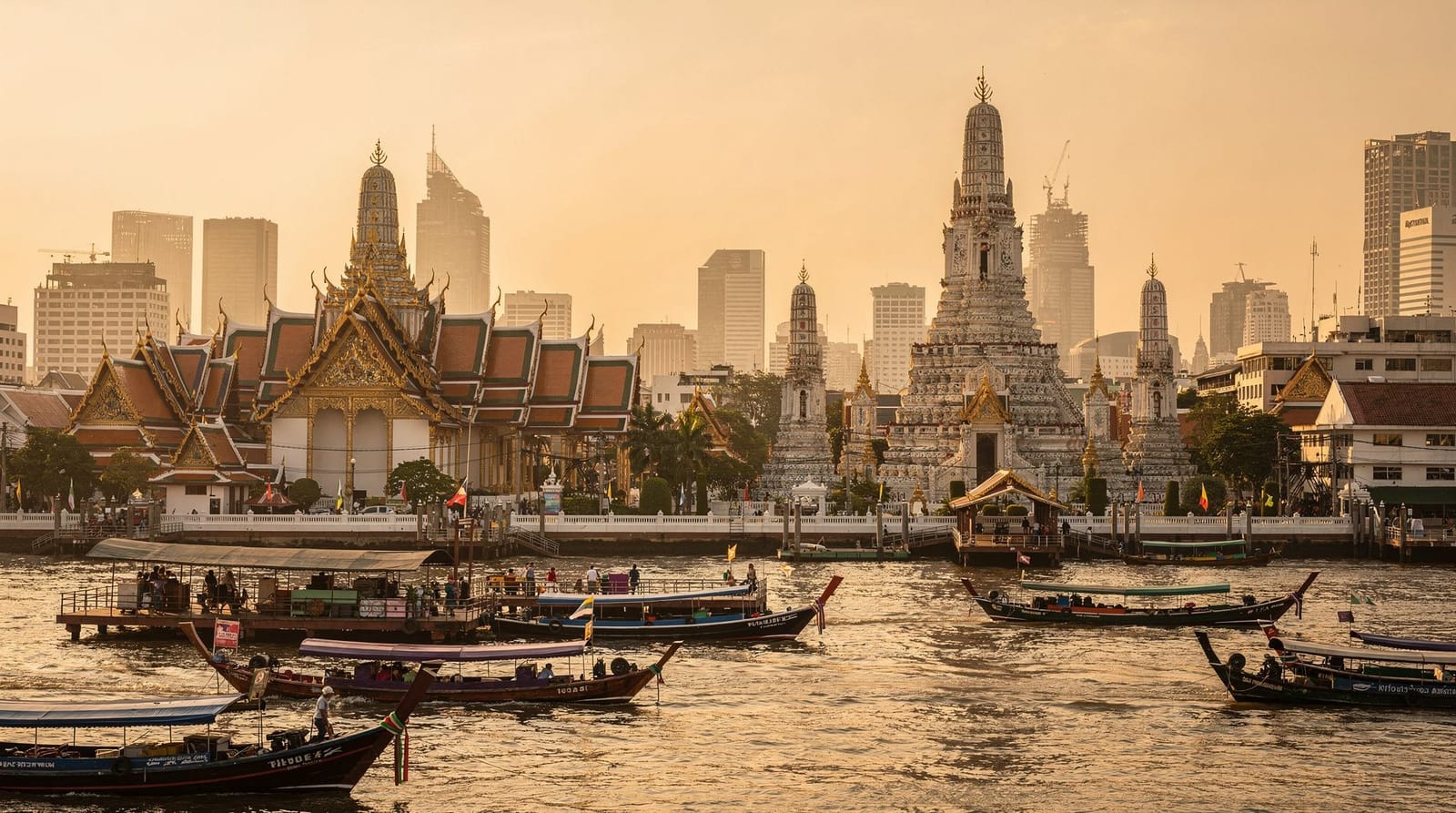
Getting there is half the charm. There is no bridge for the main crossing — you take a small wooden longtail ferry across the river from a pier on the city side, often from near Wat Klong Toey Nok or the Bang Na area, for around 4 to 15 baht depending on the pier, sometimes with your bike loaded on alongside you. The crossing takes a few minutes, the river breeze hits, and as you step off onto the Bang Krachao side the city’s roar simply stops. It is one of those rare, abrupt transitions that travel occasionally hands you — one minute traffic, the next birdsong.
Renting wheels
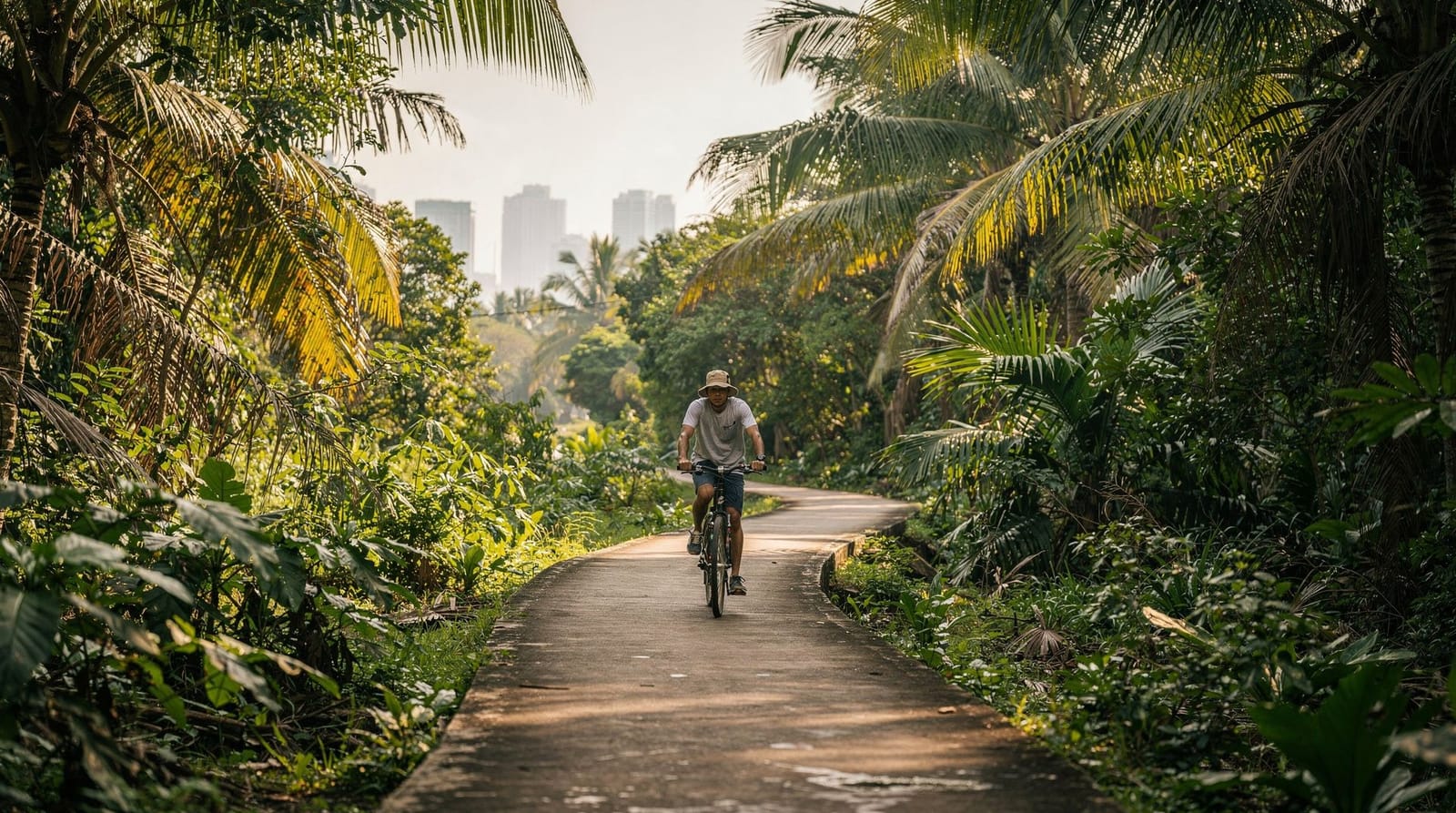
Bicycle rental is the whole point. Shops near the main piers rent simple bikes for around 80 to 100 baht for the day, often with a rough map of the cycle paths. The bikes are nothing fancy and the paths are sometimes narrow elevated concrete tracks raised above the swampy ground, just wide enough for a bike, threading through the jungle and over little canals. Wheeling along them, palm fronds brushing past, the occasional monitor lizard sliding off the path ahead, is the most genuinely peaceful thing I do anywhere near Bangkok. The Bangkok bike tours and bike tour of Bang Krachao guides cover the cycling options in depth.
A word of warning: the raised paths can be slick and have steep little drops on either side, so ride carefully, especially in the wet season when they get mossy. It is not technical, but it demands a bit of attention, which is part of why it focuses the mind so completely.
A practical tip on the bikes themselves: check the brakes and the saddle height before you wheel off, because the rental fleet is genuinely rattly and you will be on it for three or four hours. Most shops keep a deposit of your passport or 200 to 500 baht against the bike, which you get back on return. They hand you a photocopied map that is, frankly, almost unreadable — the paths are a tangle and the map bears only a loose relationship to reality — so I now just download the area on Google Maps offline before crossing, drop a pin on the pier I came in at, and accept that getting a bit lost is the whole point. There are water and snack stalls dotted along the main routes, but they thin out fast once you leave the market area, so I fill a bottle before setting off. The peninsula is bigger than it looks from the map; a full unhurried loop of the main paths, with stops, eats up a good three hours.
The full route I ride
Over a dozen visits I have settled into a loop I can recommend. From the main ferry landing on the Bang Krachao side I head first for Sri Nakhon Khuean Khan Park, fifteen minutes of gentle pedalling through orchard and jungle, and do a slow lap of the lake there before the day heats up. From the park I cut across toward the Bang Nam Pheung market side, following the elevated tracks over the canals, stopping wherever a temple or a stilt-house or a particularly photogenic stretch of green appears. The Siamese Fighting Fish Gallery and a couple of small craft spots make natural mid-ride pauses. I aim to reach the weekend market around late morning when it is liveliest but not yet baking, eat, rest in the shade, then take a looser route back to the pier in the afternoon. It is maybe twelve to fifteen kilometres all told, almost entirely flat, and slow by design.
The Bang Nam Pheung floating market
If you go on a weekend, the Bang Nam Pheung market is the social heart of the peninsula — a relaxed, leafy, largely Thai weekend market threading along wooden walkways over the water, selling proper home-cooked food, sweets, drinks and crafts. It has none of the tour-bus intensity of Damnoen Saduak; it feels like a community market that tourists are welcome to wander into rather than a spectacle staged for them. I park the bike, eat my way along the walkways for a couple of hundred baht, and rest in the shade before cycling on. It runs weekends only, so time your visit accordingly.
The park and the quiet
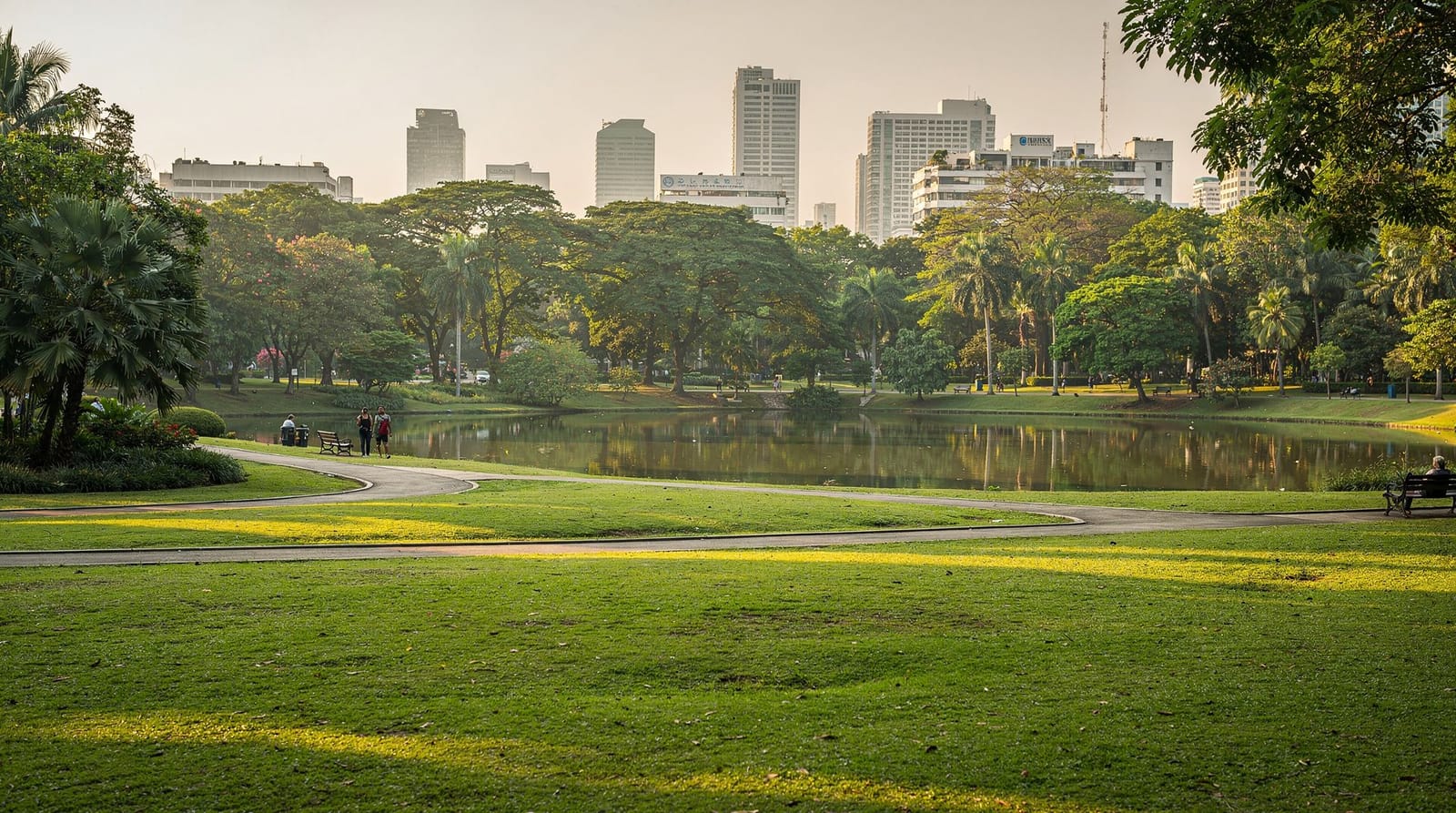
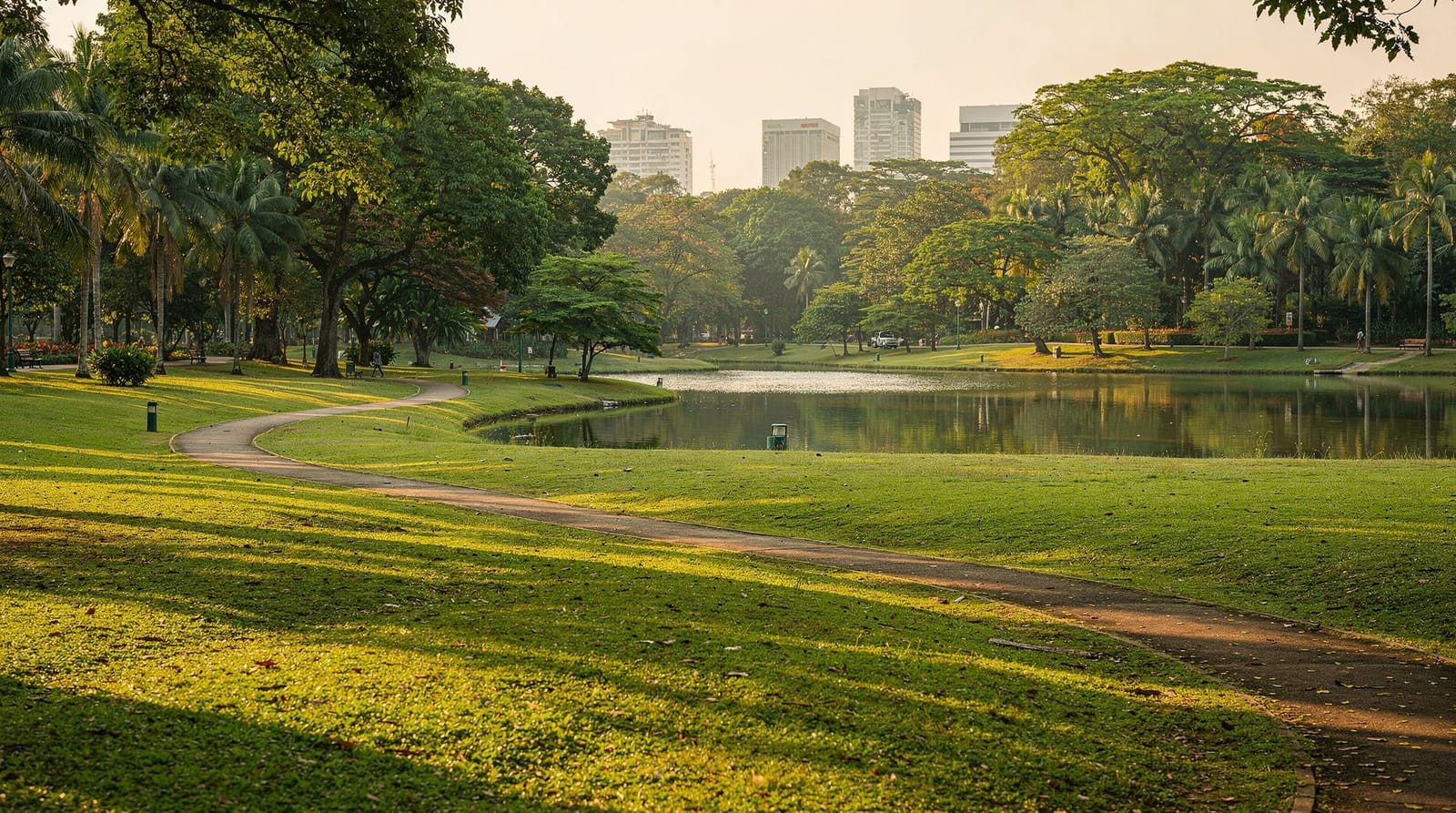
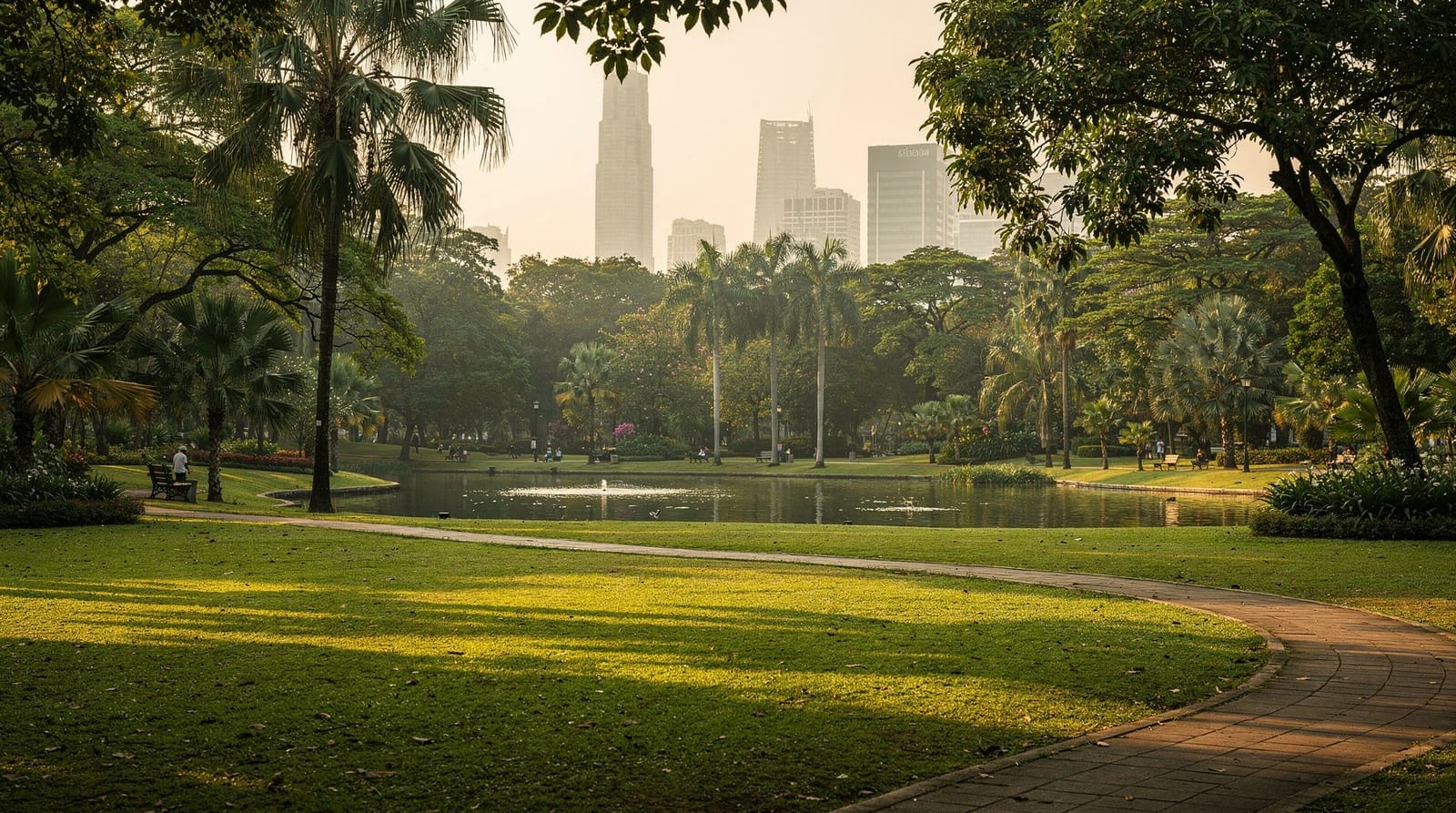
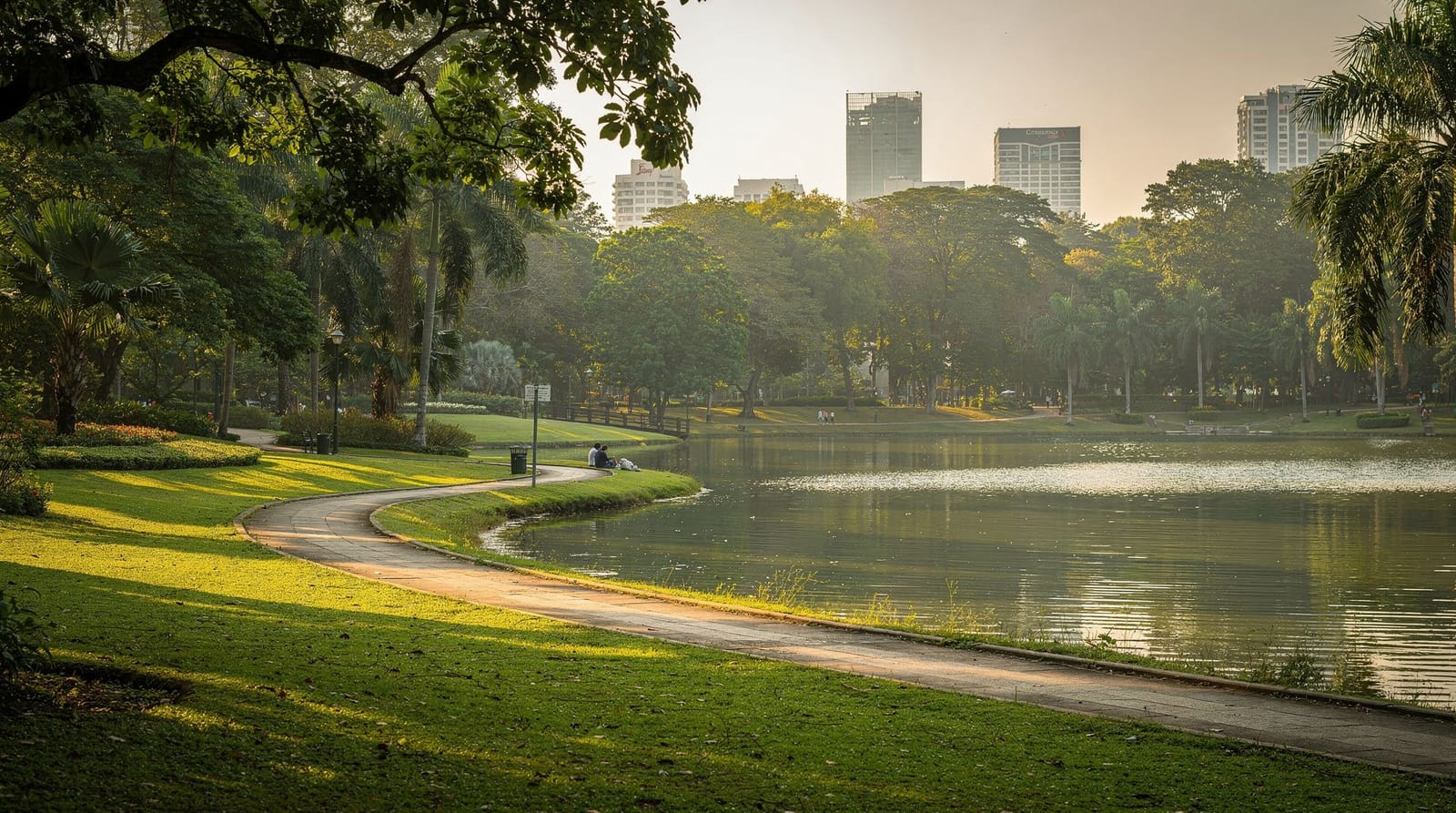
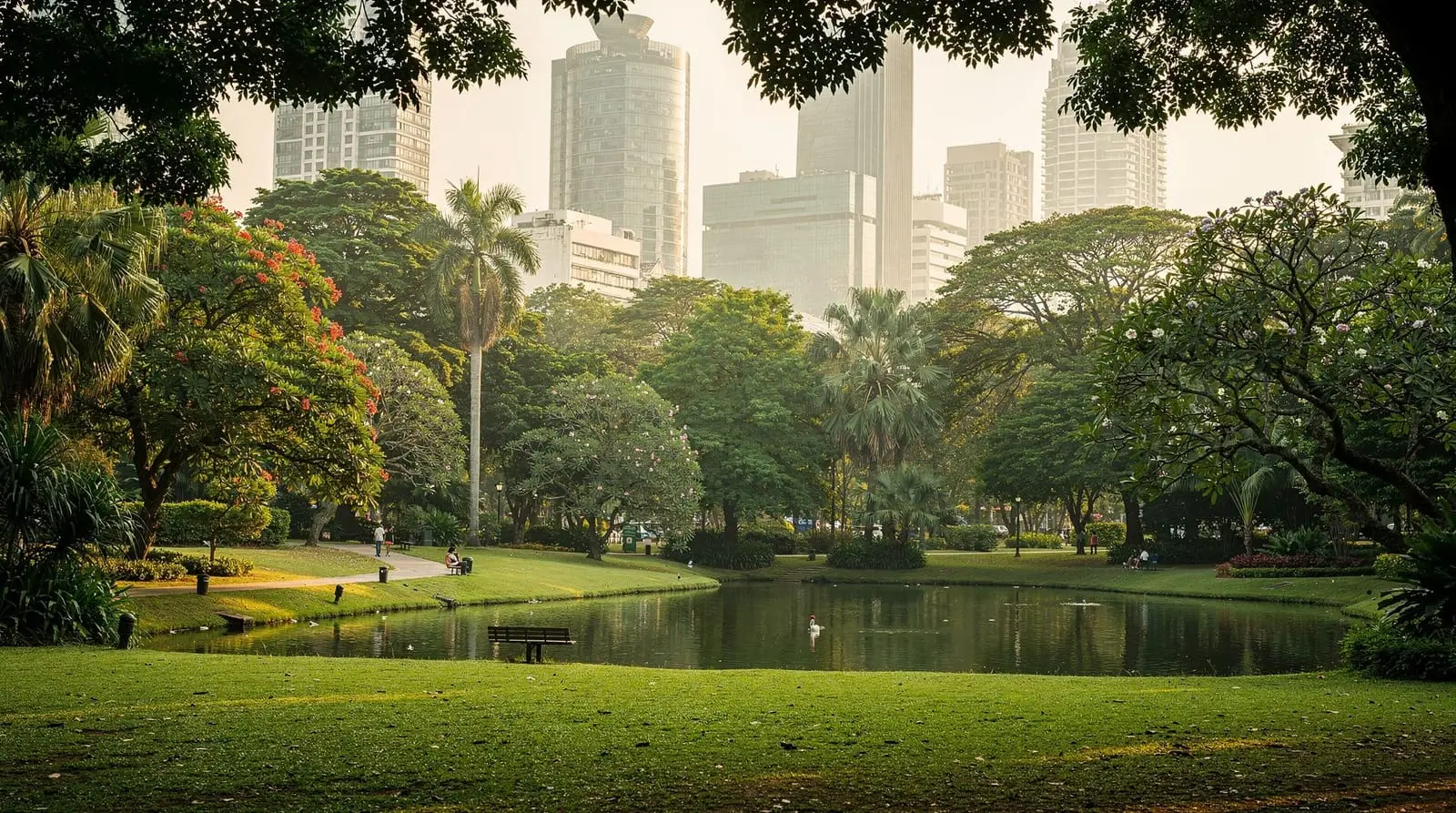
Near the centre of the peninsula sits Sri Nakhon Khuean Khan Park, a botanical garden with a lake, a bird-watching tower, and shaded paths, free to enter and gloriously peaceful. It is a fine place to leave the bike for a while and just sit in the green. The whole peninsula, really, is an exercise in doing very little in a lovely setting — the antithesis of a temple-and-market Bangkok day. The Bangkok parks guide places it among the city’s green spaces, but Bang Krachao is in a class of its own for sheer escape.
When to go, and what to bring
Timing makes a real difference here. I always aim to be on the first ferry by mid-morning at the latest, because by noon the heat off the concrete paths is punishing and the shade, plentiful as it is, only does so much. Mornings are cooler, the light through the palms is softer, and the birds are loudest. The weekend market gives you Saturday and Sunday a fuller day; on weekdays the peninsula is even quieter but the market is shut and food options shrink to a few simple stalls, so I pack a couple of snacks. The wet season, roughly June to October, turns the jungle a deeper green and the canals fuller, but the paths get genuinely slippery and an afternoon downpour is near-guaranteed, so I ride mornings and keep an eye on the sky. The cooler dry months, November to February, are the most comfortable for sustained cycling. Whatever the season, bring more water than you think you need, sunscreen, mosquito repellent for the shaded canal stretches, and a hat. There are no convenience stores deep in the green, so a 7-Eleven run before you cross is wise.
The wildlife you actually see
Part of why Bang Krachao feels like genuine escape rather than a manicured park is the wildlife. Monitor lizards, some of them comfortably over a metre long, slide off the paths ahead of your front wheel and vanish into the canals — alarming the first time, routine by the third. Kingfishers flash blue across the water, and the bird-watching tower in the park rewards a quiet ten minutes with herons and egrets working the shallows. There are squirrels in the orchards and, at dusk, the occasional flying fox heading out over the river. None of it is staged or fenced; it is simply what lives on a protected jungle island that the city forgot to pave. After a Bangkok week of relentless human density, the simple sight of a wild bird going about its business is its own small therapy.
Letting someone else handle the logistics
Doing Bang Krachao independently — finding the pier, crossing, renting a bike, navigating the paths — is part of the adventure and not hard. But the paths are genuinely confusing, easy to get lost on, and a guide who knows the back-canal routes shows you corners you would never find alone. A guided night bike tour taking in temples and the flower market reveals the city’s two-wheeled side, and a hidden-canal EV boat tour to a local artist village reaches the quiet waterways around the green lung that few visitors see. For independent riders, though, an 80-baht bike and a willingness to get a little lost is all you really need.
My reset button
Every time Bangkok starts to overwhelm me — the heat, the noise, the relentless sensory load — I know the cure is a four-baht ferry to Bang Krachao and a few hours of wheeling slowly through the jungle with nowhere to be. It is the city’s great escape valve, hidden in plain sight across the river, and the fact that so few first-time visitors ever make it there is precisely what keeps it so calm. Bring water, ride carefully, eat at the weekend market, and give yourself a full unhurried half-day. You will come back across the river restored, and you will understand Bangkok a little better for having seen the green island it works so hard to protect.
Eating on the peninsula on a weekday
If you go on a weekday, when the Bang Nam Pheung market is shut, food is not a given, and it caught me out on my first weekday visit. A handful of simple noodle and fried-rice stalls stay open near the main piers and along the busier paths, usually run out of someone’s front room, cash-only, 40 to 60 baht a plate, and genuinely good if unglamorous. Beyond those, options thin out fast the deeper you cycle into the green, so I now treat a weekday ride as a pack-your-own-snacks trip: fruit, a couple of pastries, and a full water bottle from the 7-Eleven before crossing. If eating well matters more than avoiding the weekend crowds, aim your visit for a Saturday or Sunday and build the day around the market instead. Either way, the whole outing barely dents a budget — it sits comfortably among the free things to do in Bangkok once you have paid the token ferry and bike fees.
Going further: Koh Kret as a second green escape
If Bang Krachao converts you to Bangkok’s quieter, greener side, Koh Kret, the car-free pottery island upriver, scratches the same itch from a different angle — Mon community life, kilns, and a ring path best walked or cycled rather than driven. It is a different logistical trip entirely, further north and reached via Pak Kret pier rather than the city-centre ferries, so I treat the two as separate half-days rather than trying to combine them. Between the two, Bang Krachao is the easier, closer escape for a single free afternoon; Koh Kret rewards a full half-day when you have more time to spare.
Cycling etiquette and photographing the peninsula
Bang Krachao is a working, lived-in place, not a theme park, and it is worth riding accordingly. Stilt houses and temple grounds along the paths are people’s homes and places of worship, so I keep my distance and ask before photographing anyone directly. The narrow raised paths are two-way and used by locals on motorbikes as well as tourists on bicycles, so keep to the left, slow at blind bends, and give way at the frequent little bridges. For photography, the golden hour just after the first ferry crossing gives the softest light through the palms, and the Instagram spots guide includes a couple of the peninsula’s most photogenic corners if that is part of your plan — though honestly, the best shots here come from simply stopping wherever the path surprises you.
Dry season versus wet season on the peninsula
| Dry season (Nov–Feb) | Hot season (Mar–May) | Wet season (Jun–Oct) | |
|---|---|---|---|
| Paths | Firm, easy cycling | Firm but scorching by midday | Mossy, slick, some flooding |
| Comfort | Most comfortable riding | Ride only mornings | Short, predictable afternoon rain |
| Crowds | Busiest weekends | Quieter, heat keeps casual visitors away | Quietest of all |
| My advice | Go anytime, linger longer | Cross by 8am, done by noon | Morning ride, watch the sky |
Frequently asked questions about Bang Krachao
How do you get to Bang Krachao from Bangkok?
Take a small wooden ferry across the Chao Phraya from a city-side pier for around 4 to 15 baht; you can usually load a bike on too. There is no main bridge, and the boat crossing is part of the charm.
How much does bike rental cost at Bang Krachao?
Simple bikes rent for around 80 to 100 baht for the day from shops near the main piers, often with a rough map. The raised concrete paths are narrow, so ride carefully, especially when they are wet.
Is Bang Krachao worth visiting?
Yes. It is a rare patch of preserved jungle and traditional life minutes across the river from the city, ideal for cycling, with a relaxed weekend floating market and a botanical park. It is the best green escape near Bangkok.
What is the best time of day to cycle Bang Krachao?
Early to mid-morning. The paths are cooler and shadier, the light is soft, and the birdlife is most active before the midday heat builds off the concrete tracks. Aim to cross by mid-morning and ride before noon.
How long do you need at Bang Krachao?
Give it a full unhurried half-day. A loop of the main cycle paths with stops at the park and the weekend market runs around twelve to fifteen kilometres and three to four hours, all of it flat and slow by design.
Do you need a guide for Bang Krachao?
No, independent riding is easy and part of the fun, though the paths are genuinely confusing and easy to get lost on. Download the area offline before you cross, accept a bit of wandering, and you will be fine on your own.
Can I visit Bang Krachao on a weekday?
Yes, and it is even quieter than weekends, but the Bang Nam Pheung market is shut and food options shrink to a few simple noodle stalls near the piers. Pack water and snacks, or save the visit for a weekend if the market matters to you.
Is Bang Krachao safe to cycle for beginners?
Generally yes — the paths are flat and traffic-free, but they are narrow, raised above canals, and can be slick after rain. Ride slowly, keep to the left on the two-way sections, and it is manageable even for casual cyclists.
For a deeper feel for the city’s two-wheeled and waterborne side beyond the green lung, the Bangkok bike tours overview and the longtail canal experience and Thonburi khlongs guides are all worth a look, as is the wider getting around Bangkok guide for planning the journey out.