Damnoen Saduak floating market: an honest day-trip guide
From Bangkok: Damnoen Saduak Floating Market Guided Tour
Is the Damnoen Saduak floating market worth a day trip?
Damnoen Saduak is Thailand's most famous floating market and the most photogenic — vendors paddling produce-laden boats through narrow canals about 100km southwest of Bangkok. But it is also heavily touristic, crowded and commercialised, and only worth it if you arrive very early (before 08h30) and accept the tourist-trap reality. Many visitors prefer the more local Amphawa market or pair Damnoen Saduak with the remarkable Maeklong railway market on the same trip.
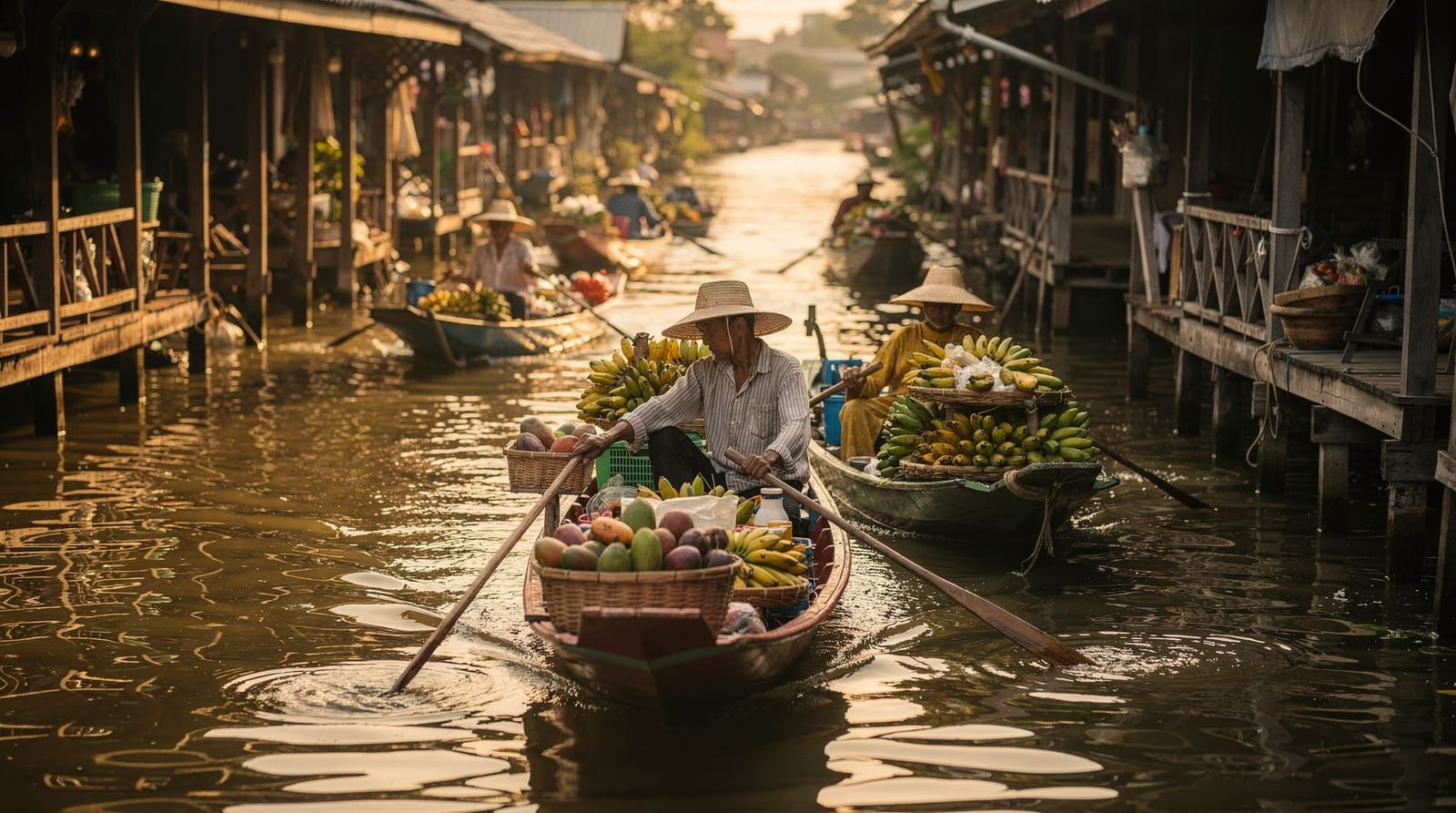
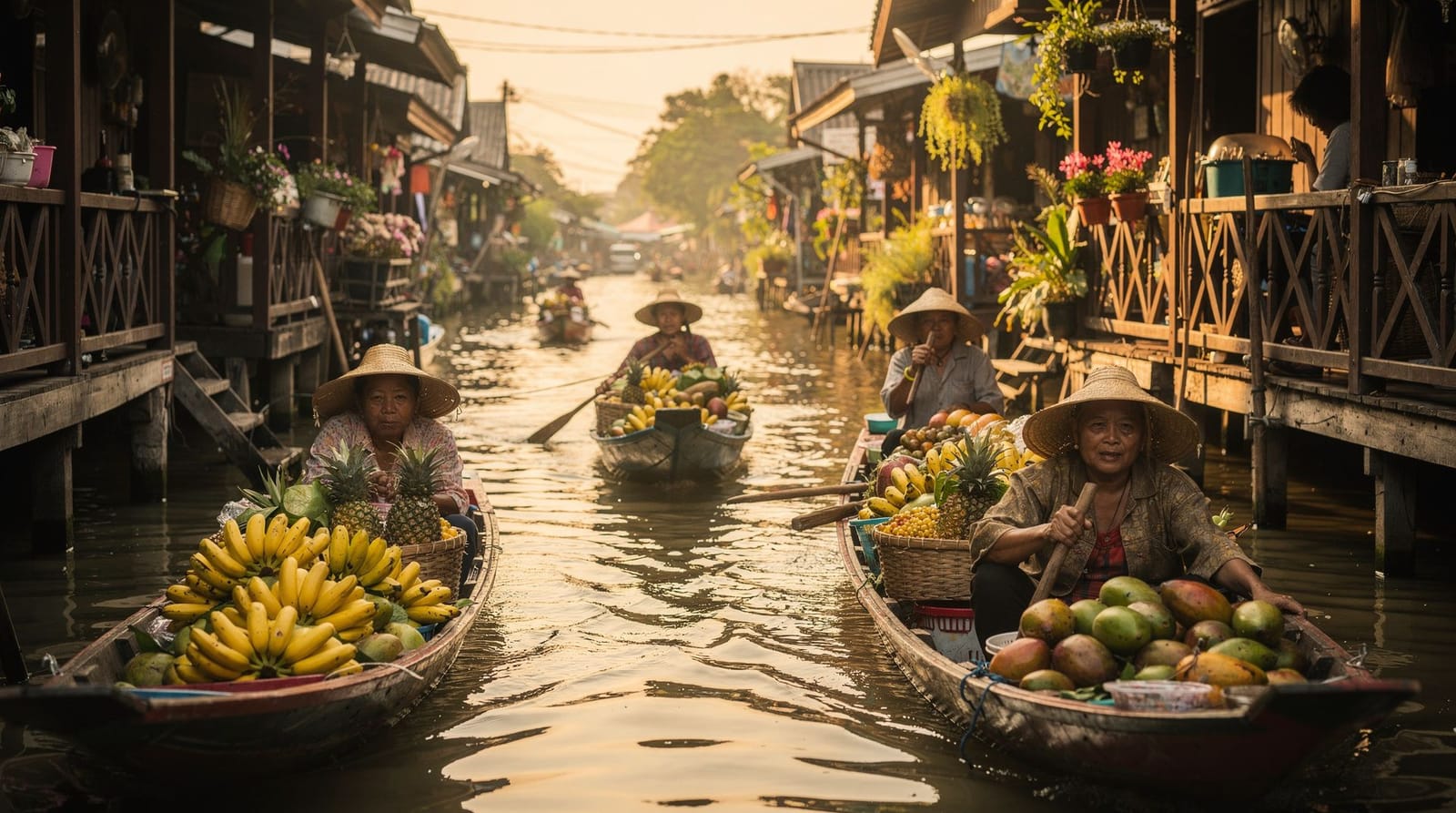
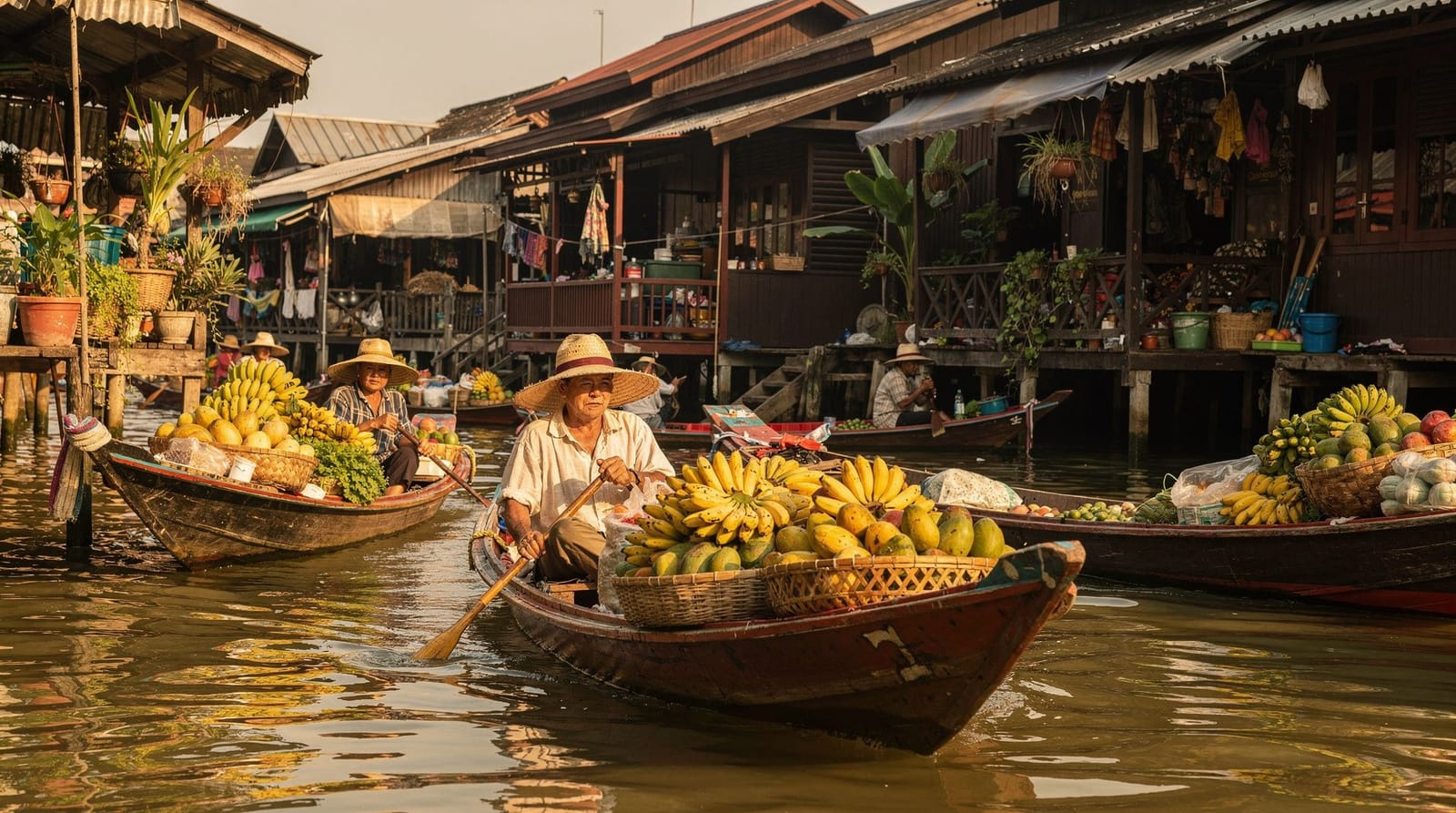
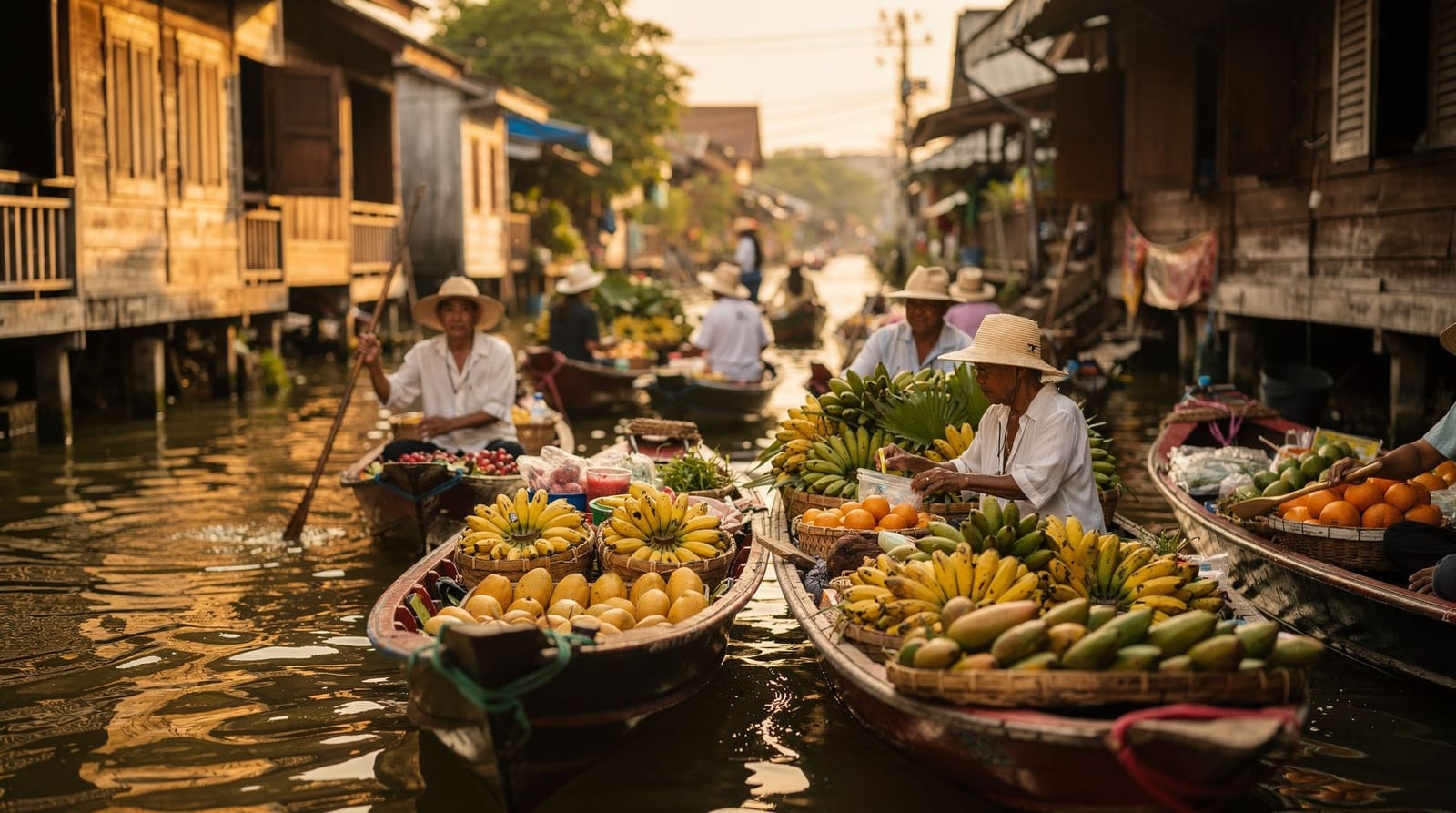
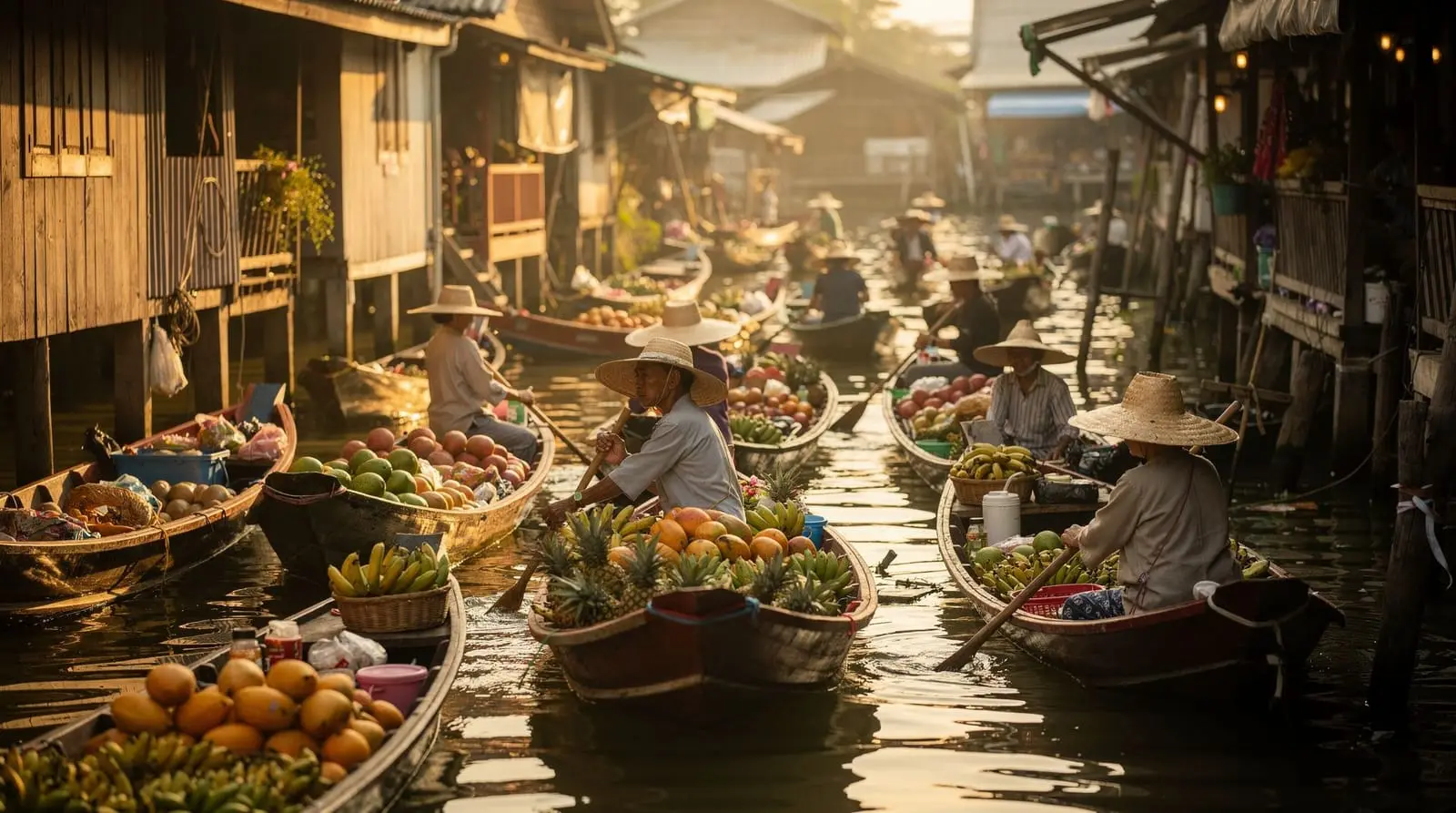
Damnoen Saduak is the floating market you have seen in every Thailand photo — wooden boats heaped with mangoes, pomelos and pad thai, paddled by women in conical hats through narrow brown canals. It is the most famous floating market in the country, about 100km southwest of Bangkok, and it is genuinely photogenic. It is also, in an honest reckoning, one of Thailand’s most commercialised tourist attractions, where souvenir sellers now outnumber the produce vendors and the canals choke with tour boats by mid-morning. This guide tells you exactly how to get the good version of Damnoen Saduak and avoid the bad one.
Damnoen Saduak at a glance
| Entry | Free — the real cost is the boats |
| Boat cost | Longtail ~150-300 THB pp; private paddle boat 600+ THB/hr, negotiable |
| Best arrival | Before 08h00-08h30 |
| Distance | ~100km southwest, 1-1.5 hours by road |
| Time needed | Half a day, often combined with Maeklong |
The honest verdict up front
Damnoen Saduak is worth seeing once, on two strict conditions: you arrive very early, and you keep your expectations calibrated. Before about 08h30 the light is golden, a handful of genuine vendors are still trading, and you can take photographs that justify the trip. After 09h30 the experience collapses into a slow-motion traffic jam of boats full of tourists buying overpriced fans and fridge magnets. If you cannot commit to an early start, you may be happier at the more local Amphawa floating market instead.
For the fuller debate, see our Damnoen Saduak worth it verdict and the Damnoen Saduak versus Amphawa comparison.
Getting there
Damnoen Saduak is about 100km southwest of Bangkok, roughly 1–1.5 hours by road. Minivans run from the Southern Bus Terminal (Sai Tai Mai) for around 80–100 THB, but the dawn timing needed for a good visit is awkward to coordinate independently. The practical choice for most visitors is a guided tour with hotel pickup, which handles the early start and almost always combines the floating market with the Maeklong railway market.
Damnoen Saduak floating market half-day guided tourThe day-trip transport guide has the minivan terminal details if you go solo.
What it costs
Entry to the market is free; the cost is in the boats. A shared longtail canal tour runs about 150–300 THB per person, while a private paddle boat is 600 THB or more per hour and is heavily negotiable — agree the price and the route before you step in. Souvenir prices from the boats are inflated and assume you will not bargain, so bargain hard or simply decline. A guided day tour from Bangkok costs 800–1,500 THB including transport and the Maeklong combination.
The Maeklong railway market — the real star
Most tours pair Damnoen Saduak with the Maeklong railway market, and for many visitors Maeklong is the better half of the day. Here a fresh-produce market is built directly across a working railway line: when a train approaches, vendors calmly fold back their awnings and slide their baskets aside, the train inches through inches from the merchandise, and then everything springs back into place. It is genuinely astonishing, far less commercialised than Damnoen Saduak, and it happens several times a day on the published timetable.
Damnoen Saduak and Maeklong railway market combined tourSee the floating markets of Bangkok guide for how Maeklong, Damnoen Saduak, Amphawa and the city’s own markets compare.
How to get the good version
Take a tour that leaves Bangkok by 06h30–07h00, or set out independently to arrive by 08h00. Walk the canal-side walkways — which are free — instead of, or before, taking a boat, since this removes the captive-selling pressure. If you do take a paddle boat, negotiate the full price and route up front and feel free to skip the souvenir stops. Bring cash in small notes, sun protection and modest clothing if your tour includes a temple stop such as Wat Pho or Wat Arun.
Damnoen Saduak floating market with Wat Pho and Wat ArunIs it a trap? Yes, but a manageable one
Damnoen Saduak earns its place on lists of Bangkok tourist traps, and you should go in clear-eyed. The pressure to buy is constant, the “floating” produce vendors are partly performance, and the midday crowds are genuinely unpleasant. But the early-morning visuals are real, and combined with Maeklong it makes a satisfying half-day. Treat it as a photo excursion, not a glimpse of authentic Thai market life — for that, head to Amphawa or the city’s own Khlong Lat Mayom market.
This trip slots well into the Bangkok with day trips itinerary. Return to the day trips from Bangkok overview to weigh it against the alternatives.
Damnoen Saduak, Amphawa and Maeklong compared
If you’re weighing which floating-market day trip fits your trip, here’s the honest side-by-side:
| Damnoen Saduak | Amphawa | Maeklong | |
|---|---|---|---|
| Best for | Iconic photos, convenience | A local, evening atmosphere | A genuinely unusual sight |
| When | Every morning | Fri–Sun afternoon/evening | Several times daily, on the train timetable |
| Crowd level | Heavy after 09h30 | Moderate, mostly Thai visitors | Light to moderate |
| Distance from Bangkok | ~100km, 1–1.5 hrs | ~80km, similar drive time | Near Damnoen Saduak, 30–40 min apart |
What to wear and bring
Sun protection matters more here than almost anywhere else on a Bangkok day trip — the canal has little shade, and mornings turn hot fast once the sun is up. Bring a hat, sunscreen, and light, breathable clothing; if your tour includes a temple stop such as Wat Pho or Wat Arun, pack a layer that covers shoulders and knees. Closed sandals or shoes with good grip help on the wet, sometimes slippery boat platforms. Carry small-denomination cash, since boat vendors and stalls rarely have change for large notes and bargaining goes more smoothly with exact amounts ready.
Rainy season and family considerations
During the rainy season (roughly June–October), a light shower rarely cancels the market — vendors simply carry on under awnings — but a heavy downpour can shorten the boat rides and make the canal-side walkways slippery. Check the forecast the night before and pack accordingly; the rainy season in Bangkok guide has the wider picture. Families generally do well here: the boats and the spectacle appeal to children, though the early departure time is the real challenge for a trip with young kids, and the packed mid-morning boats are worth avoiding with a stroller. The Bangkok with kids guide has more on pacing day trips with children.
Frequently asked questions about Damnoen Saduak floating market: an honest day-trip
What time should I arrive at Damnoen Saduak?
How much does it cost to visit Damnoen Saduak?
How do I get to Damnoen Saduak from Bangkok?
Is Damnoen Saduak a tourist trap?
Should I choose Damnoen Saduak or Amphawa?
What is the Maeklong railway market and is it combined?
Can I avoid the boat sellers and pressure?
Top experiences
Bookable activities with verified prices and instant confirmation on GetYourGuide.