A floating market photo diary: chasing the light at Amphawa
I went to Amphawa to take photographs and came back with something better than the shots I had planned for — a real feel for a floating market that locals actually use, lit by late-afternoon gold and, after dark, by fireflies. This is a photo diary of that day, written for anyone who wants to come home with images that capture a floating market honestly rather than the same over-crowded clichés. If you are choosing between the famous markets for photography, this is also my case for why Amphawa, not the more famous Damnoen Saduak, is the one to point your lens at.
| Where | Amphawa, about 90km southwest of Bangkok |
| Best light | Golden hour, roughly an hour before sunset |
| Time needed | A full afternoon into the evening, 2pm–9pm |
| Getting there | Organised day trip recommended (firefly boats run after dark) |
| Cost on-site | 60–150 baht per boat-vendor plate, 60–80 baht for the firefly boat |
Why Amphawa over Damnoen Saduak
A quick word on the choice, because it matters enormously for photographers. Damnoen Saduak is the famous one, the postcard market — and by mid-morning it is a crush of tourist boats and souvenir stalls, near-impossible to photograph without a hundred other visitors in frame. Amphawa, about 90 kilometres southwest of Bangkok, runs mainly on weekend afternoons and evenings, draws a largely Thai crowd, and feels like a community market rather than a set built for cameras. The Damnoen Saduak versus Amphawa comparison lays out the trade-offs, and for honest, atmospheric, human photographs, Amphawa wins easily. The floating markets guide covers them all.
Mid-afternoon: arriving as the market wakes
I arrived around 2pm, when Amphawa is just opening up — vendors setting up their boats along the canal, the wooden walkways beginning to fill, the light still high and harsh. This is the time for the establishing shots: the curve of the canal lined with old wooden shophouses, the boats nosing into position, the first wisps of charcoal smoke from the grilling boats. The harsh early light is not ideal for portraits, but it is perfect for the wide architectural frames that set the scene. I shot from the bridges that cross the canal, which give the cleanest elevated angles down onto the boats. The best photo spots guide has more on composing Bangkok’s markets and waterways.
Late afternoon: the golden hour on the water
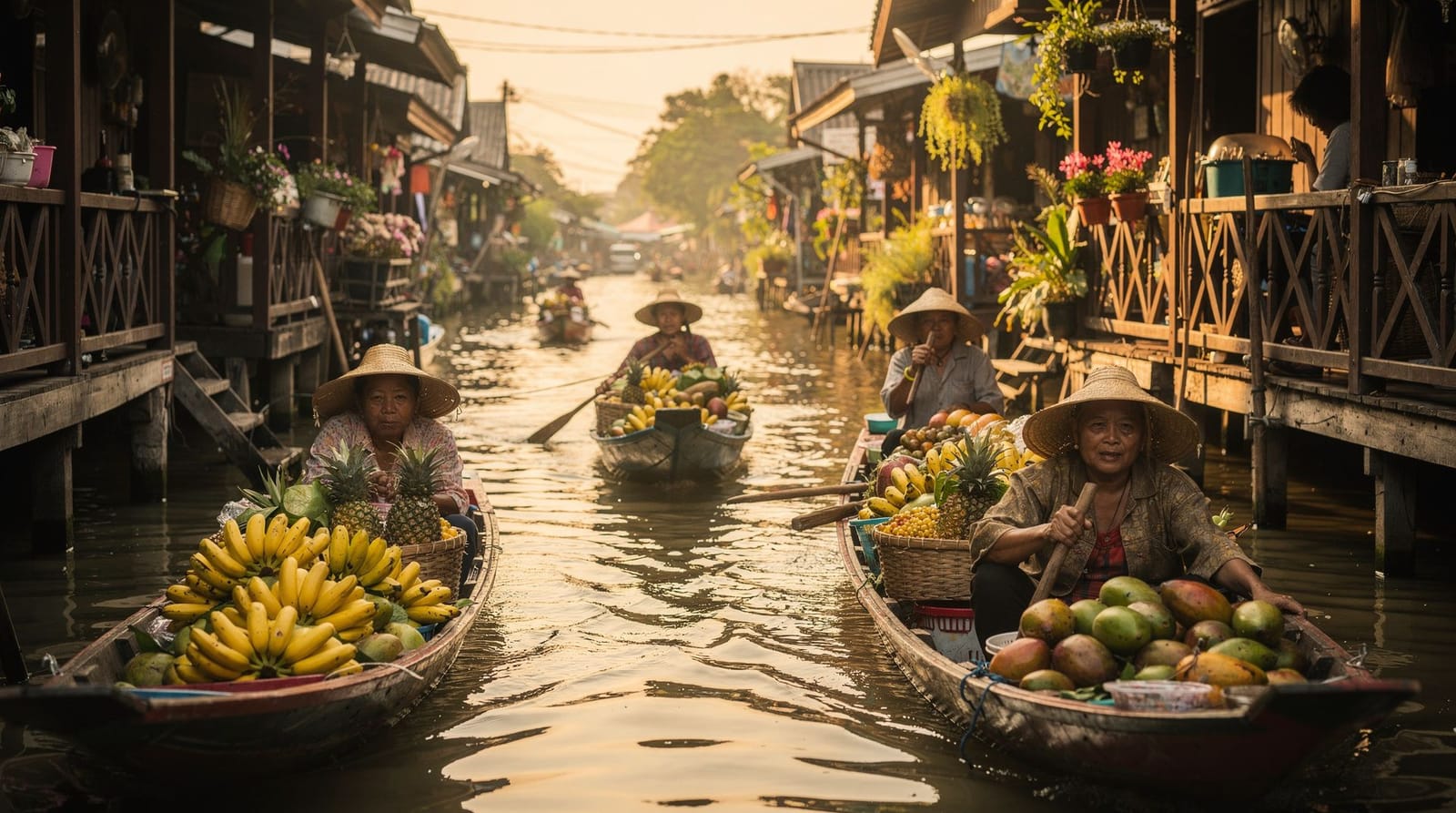
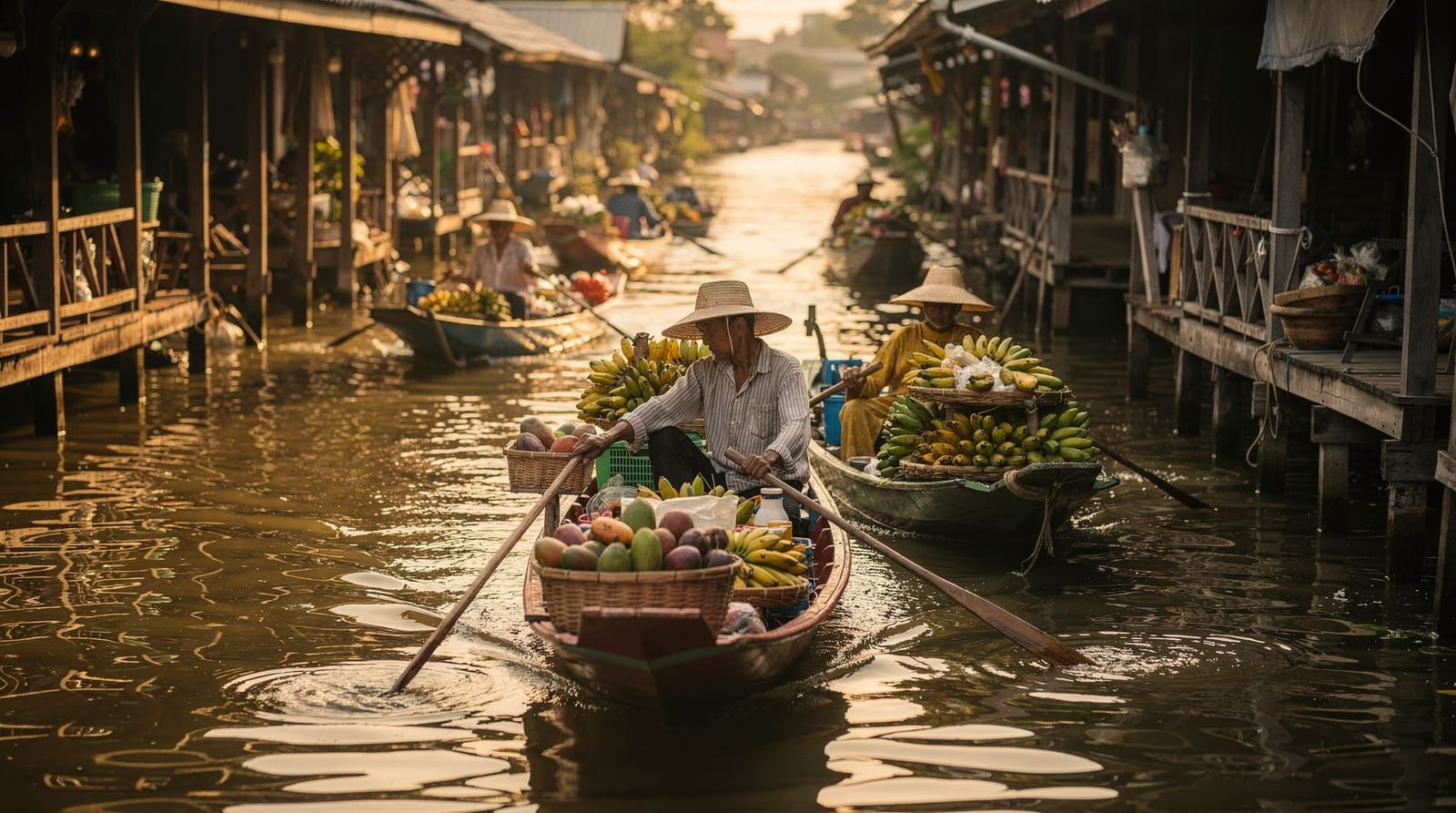
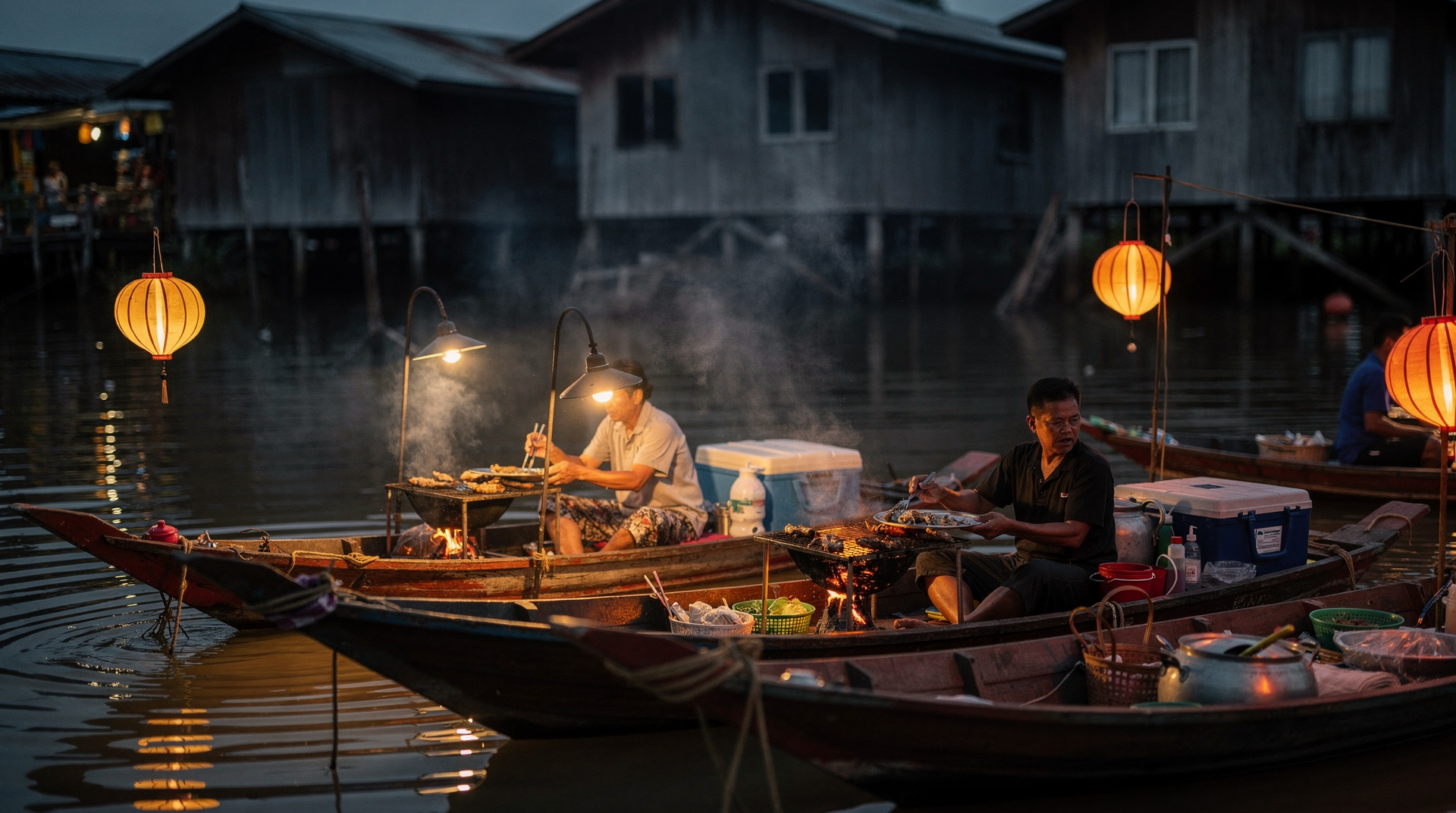
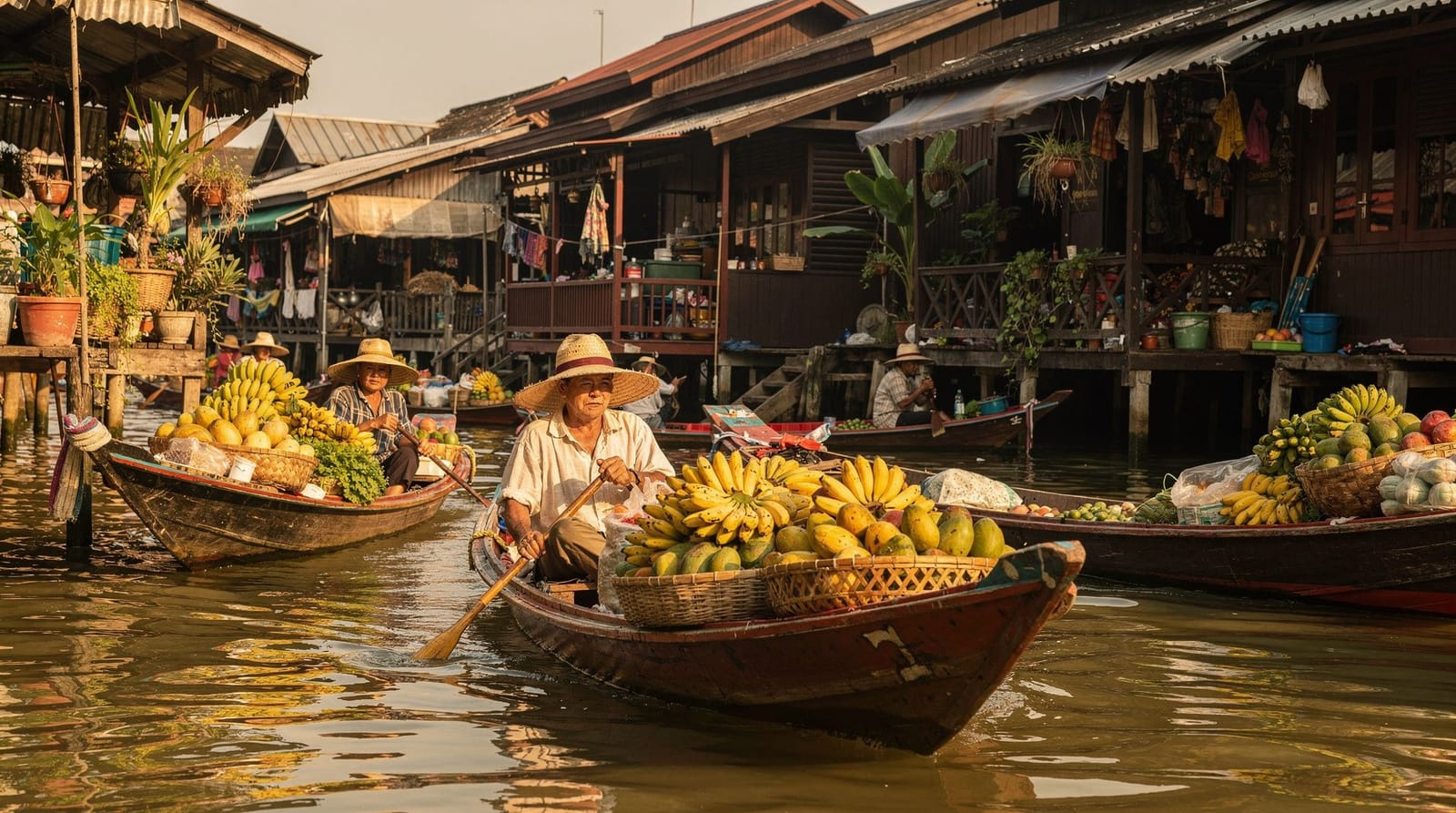
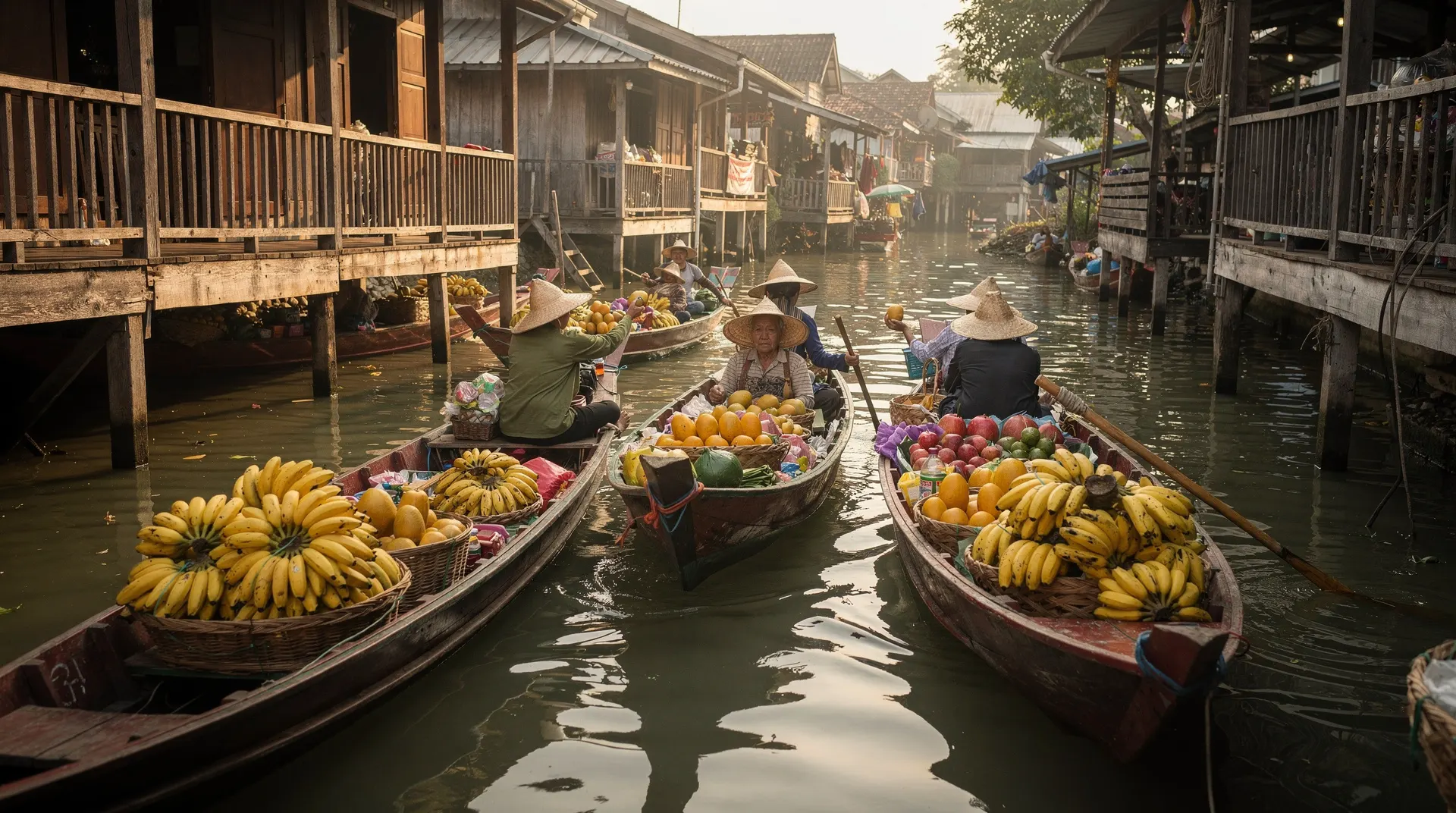
This is the shot you came for. As the afternoon softens toward evening, the low sun slants down the canal and turns the whole scene gold — the water, the wooden boats, the smoke from the seafood grills, the faces of the vendors. The boat vendors cooking grilled prawns, squid and noodles right on the water are the photographic heart of Amphawa, and in the golden hour, with the warm light catching the steam and smoke, they are extraordinary. I spent the best hour of the day here, shooting close from the walkways and the canal edge, buying food as I went both to be a respectful customer and because it was genuinely delicious. A plate of grilled seafood from a boat is 60 to 150 baht, and eating it is part of the experience, not a distraction from it.
A few technique notes from that hour: shoot into the light for silhouettes of the boats and steam, then turn around for the warm front-lit faces. Get low, to water level where you can, for the most intimate boat-vendor frames. And be patient — the best moment is a vendor mid-action, fanning the coals or handing a plate across the water, not a posed shot.
My kit and settings for the day
People always ask what I carried, so here it is, kept deliberately light because Amphawa is a place you walk and squeeze through, not a place for a tripod-laden circus. I shot the whole day on one body with a fast 35mm-equivalent prime, which is wide enough for the canal scenes and intimate enough for the boat-vendor portraits without making me change lenses in the crush. A 50mm came out only occasionally for tighter faces. For the golden hour I shot wide open for the warm bokeh on the steam and water, dropping my ISO low while the light held. As dusk came I bumped ISO steadily — 1600, then 3200 as the lanterns took over — and leaned on a small travel tripod I had folded in my bag for the slow-shutter reflection shots once the light dropped past handholdable. A polariser helped cut the glare off the water in the harsh early afternoon. And I carried spare batteries and a cloth, because the humidity and the grill smoke conspire to fog a lens fast. None of this is exotic; the point of Amphawa is access and patience, not gear.
Etiquette and being a good photographer here
Because Amphawa is a real community market and not a set, how you behave with your camera matters, and it shapes the pictures you get. The boat vendors are working, fast, in tight quarters, and a lens shoved in a face without a word sours the whole exchange. My approach is simple and it consistently earns me better frames: I buy first. A 60-to-150-baht plate of grilled prawns or squid from a boat is both genuinely delicious and the most natural icebreaker there is, and a vendor you have just bought from will almost always smile, carry on cooking, and let you shoot freely. A nod, a wai, a “khop khun khrap” go a long way. I avoid flash, which is intrusive and flattens the gorgeous natural light anyway. And on the firefly boats after dark, I keep my screen brightness low and my shutter quiet out of respect for the other passengers and the experience itself — nobody comes to watch fireflies blink in unison only to have a stranger’s LCD glaring beside them. Treat the place as a community you are a guest in rather than a backdrop, and it rewards you with the honest, human images that are the entire reason to choose Amphawa over the famous market in the first place.
Dusk: the lanterns and the canal lights
As the sun sets, Amphawa shifts mood again. The wooden shophouses light up, lanterns glow, and the canal takes on a completely different, more intimate character. This is the time for slower shutter speeds, for the reflections of lights on the water, for the warm interiors of the riverside cafes and shops. Bring something to brace your camera, because the light drops fast and handheld shots get tricky. The transition from golden hour to blue hour to full dark all happens within an hour or so, and each phase is worth shooting.
After dark: the firefly boats
Here is Amphawa’s secret weapon, the thing that genuinely sets it apart, and the reason to stay into the evening: the firefly boats. After dark, longtail boats take visitors a short way along the river to see the lamphu trees lit up with thousands of fireflies, blinking in unison like natural fairy lights. It is a magical, gentle experience — and a fiendishly difficult one to photograph, requiring a tripod, a fast lens, high ISO and a lot of patience for what may be only a faint result. But even if the photographs do not come out, the experience is worth it; sometimes the best moments are the ones you watch rather than shoot. The boat trip costs around 60 to 80 baht per person.
Getting there and getting the most from it
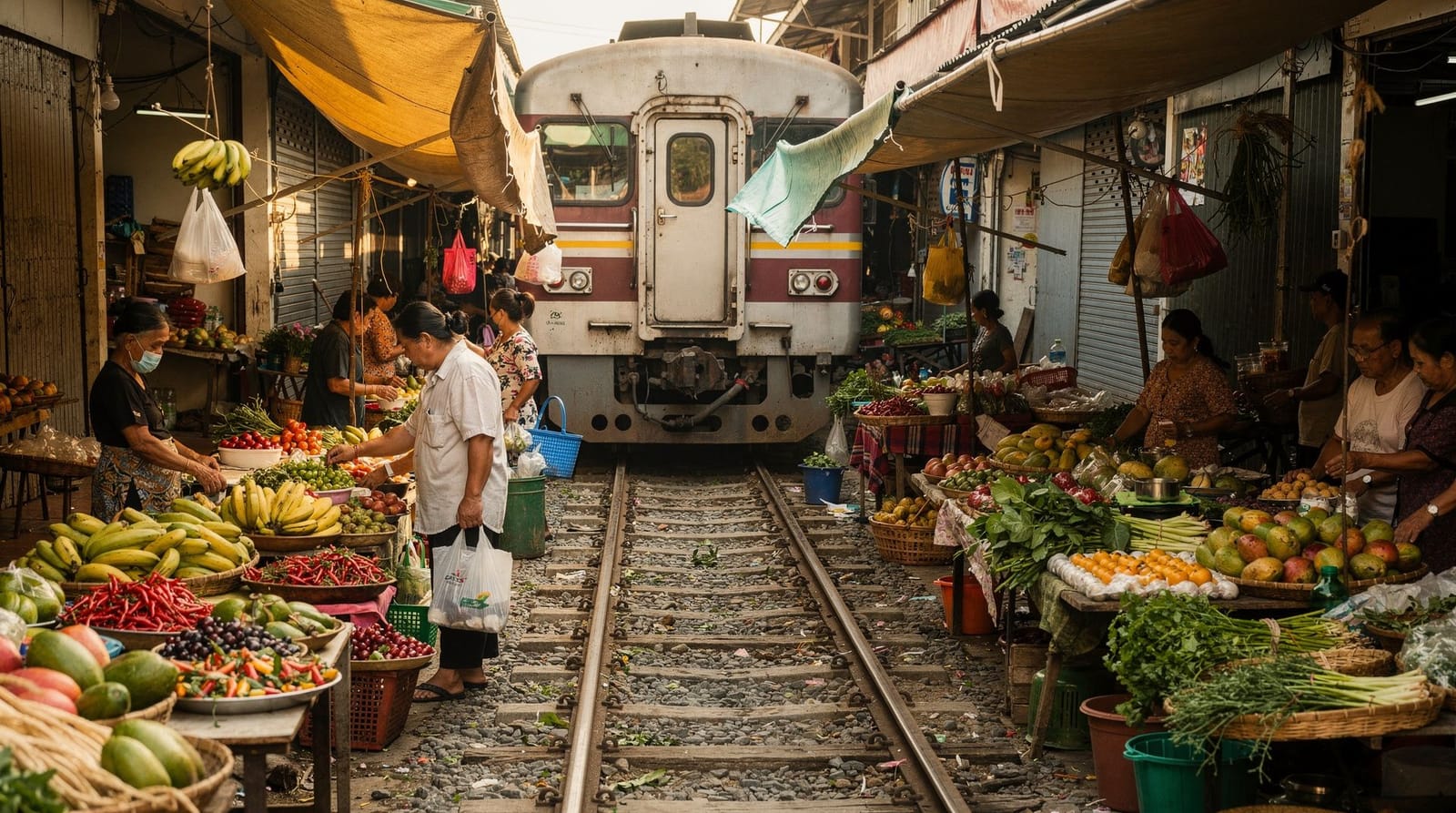
Amphawa is far enough that an organised trip often makes sense, especially because the firefly boats run after dark and getting back to Bangkok late independently is awkward. A good tour also usually bundles in the nearby Maeklong railway market, where vendors fold their awnings back as a train passes inches from the produce — a spectacle that is itself a photographer’s dream and worth the trip alone. A Maeklong and Amphawa floating market day trip pairs the two perfectly, and an Amphawa and railway markets tour covers the same ground with the timing handled for you. The Amphawa day trip guide weighs the DIY option for those who prefer it.
Weekday versus weekend: when to go for fewer crowds
Amphawa is at its most photogenic and its most crowded on Saturday and Sunday afternoons, which is when almost every tour and almost every visitor arrives. If your dates allow it, a Friday visit gets you nearly the same golden-hour scene and the same firefly boats with noticeably thinner crowds on the walkways and shorter queues for a spot on the bridges. I have shot both, and the Friday frames have fewer stray tourists drifting into the edge of the composition. It is a small scheduling choice, but for anyone treating this as a serious shoot rather than a casual visit, it is the single easiest way to improve your odds without changing anything about your kit or technique. The floating markets guide and the Bangkok markets guide both note the wider pattern of weekend crowding across the city’s markets, and it holds true here more than almost anywhere.
My day at Amphawa, in order
| Time | What’s happening | What to shoot |
|---|---|---|
| 2:00pm | Market waking up, harsh high light | Wide architectural frames, boats in position |
| 4:30–6:00pm | Golden hour | Boat vendors, steam, silhouettes, close portraits |
| 6:00–7:00pm | Dusk, lanterns coming on | Slow shutters, canal reflections |
| After 7:00pm | Full dark, firefly boats | Long exposure attempts, or just watch |
For photographers who want the market shots without the firefly leg — a shorter, more flexible window that still catches golden hour — the best photo spots and Instagram spots guides map other Bangkok locations worth combining with an Amphawa afternoon, and the photoshoot guide covers planning a dedicated shoot day around the city more broadly.
The diary’s last entry
I came to Amphawa for photographs and left with a memory card full of golden-hour boats and a head full of fireflies I never quite captured, and I would not change a frame of it. The lesson, for any photographer weighing the floating markets, is simple: skip the famous, crowded one, go to Amphawa on a weekend afternoon, shoot the golden hour on the water, stay for the lanterns, take the firefly boat, and accept that the best image of the day might be the one you only saw. That is the honest version of floating-market photography — and the more rewarding one.
Frequently asked questions about photographing Amphawa floating market
When is the best light at Amphawa floating market?
The golden hour, roughly an hour before sunset, when low sun turns the canal, boats and grill smoke gold. Dusk and blue hour bring lantern-lit reflections, and after dark come the firefly boats.
Is Amphawa better than Damnoen Saduak for photography?
Yes. Amphawa runs on weekend afternoons with a largely Thai crowd and feels authentic, while Damnoen Saduak becomes a tourist crush by mid-morning. Amphawa offers more honest, atmospheric, human images.
What days is Amphawa floating market open?
Amphawa runs mainly on Friday, Saturday and Sunday afternoons into the evening. Time your visit for the late afternoon golden hour, and stay after dark for the firefly boat trips along the river.
What camera gear do I need for Amphawa?
Keep it light: one body and a fast wide-ish prime around 35mm covers nearly everything, from canal scenes to boat-vendor portraits. Bring a small travel tripod for the dusk reflections and firefly boats, spare batteries, and a cloth for the humidity and grill smoke. Leave the heavy kit at home.
How do I photograph the Amphawa firefly boats?
It is genuinely hard. You need a tripod, a fast lens, high ISO and patience, and even then results may be faint. Keep your screen dim out of respect for other passengers, and accept that the experience may be better watched than shot. The boat trip costs around 60 to 80 baht.
How do I get good photos of the boat vendors without being rude?
Buy first. A 60-to-150-baht plate from a boat is the most natural icebreaker, and a vendor you have bought from will usually let you shoot freely. Skip the flash, offer a nod and a “khop khun,” and treat the market as a community you are a guest in.
For planning the trip itself, the floating markets guide, the Amphawa day trip and Damnoen Saduak vs Amphawa comparisons, the best photo spots guide and the day trips from Bangkok overview all help, with the Maeklong railway market the natural pairing.