Phetchaburi
Phetchaburi is an underrated day trip: a hilltop royal palace, cave temples and a working old town, west of Bangkok near Hua Hin. How to visit and what to see.
Petchaburi Temples & Royal Palace - small Join Group Tour
Quick facts
- Distance from Bangkok
- ~120 km southwest (2–2.5 hr by train, minivan or car)
- Getting there
- SRT train, minivan from Bangkok, or private car; pairs with Hua Hin
- Key sight
- Phra Nakhon Khiri (hilltop palace), Tham Khao Luang cave temple, old town
- Time needed
- A full day; or a stop on the way to Hua Hin
- Best time
- Nov–Feb (cooler); the hilltop and caves are best in the morning
Phetchaburi is one of the most rewarding day trips from Bangkok that almost no foreign visitor makes. About 120 km southwest of the city, this old provincial capital — sometimes spelled Phetburi and nicknamed “Muang Phet” — crams an unusual amount into a compact, walkable area: a 19th-century royal palace crowning a forested hill, a string of historic temples in a faded riverside old town, and, just outside, some of Thailand’s most atmospheric cave shrines. It sits on the route south toward Hua Hin and Cha-am, so it pairs naturally with a coastal trip, but it stands on its own as a culture-rich, refreshingly untouristed destination.
Is it worth the trip? For travellers who enjoy temples, history, and the pleasure of having a place largely to themselves, very much so. Phetchaburi rewards curiosity rather than ticking off a famous icon — there is no single world-renowned sight, but the combination of hilltop palace, cave temples, atmospheric old town, and celebrated local sweets adds up to a genuinely satisfying day. This page walks through the highlights and how to get there.
Phra Nakhon Khiri (Khao Wang)
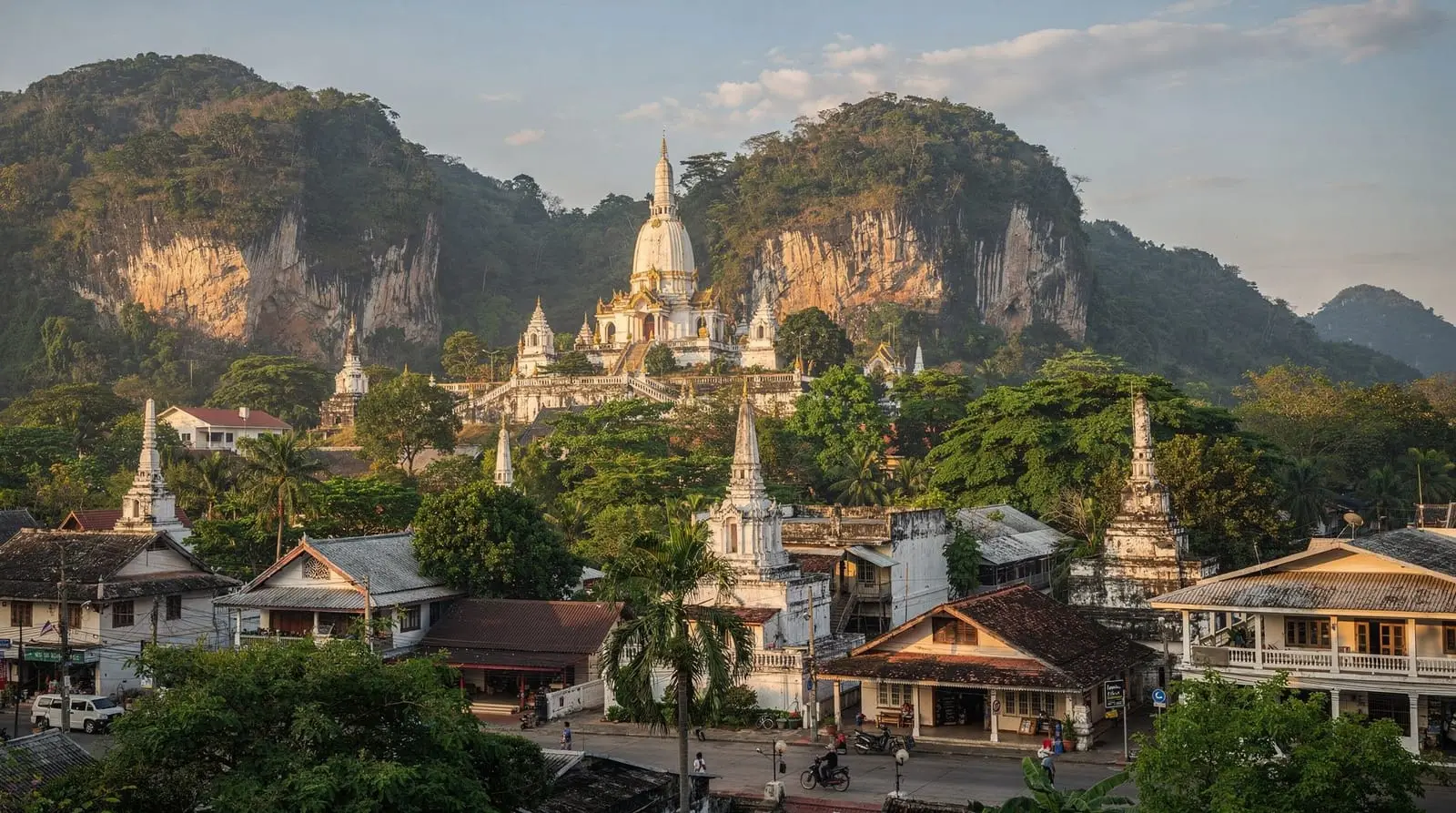
The signature sight is Phra Nakhon Khiri, known locally as Khao Wang (“Palace Hill”) — a 19th-century summer palace complex built for King Mongkut (Rama IV) across three peaks of a hill overlooking the town. The buildings blend Thai, Western, and Chinese styles, with a white-and-cream royal residence, an observatory, a glittering chedi, and several temples, all connected by paths through frangipani trees and inhabited (be warned) by bands of macaques. A funicular tram carries you up from the base, or you can walk. From the top, the views over Phetchaburi and the surrounding rice plains are superb, especially in the clear morning light. The hilltop palace is now a national museum; modest entry and tram fees apply, and the same monkey-caution advice applies as at Lopburi — keep belongings secured. The Phetchaburi temples and royal palace small-group tour takes in the hill and the town’s key temples with a guide.
The cave temples
Phetchaburi’s caves are its quiet marvel. Tham Khao Luang, a short way outside town, is a large cavern lit by shafts of sunlight falling through openings in the roof onto a collection of golden Buddha images — a serene, photogenic, and genuinely moving space, and one of the most beautiful cave shrines in central Thailand. (Resident monkeys again; mind your things.) A second cave temple, Tham Khao Bandai-It, set in a forested hill, has a network of chambers with reclining and seated Buddhas. These caves are the kind of place that stays with you, and they are largely free of crowds. Dress respectfully — they are active shrines. See temple etiquette and dress code.
The old town temples
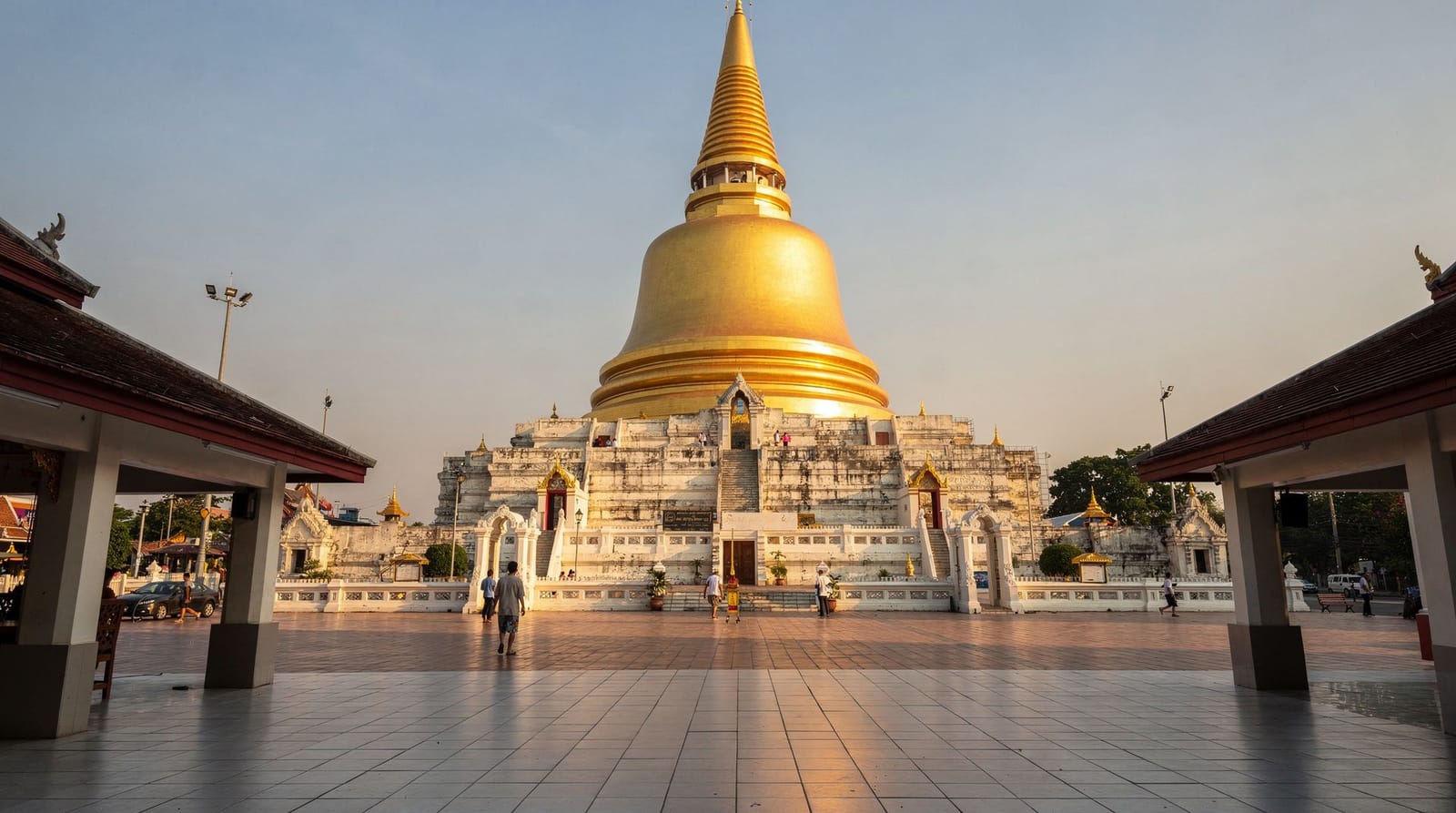
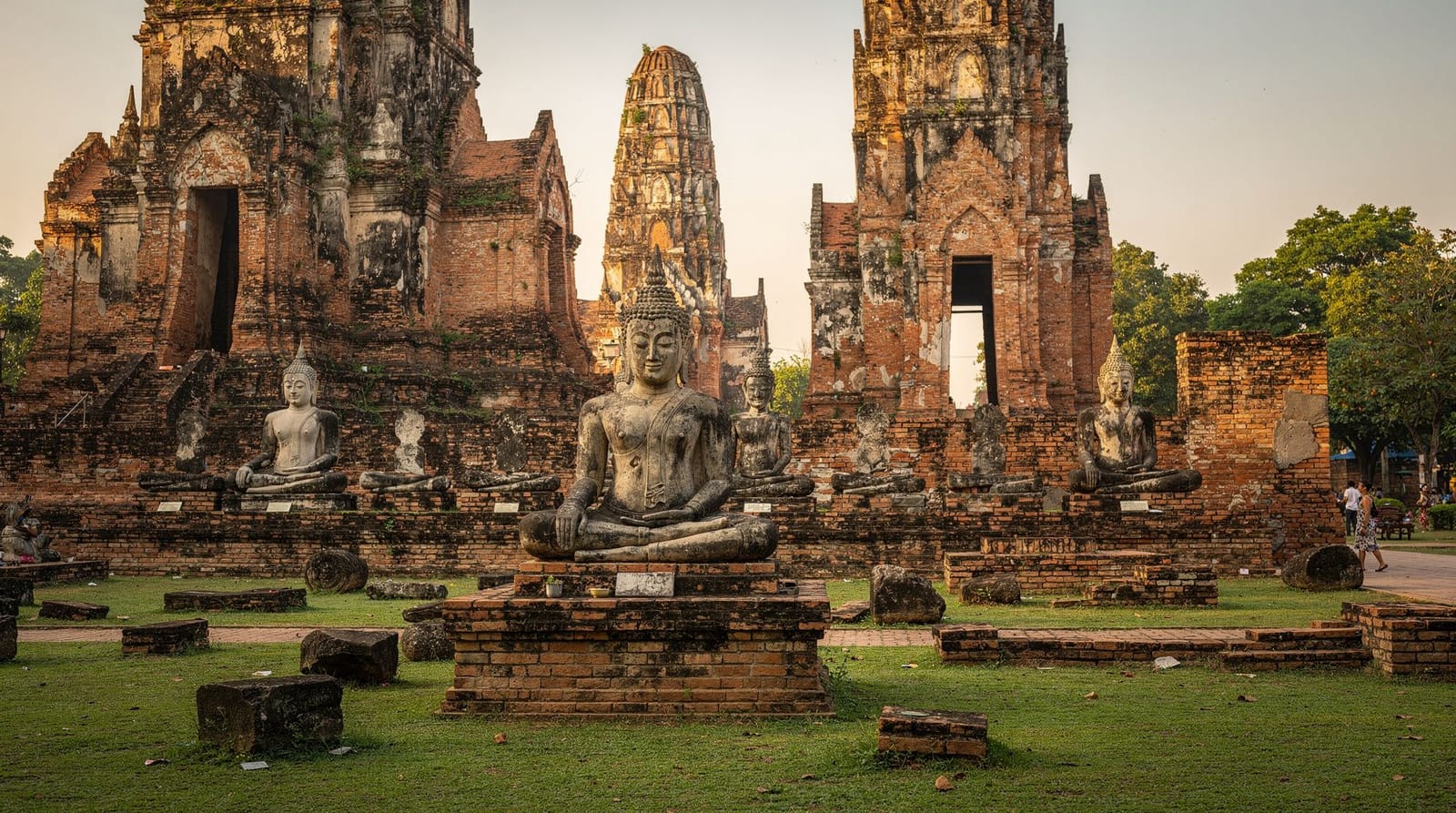
Down in the town, Phetchaburi’s historic temples reward a wander. Wat Mahathat Worawihan, with its white-and-gold prang towers at the centre of town, is the principal temple and a fine example of central-Thai architecture. Wat Yai Suwannaram has a beautifully decayed teak hall and old murals, while Wat Kamphaeng Laeng preserves laterite prang towers from the Khmer period, a reminder of how far back the town’s history runs. The riverside lanes, old shophouses, and morning market give Phetchaburi a lived-in, unpolished character. For the architectural context, see best temples and, for where it fits, day trips from Bangkok.
Famous for sweets
Phetchaburi is renowned across Thailand for its desserts, thanks to the high-quality palm sugar (nam tan tanod) tapped from the toddy palms that ring the town. Look for khanom mo kaeng (a baked mung-bean and coconut custard), foi thong (golden egg-yolk threads), and a whole repertoire of palm-sugar sweets sold at shops and the market. They make excellent edible souvenirs and a genuine local specialty rather than a tourist gimmick. The town’s savoury khao chae (chilled rice in fragrant water, a hot-season dish) is also notable.
How Phetchaburi compares to Ayutthaya and Kanchanaburi
If you’re deciding between Thailand’s day-trip classics, Phetchaburi is the quiet option. Ayutthaya is closer, more famous, and busier with tour buses and dramatic brick ruins; Kanchanaburi trades temples for wartime history and waterfalls. Phetchaburi has neither the crowds nor the headline fame of either, but it offers a genuinely lived-in old town, a hilltop palace with real architectural interest, and cave shrines that rival anything in the country for atmosphere — all without the tour-group scrum. It suits travellers who have already done Ayutthaya and want something calmer, or who simply prefer discovering a place that isn’t on every itinerary.
Getting around once you’re there
Phetchaburi’s sights are spread across a few kilometres — the hilltop palace, the caves outside town, and the old-town temples are not all walkable from each other. Songthaews (shared pickup-truck taxis) run set routes around town for a few baht and are the local way to get between clusters. Motorbike taxis are quick for point-to-point hops, and a chartered motorbike or tuk-tuk for a couple of hours (negotiate the price first) is a practical way to link the palace, caves, and old town without a private car. Grab has patchy coverage outside the town centre, so don’t rely on it the way you would in Bangkok — see the general Grab, taxi and tuk-tuk guide for how ride-hailing works in Thailand’s smaller towns.
Phetchaburi’s three sight clusters compared
| Phra Nakhon Khiri (hilltop) | Cave temples | Old town temples | |
|---|---|---|---|
| Time needed | 1.5–2 hours | 1–1.5 hours | 1.5–2 hours |
| Best for | Views, architecture, history | Atmosphere, photography | Wandering, local life, food |
| Effort | Funicular or a walk up | Short walk, uneven cave floors | Flat, easy walking |
| Crowds | Light | Very light | Very light |
If time is tight, most travellers rate the caves as the unmissable highlight, with the hilltop palace a close second.
Getting there from Bangkok
Train: the easy, scenic route. Southern-line trains from Bangkok stop at Phetchaburi in roughly 2 to 2.5 hours; the station is near the town centre. Cheap and pleasant, and the same line continues to Cha-am and Hua Hin, making a combined trip simple.
Minivan: minivans from Bangkok reach Phetchaburi in about 2 hours for a low fare, a practical and frequent option.
Private car / Grab: door-to-door in around 2 hours via the motorway; the most flexible way to combine the hilltop palace, the caves (which are spread around the town’s edge), and onward travel to the coast. The Phetchaburi and summer palace private tour gives small groups a driver and guide for the day, with a larger-group private version available too. See Bangkok to day trips transport and the best Bangkok tours.
A sensible plan
The sights are slightly scattered, so a little structure helps. Start at the cave temples or Phra Nakhon Khiri in the cool of the morning (the hilltop and the caves are both best before the heat and the harsh midday light). Spend the middle of the day in the old town — the riverside temples and the market — with a dessert stop, and use the early afternoon for whichever of the hilltop palace or caves you saved. With a private car you can comfortably add Phetchaburi to a day that continues to Hua Hin for the evening. As a standalone day trip by train it makes a relaxed, full day. For the broader coastal circuit, see Cha-am.
Practical information
Phra Nakhon Khiri: funicular tram or a walk up; modest entry; watch belongings around the resident macaques.
Caves: active shrines — dress modestly; bring a small torch for the darker chambers; monkeys present.
Timing: mornings are best for the hilltop views, the cave light, and the heat.
Sweets: seek out khanom mo kaeng and palm-sugar desserts at the market and town shops — excellent souvenirs.
Pairing: combine with Hua Hin and Cha-am to the south, especially by private car.
Souvenirs: palm-sugar sweets from the market travel well and make genuine, well-regarded gifts — see the best souvenirs guide for how they compare to other Bangkok-area options. If you’re stacking Phetchaburi into a wider trip, the day trips with itinerary planning guide helps slot it alongside other excursions.
Frequently asked questions about Phetchaburi
Is Phetchaburi worth a day trip from Bangkok?
Yes, especially for travellers who enjoy temples, history, and uncrowded places. There is no single world-famous icon, but the combination of a hilltop royal palace, atmospheric cave shrines, a faded old town of historic temples, and celebrated local sweets adds up to a genuinely rewarding, refreshingly untouristed day.
What are the main sights in Phetchaburi?
Phra Nakhon Khiri (Khao Wang), the 19th-century hilltop summer palace with sweeping views; the cave temples Tham Khao Luang (with sunlight falling on golden Buddhas) and Tham Khao Bandai-It; and the old-town temples, including Wat Mahathat Worawihan and the Khmer-era Wat Kamphaeng Laeng. The town is also famous across Thailand for its palm-sugar desserts.
How do I get to Phetchaburi from Bangkok?
By southern-line train (~2–2.5 hours, near the town centre), by minivan (~2 hours), or by private car or Grab (~2 hours via the motorway). The same train line continues to Cha-am and Hua Hin, so combining Phetchaburi with the coast is easy. A private car is the most flexible way to reach the scattered sights and continue south.
Can I combine Phetchaburi with Hua Hin?
Yes. Phetchaburi lies on the route south toward Cha-am and Hua Hin, so it pairs naturally — many travellers see Phetchaburi’s palace and caves in the morning and continue to Hua Hin for the evening. A private car or regional tour makes the combination straightforward. See our Hua Hin and Cha-am pages.
Are there monkeys in Phetchaburi?
Yes — both Phra Nakhon Khiri (the hilltop palace) and the Tham Khao Luang cave temple have resident macaques. They are bold and will snatch loose items like sunglasses, food, and bags. Keep your belongings secured, avoid carrying visible food, and don’t try to feed or pet them. The same sensible caution as at Lopburi applies.
What food is Phetchaburi famous for?
Desserts, above all — the town’s high-quality palm sugar produces celebrated sweets such as khanom mo kaeng (baked mung-bean and coconut custard) and foi thong (golden egg-yolk threads), sold at the market and town shops. The chilled hot-season rice dish khao chae is also a local specialty. These sweets make genuine, well-regarded edible souvenirs.
Top experiences
Bookable activities with verified prices and instant confirmation on GetYourGuide.