A Muay Thai night, ringside: the sound stays with you
The thing I did not expect about my first Muay Thai night was the music. Before the fighters threw a single punch, a small band in the corner began to play — a reedy oboe-like instrument called the pi, drums, and finger cymbals — and the rhythm rose and fell with the action all night, speeding up as the fighters engaged, slackening when they circled. By the end I realised the music had got into my chest, and weeks later, back home, I could still hear it. A Muay Thai night at one of Bangkok’s historic stadiums is not just a sporting event; it is a full sensory ritual, and it remains one of the most vivid evenings I have ever spent in the city.
| Where | Rajadamnern (old city) or Lumpinee (northern ring road) |
| Cost | Ringside 1,800–2,500 baht, cheaper tiers from ~1,000 baht |
| Time needed | 3–4 hours, starting around 6:30–8pm |
| Getting there | Grab/taxi, 100–300 baht depending on stadium |
| Book ahead | Yes, via an official seller to skip the touts |
What you are actually watching
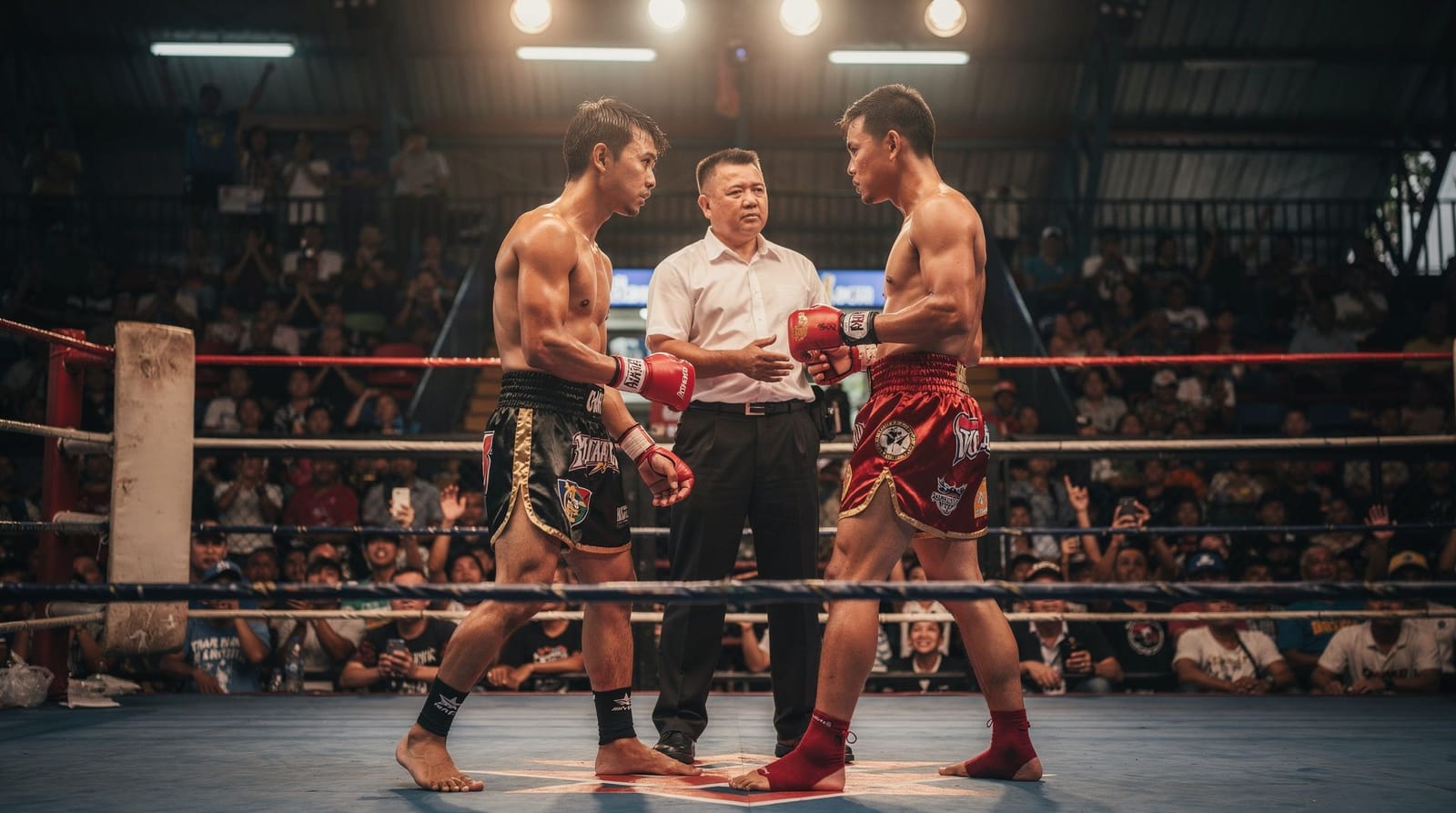
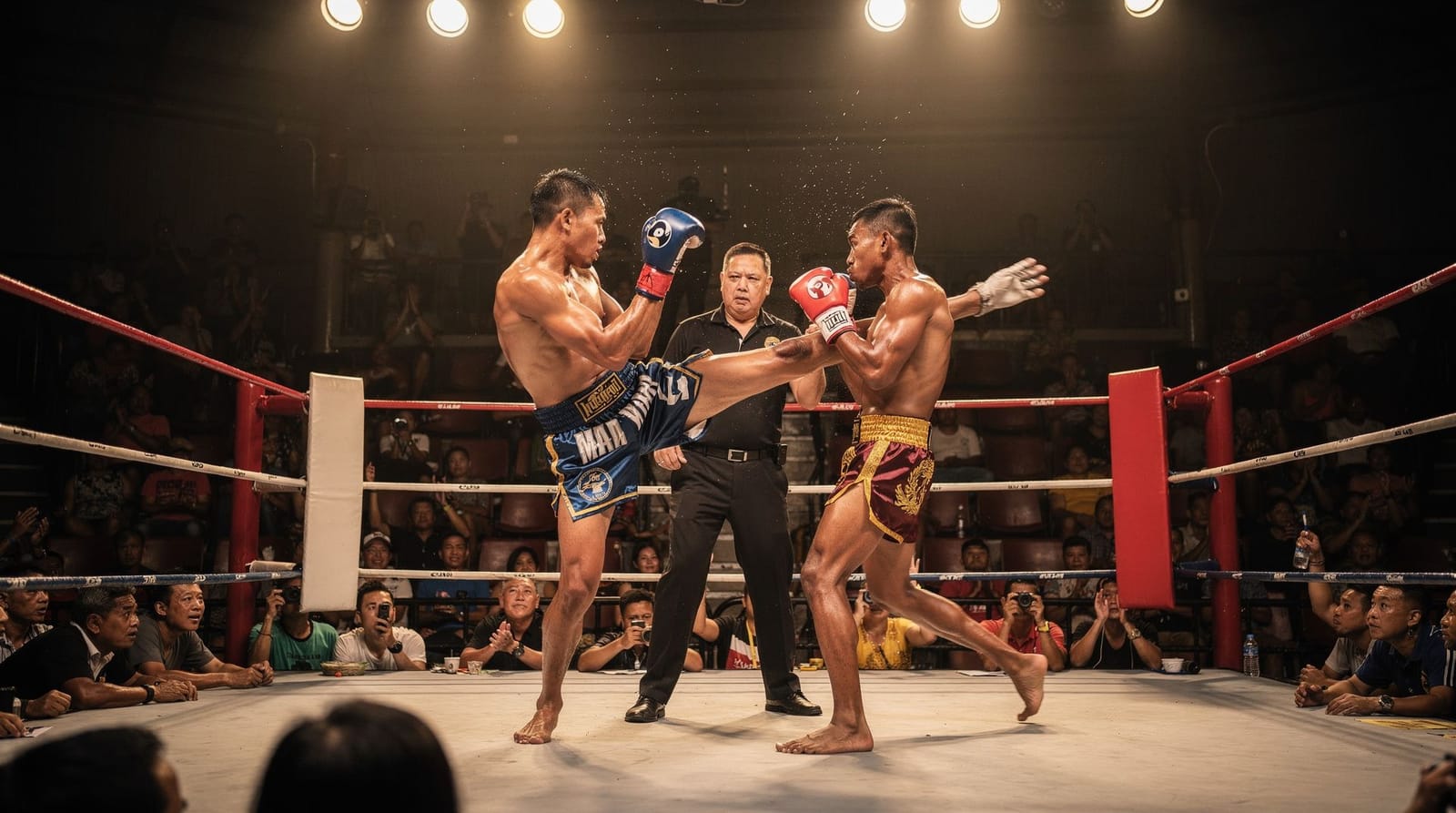
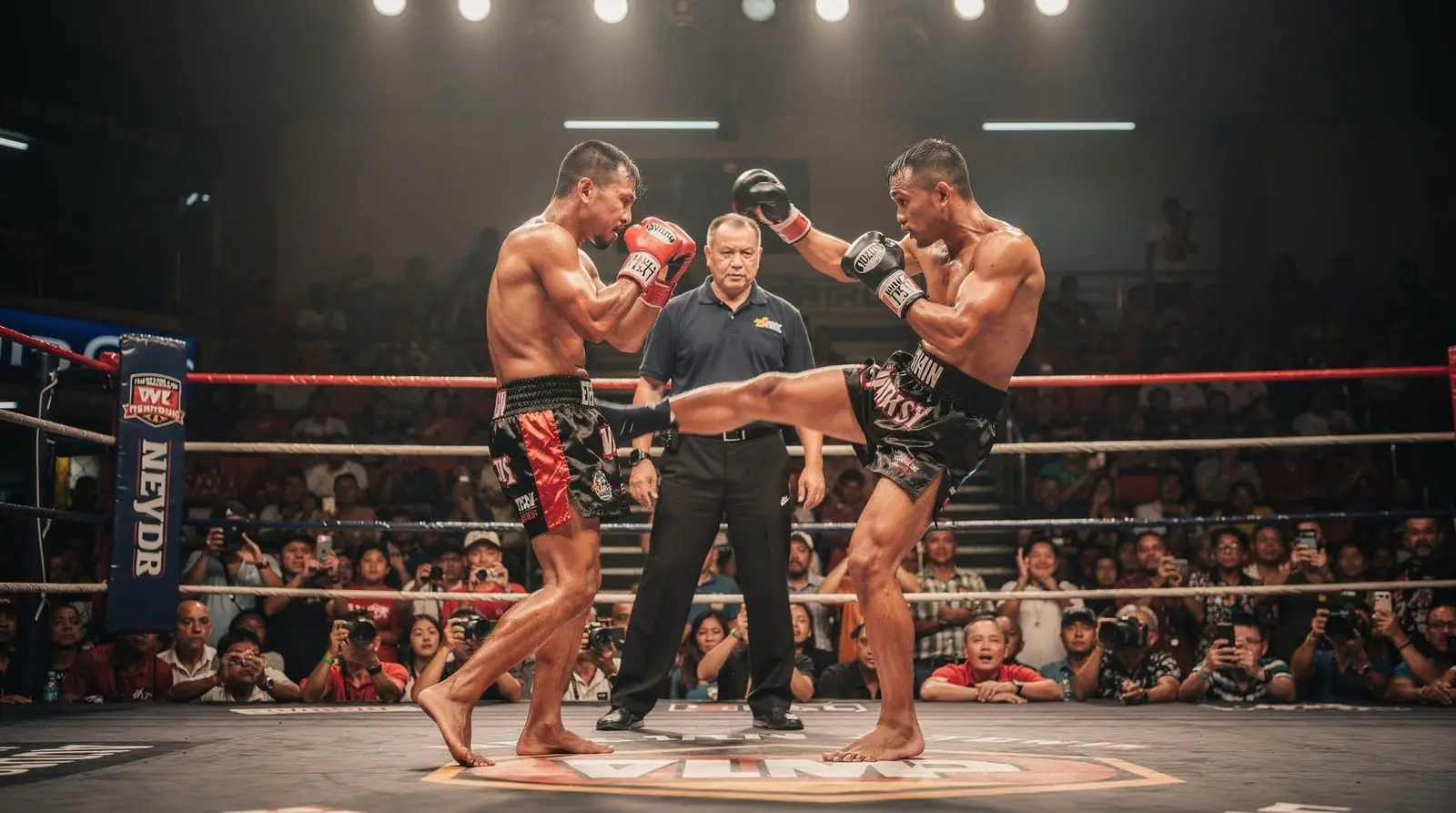
Muay Thai, the “art of eight limbs,” is Thailand’s national sport and a martial tradition centuries deep, using fists, elbows, knees and shins. But a stadium night is about far more than the fighting. It opens with the wai kru ram muay, a slow, almost balletic ritual dance each fighter performs to honour their teacher and gym, sealing the ring and asking for protection. The fighters wear the mongkol headband and prajioud armbands, blessed by their camp. Only after this ceremony does the violence begin. The Muay Thai guide explains the rituals and rules in full, and understanding them transforms the experience from confusing to mesmerising.
The atmosphere, especially the crowd
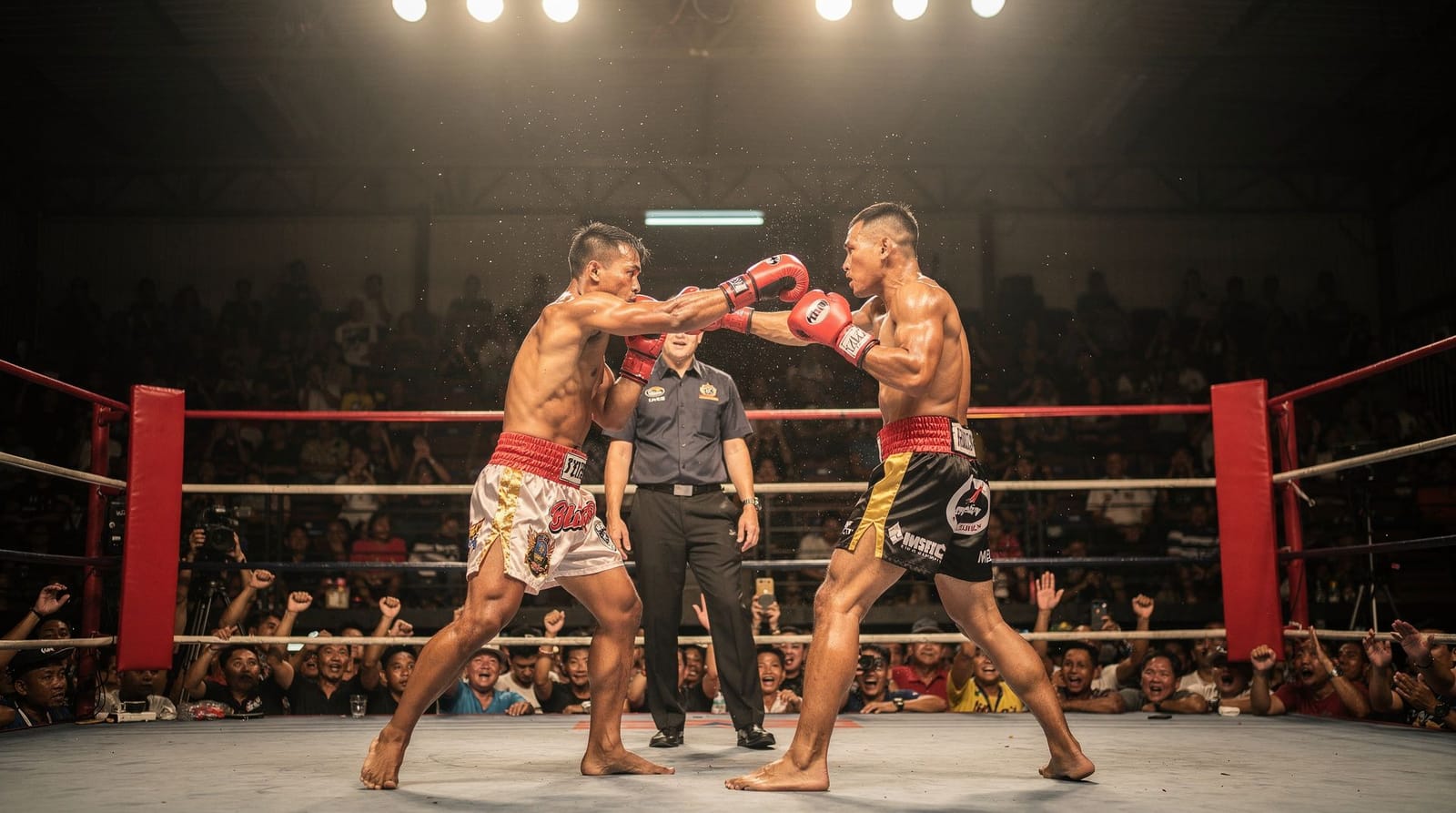
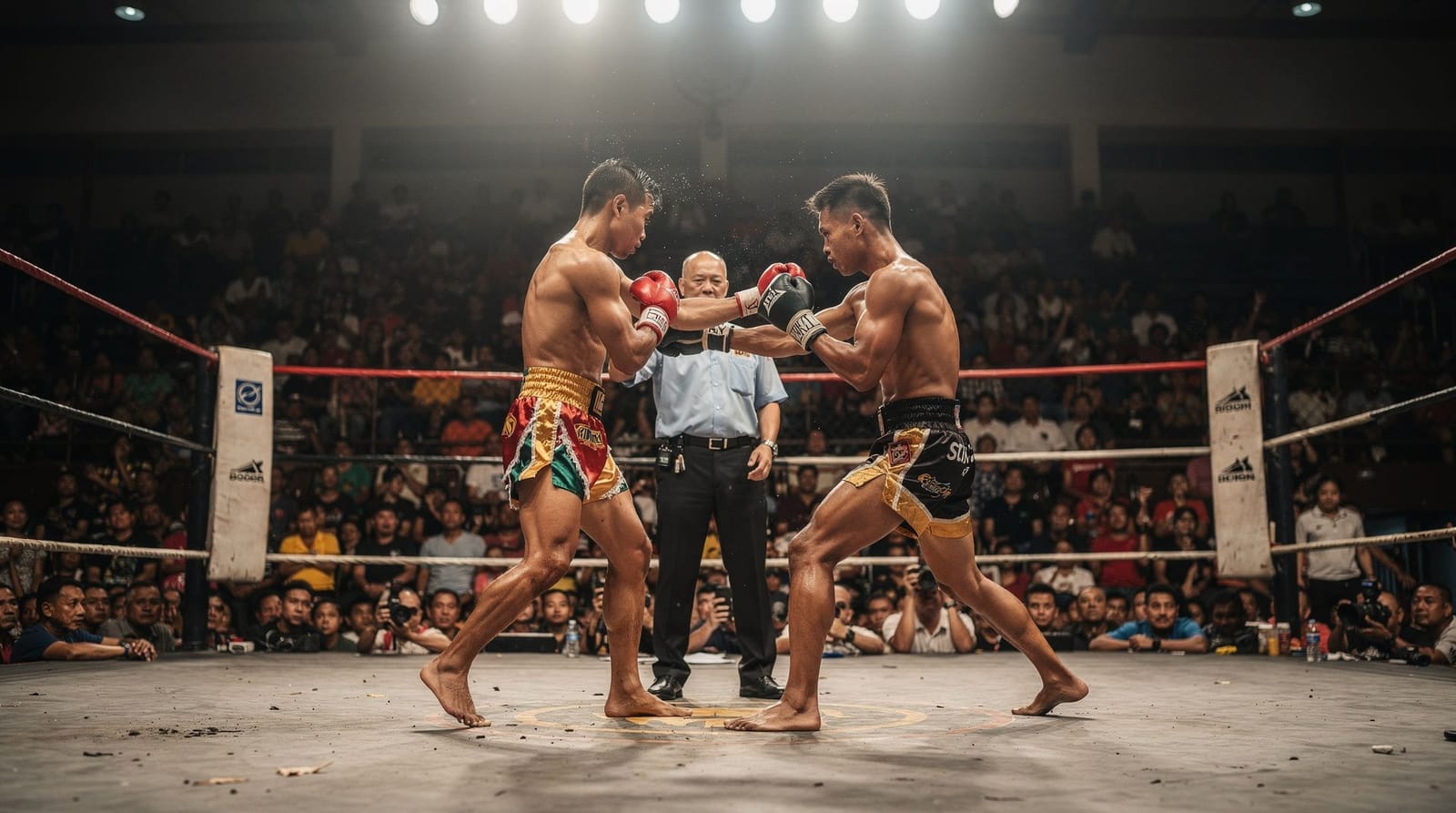
Here is what the videos never capture: the crowd. The serious betting action happens in the standing sections, where men signal frantic odds to each other with hand gestures, the noise swelling and crashing with every exchange in the ring, money changing hands on the outcome of a single round. The energy is electric and slightly chaotic and completely authentic — this is Thai working-class sporting culture at full volume, not a show put on for tourists. Sitting ringside, you are close enough to hear the impact of shin on ribs, see the sweat fly, feel the crowd’s roar as a fighter lands a clean elbow. It is visceral in a way I was not prepared for.
Rajadamnern vs Lumpinee: which to choose
Bangkok has two legendary stadiums, and choosing between them is the first decision. Rajadamnern, near the old city, is the older and more atmospheric — a venerable hall steeped in history, recently given a modern relaunch with regular fight nights. Lumpinee, now in a newer purpose-built arena further out, is the other great institution. Both stage top-level fights; the Rajadamnern versus Lumpinee comparison weighs the atmosphere, location and schedule of each. For a first-timer chasing history and ambience, I lean Rajadamnern. The watch Muay Thai guide covers both plus the smaller venues.
Tickets: the honest breakdown
This is where you need to go in informed, because the ticket structure is tiered and tourist-priced. At the historic stadiums, foreigner tickets are sold in tiers — ringside is the premium, then second-class, then the cheaper standing or upper sections. Ringside runs around 1,800 to 2,500 baht, with the cheaper tiers from roughly 1,000 baht. Yes, foreigners pay more than the local price, which rankles some people, but the ringside experience genuinely is worth the premium for a one-off bucket-list night. The ticket guide explains the tiers and how to avoid the touts outside who mark prices up further. Buy from the official box office or a reputable seller, not from someone who grabs you on the street.
Because the tout situation outside the stadiums is real, booking ahead is the stress-free move. An official Rajadamnern Stadium Muay Thai ticket guarantees a legitimate seat at a fixed price, and a Lumpinee Stadium match ticket does the same for the other great venue. The ticket guide is worth reading either way.
How a night unfolds
A typical card runs eight to ten or more bouts over an evening, building from young up-and-coming fighters early on to the marquee matchups later. Each fight is five three-minute rounds. The first round is often slow and tactical, almost a feeling-out dance, and the crowd stays quiet; the betting heats up and the action explodes in the middle rounds. If you arrive at the start you will watch the standard build, but the truly electric fights, and the loudest crowd, come later in the evening. Pace yourself, grab a Singha and some snacks, and let the night build.
A note on the fighters
It is worth holding in mind, as you watch, that many of the young fighters come from poor rural families and that Muay Thai is, for them, a hard livelihood as much as an art — a path out of poverty paid for in shins and elbows. That context gave the evening a weight beyond entertainment for me. These are not actors; the toll is real, the skill is hard-won, and the respect the fighters show each other after a brutal bout, touching gloves, bowing, sometimes embracing, is genuinely moving.
Getting there and what time to arrive
Logistics matter because the two stadiums sit in awkward spots for public transport. Rajadamnern is near the old city on Ratchadamnoen Nok Avenue, not close to a BTS or MRT station, so the easiest approach is a Grab car — budget 100 to 200 baht from most central areas, more in evening traffic. If you are staying near Khao San and Banglamphu you can almost walk it, fifteen minutes or so. The newer Lumpinee arena is well out toward the northern ring road and is firmly a Grab or taxi job, easily 200 to 300 baht from the centre, so factor that into the real cost of the evening. Fight nights usually start around 6:30 to 8pm and run three to four hours. My advice is to arrive close to the start, watch the early bouts to learn the rhythm and the scoring, and stay for the main events later when the crowd and the betting reach full pitch. The ticket guide lists the current fight nights for each stadium, which do not run every day.
What to eat, drink and bring
A stadium night is a long sit, so come prepared. Both venues sell Singha and Chang beer and basic snacks, though prices inside carry the usual captive-audience markup — expect 100 baht or so for a beer. I like to eat properly beforehand at a street stall near the stadium rather than rely on what is inside; around Rajadamnern there are food carts within a short walk. Bring cash in small notes for drinks and for the inevitable temptation to place a tiny bet through the crowd, though I would be cautious about wading into the serious betting as a newcomer who cannot read the hand signals. Dress is casual — it is hot and the venues are not air-conditioned to a chill — but the historic halls are not nightclubs, so nothing too brief. And bring a little patience for the early rounds, which are deliberately tactical before the fireworks.
Rajadamnern versus Lumpinee, side by side
| Rajadamnern | Lumpinee | |
|---|---|---|
| Location | Old city, near Khao San | Northern ring road, further out |
| Atmosphere | Older, more historic hall | Newer purpose-built arena |
| Getting there | Grab, 100–200 baht, or walk from Khao San | Grab or taxi, 200–300 baht |
| Best for | First-timers chasing history | Repeat visitors, top-level fight nights |
The full Rajadamnern versus Lumpinee breakdown weighs the fight schedules and atmosphere in more depth than a single table can.
A note on ring traditions
One detail that surprised me and is worth knowing before you go: some of the older, more traditional stadiums and provincial rings still observe a superstition that women should not touch the ring ropes or climb into the ring itself, a belief tied to the ring’s sacred, blessed status in Muay Thai’s ritual roots. The major tourist-facing stadiums in Bangkok have largely moved past this in terms of seating and spectating — women attend, bet and sit ringside without restriction — but the custom can still surface around the ring itself at some venues, so do not be surprised if you see it observed. It is a small, telling example of how much genuine ritual sits underneath the sport, alongside the wai kru and the music.
If you want to step into the ring yourself
Watching a fight often plants a seed, and Bangkok is full of gyms that run beginner classes for visitors who want to feel what those eight limbs actually do. A drop-in session has you wrapping your hands, learning the basic teep (push kick) and a few combinations, and hitting pads until your shins sting and your respect for the fighters triples. It is humbling in the best way, and a couple of hours is enough to understand why a single round looks so much harder once you have tried to throw a clean knee. The Muay Thai class for beginners guide explains what a first lesson involves and what to expect, and it pairs beautifully with a stadium night — watch the masters one evening, find out how impossible it is the next morning. Wear shorts and a t-shirt, expect to sweat buckets in the heat, and do not be intimidated by the gym setting: the trainers who run tourist sessions are used to total beginners and will scale everything to your level. You will leave with sore shins, a new vocabulary of teeps and elbows, and a far sharper eye for what the fighters are doing the next time you watch a bout.
Should you go?
Without question. A Muay Thai night is one of the few experiences in Bangkok that is simultaneously a sport, a religious ritual, a music performance and a slice of authentic Thai social life, and seeing it live at one of the historic stadiums is incomparable to watching it on a screen. Go ringside if your budget stretches, learn what the wai kru and the music mean before you arrive, buy legitimate tickets, and prepare for an evening that, in my experience, lodges itself in your memory more firmly than almost anything else the city offers. The culture guide sets it in context, the things to do at night guide slots it among the city’s best evenings, and a first-timer itinerary leaves room for a stadium night — but nothing prepares you quite like the real thing, with that reedy music rising in your chest.
Frequently asked questions about Muay Thai in Bangkok
How much are Muay Thai tickets in Bangkok?
At the historic stadiums, ringside runs about 1,800 to 2,500 baht for foreigners, with cheaper second-class and standing tiers from around 1,000 baht. Buy from official sellers, not street touts.
Which is better, Rajadamnern or Lumpinee?
Both stage top-level fights. Rajadamnern, near the old city, has more historic atmosphere; Lumpinee occupies a newer purpose-built arena. For a first visit chasing ambience, Rajadamnern is the popular pick.
Is Muay Thai suitable for first-time spectators?
Yes. Beyond the fighting, you get the pre-fight wai kru ritual, live traditional music, and an electric betting crowd. Learning the basics beforehand makes it far more engaging than expected.
How do I get to the Muay Thai stadiums in Bangkok?
Neither historic stadium sits beside a BTS or MRT station, so a Grab car or taxi is easiest — roughly 100 to 200 baht to Rajadamnern from the centre, more to the further-out Lumpinee arena. From Khao San you can almost walk to Rajadamnern.
What time do Muay Thai fights start?
Fight nights typically begin around 6:30 to 8pm and run three to four hours across eight to ten or more bouts. The marquee fights and the loudest crowd come later in the evening, so arriving near the start lets you watch the night build.